

Introduction
Running low on fuel can happen to almost anyone. A busy schedule, an unfamiliar route, unexpected traffic, or a gas station that is farther away than expected can leave a driver watching the fuel gauge drop toward empty. The situation may seem manageable at first, especially when the vehicle continues running normally. However, driving with very little fuel can create problems that go beyond simply running out of gas.
For drivers in Marrero, Harvey, Gretna, Westwego, and surrounding Louisiana communities, an empty fuel tank can become a roadside emergency at an inconvenient time. A vehicle may stop in moving traffic, on a highway shoulder, at an intersection, or in an unfamiliar neighborhood. Finding a nearby gas station is not always possible, and walking along a busy road with a fuel container can expose drivers to additional safety risks.
This is where emergency fuel delivery becomes a practical alternative. Instead of continuing to drive on an almost-empty tank or attempting to reach a gas station at any cost, drivers can request roadside fuel assistance and have fuel brought to their location.
Understanding the difference between emergency fuel delivery and driving on empty helps motorists make safer decisions. It also explains why paying attention to fuel levels, recognizing warning signs, and knowing when to request roadside assistance can prevent unnecessary vehicle problems.
What Is Emergency Fuel Delivery?
Emergency fuel delivery is a roadside assistance service that brings fuel directly to a vehicle that has run out of gasoline or diesel. Rather than requiring the driver to walk to a gas station, arrange transportation, or leave the vehicle unattended, roadside assistance provides fuel at the vehicle's location.
The service is particularly useful when a car becomes stranded somewhere without convenient access to a fuel station.
How Emergency Fuel Delivery Works
The process is generally straightforward:
Contact a roadside assistance provider: Explain that your vehicle has run out of fuel and needs emergency fuel delivery.
Share your location: Provide the road name, nearby intersection, business, landmark, or highway exit. Accurate location details help the service provider find your vehicle.
Identify your vehicle: Provide the vehicle's make, model, color, and fuel type.
Wait in a safe location: Stay inside the vehicle if it is safely positioned away from traffic. If the vehicle is exposed to an immediate traffic hazard, move to a safer location if possible.
Receive the fuel: A roadside assistance professional brings the appropriate fuel and assists with getting the vehicle running again when conditions allow.
The amount of fuel delivered depends on the provider's service procedures and the vehicle's needs. Emergency fuel delivery is generally intended to help the driver reach a nearby gas station, not necessarily to fill the entire tank.
When Do Drivers Need Emergency Fuel Delivery?
Fuel delivery can help in several common situations:
The vehicle runs completely out of gasoline.
A driver misjudges the distance to the next gas station.
Unexpected traffic increases fuel consumption.
An unfamiliar route makes nearby fuel stations difficult to locate.
A vehicle becomes stranded in an area with limited fuel station access.
A driver cannot safely walk to a gas station.
A vehicle runs out of diesel fuel and needs appropriate roadside assistance.
For motorists traveling around Marrero, Harvey, Gretna, and Westwego, knowing that roadside fuel assistance is an option can make an unexpected fuel shortage easier to manage.
Driving on Empty: What Does It Actually Mean?
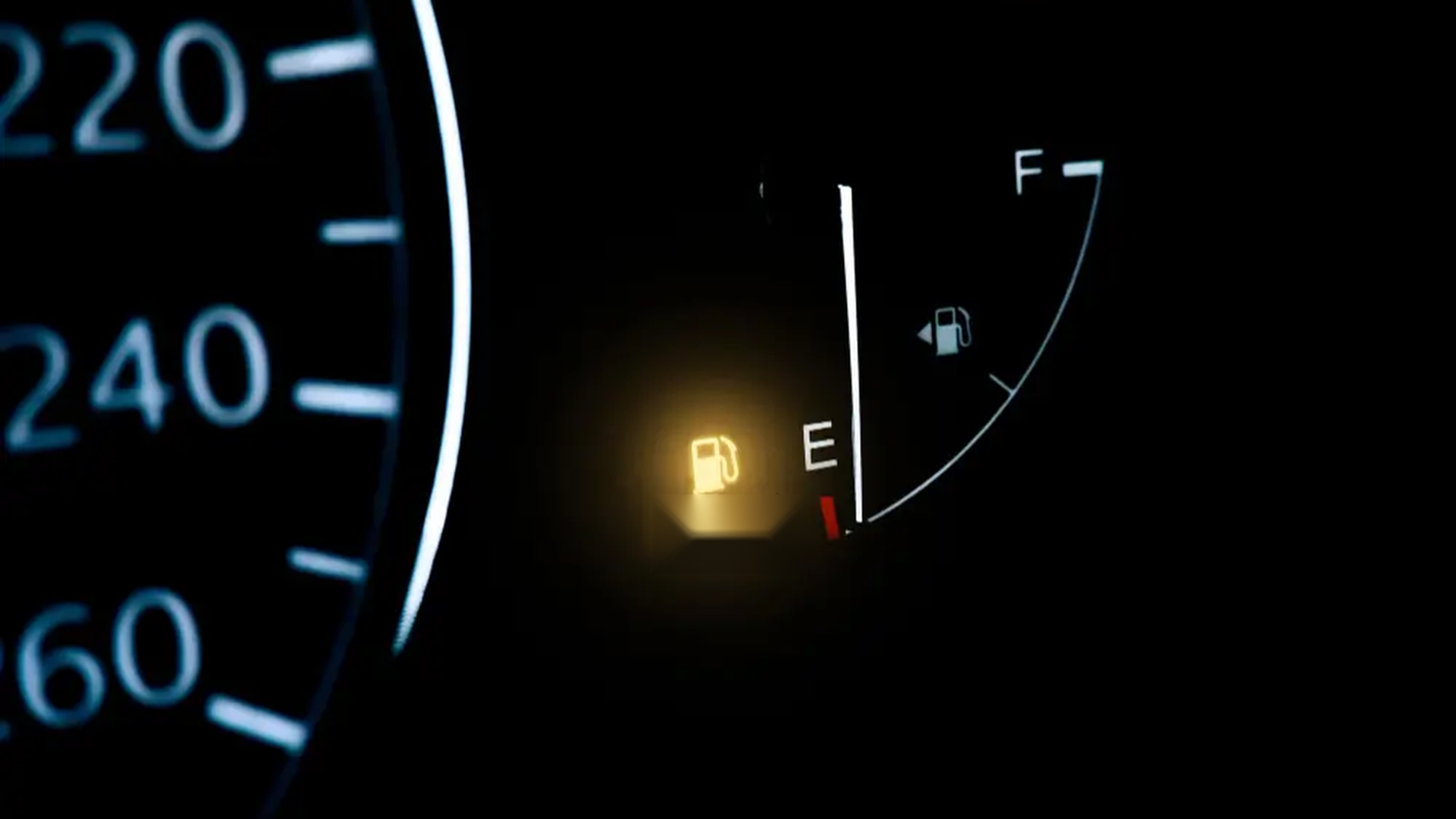
Driving on empty means operating a vehicle when its fuel level has become extremely low, often after the low-fuel warning light appears or the fuel gauge approaches its lowest reading.
However, an empty fuel gauge does not always mean the tank contains absolutely no fuel.
Most vehicles activate their low-fuel warning before the tank is completely empty. Some reserve fuel may remain, but the amount varies by vehicle, fuel system, driving conditions, and fuel consumption.
How Accurate Is the Empty Fuel Warning?
A vehicle's fuel gauge provides an estimate rather than a perfectly precise measurement.
Several factors can affect the reading:
Vehicle design and fuel tank shape.
Fuel sensor condition.
Road angle and vehicle position.
Fuel movement inside the tank.
Driving conditions and engine demand.
For example, a driver may notice that the fuel gauge drops quickly while climbing a hill or driving around sharp turns. This can happen because fuel moves inside the tank and temporarily affects the sensor reading.
The distance remaining after the low-fuel warning activates is not something drivers should rely on as a guarantee.
Is There Really a Fuel Reserve?
Many vehicles retain some fuel after the low-fuel warning appears. However, the reserve amount differs between manufacturers and models.
Some drivers assume they can continue driving for another 20, 30, or even 50 miles after the warning light turns on. That assumption can be dangerous because actual remaining range depends on several conditions.
Factors that influence remaining driving range include:
Speed and acceleration.
Traffic congestion and repeated stopping.
Air conditioning usage.
Road elevation and terrain.
Vehicle weight and cargo.
Tire pressure and engine condition.
Weather and temperature.
A vehicle that might travel a reasonable distance under steady highway conditions may consume fuel much faster in stop-and-go traffic.
The safest approach is to treat the low-fuel warning as a signal to refuel as soon as possible.
Emergency Fuel Delivery vs. Driving on Empty: Which Is Safer?
Emergency fuel delivery is generally the safer choice when a vehicle has insufficient fuel to reach a nearby gas station without taking unnecessary risks.
Continuing to drive on extremely low fuel may seem convenient, but it can leave the driver stranded in a more dangerous location.
Comparing Both Options
Emergency fuel delivery
Brings fuel directly to the stranded vehicle.
Reduces the need to walk along busy roads.
Helps avoid unnecessary driving with critically low fuel.
Can reduce the chance of stopping in an inconvenient or hazardous location.
Provides a practical option when nearby gas stations are inaccessible.
Driving on empty
May temporarily keep the vehicle moving.
Can result in an unexpected engine shutdown.
May leave the driver stranded in traffic or an isolated location.
Can increase stress and create additional roadside safety concerns.
May contribute to fuel-system problems under certain conditions.
The main difference is predictability. Emergency fuel delivery addresses the fuel shortage before the driver has to take additional risks trying to reach a gas station.
Why Waiting for Fuel Assistance Can Be the Better Decision
Imagine a driver leaving work in Harvey with a nearly empty tank. The fuel warning light has been on for several miles, but the driver believes there is enough fuel to reach a station in Marrero.
Traffic becomes heavier than expected, and the vehicle begins struggling to maintain power. The driver eventually pulls onto the shoulder.
Continuing to drive would not necessarily solve the problem. The vehicle could stop in a less accessible location, leaving the driver with fewer safe options.
Requesting emergency fuel delivery earlier would help avoid that unnecessary risk.
The Risks of Driving With an Almost-Empty Fuel Tank
Running low on fuel is not automatically damaging to every vehicle. However, repeatedly operating with very little fuel can create avoidable mechanical and safety concerns.
Understanding these risks helps drivers recognize why refueling early is a better habit.
1. Fuel Pump Overheating
The fuel pump is responsible for moving fuel from the tank to the engine.
In many vehicles, fuel surrounding the pump helps cool and lubricate components of the fuel delivery system. When fuel levels remain extremely low, the pump may have less fuel available around it for cooling.
This does not mean that one low-fuel incident will automatically damage the pump. However, repeatedly running a vehicle with very little fuel can increase unnecessary stress on the fuel system.
Fuel pump replacement can be expensive, making preventive refueling a sensible maintenance habit.
2. Engine Stalling and Sudden Loss of Power
An engine requires a consistent fuel supply to operate correctly.
When the tank becomes empty, the fuel pump can no longer provide the required fuel to the engine. The vehicle may hesitate, sputter, lose acceleration, or shut down completely.
This can become particularly dangerous when it happens:
In heavy traffic.
While merging onto a highway.
At a busy intersection.
During a turn.
On a narrow road with limited shoulder space.
If the engine stalls, power steering assistance and brake assistance may also be reduced or lost depending on the vehicle. Steering and braking may require significantly more physical effort.
Drivers should avoid deliberately testing how far their vehicle can travel after the fuel warning appears.
3. Increased Risk of Fuel System Contamination
Fuel tanks can accumulate small amounts of sediment and other contaminants over time.
Modern fuel systems are designed with filters and other components that help prevent debris from reaching sensitive engine parts.
Low fuel levels do not automatically cause contaminants to enter the engine. However, operating with very little fuel may increase the possibility of drawing sediment toward the fuel pickup, particularly in vehicles with older or poorly maintained fuel systems.
Regular maintenance and keeping an adequate amount of fuel in the tank can help reduce unnecessary fuel-system stress.
4. Unexpected Breakdown in an Unsafe Location
One of the biggest problems associated with running out of fuel is not mechanical. It is the location where the vehicle stops.
A car that runs out of fuel in a parking lot creates a different situation from one that stops in an active traffic lane.
Drivers traveling through Gretna, Westwego, or other busy Louisiana areas may encounter:
Heavy traffic.
Limited roadside parking.
Narrow shoulders.
Poorly lit roads.
Construction zones.
Areas without convenient pedestrian access.
A fuel shortage that could have been handled with a routine gas station stop may become a stressful roadside emergency.
5. Additional Stress on Certain Fuel Systems
Some modern vehicles use sophisticated fuel injection systems that require consistent fuel pressure.
When the fuel supply becomes interrupted, the engine may experience starting difficulties or fail to run properly until fuel delivery is restored.
Diesel vehicles can have additional considerations. Certain diesel systems may require air bleeding or priming after running completely out of fuel.
This means a diesel vehicle may not restart immediately after fuel is added.
Drivers should follow the manufacturer's instructions or request qualified assistance rather than repeatedly attempting to start the engine.
What Happens When Your Vehicle Completely Runs Out of Fuel?
Running out of fuel can affect vehicles differently depending on their engine type and fuel system.
Understanding what happens can help drivers respond appropriately.
What Happens to a Gasoline Engine?
When a gasoline vehicle runs out of fuel, the engine eventually stops receiving the gasoline needed for combustion.
Before shutting down, drivers may notice:
Engine sputtering.
Hesitation during acceleration.
Reduced engine power.
Difficulty maintaining speed.
Sudden engine shutdown.
Once the fuel supply is restored, the vehicle may restart after a few attempts, although repeated cranking should be avoided.
If the engine does not restart, the problem may require further diagnosis.
What Happens to a Diesel Engine?
Diesel engines operate differently from gasoline engines.
Many diesel fuel systems rely on fuel pressure and carefully controlled fuel delivery. When the tank becomes completely empty, air may enter the fuel lines.
Adding diesel fuel does not always solve the problem immediately. Depending on the system, the vehicle may need priming or bleeding to remove trapped air.
Attempting to force the engine to start without following the proper procedure may create additional complications.
Why You Should Not Keep Cranking the Engine
Repeatedly turning the ignition or holding the starter after the vehicle runs out of fuel can place unnecessary strain on the starter motor and battery.
Instead:
Move the vehicle to a safe position if possible.
Turn off unnecessary electrical accessories.
Confirm that the vehicle has the correct fuel.
Request appropriate roadside fuel assistance.
Follow the manufacturer's restarting instructions.
Seek professional mechanical assistance if the vehicle still will not start.
The correct approach depends on the vehicle's fuel system.
What Should You Do If Your Car Runs Out of Gas?
Finding yourself stranded with an empty fuel tank can be frustrating, but a calm response can reduce the risks.
Follow these steps to handle the situation safely.
Step 1: Move Away From Traffic if Possible
If the engine begins losing power while driving, activate your hazard lights.
If the vehicle still has enough momentum and can be controlled safely, steer toward the nearest safe shoulder, parking area, or other location away from moving traffic.
Do not make sudden movements that could endanger other drivers.
Step 2: Turn on Your Hazard Lights
Hazard lights alert approaching motorists that your vehicle is stopped or experiencing a problem.
Keep them activated while waiting for assistance, particularly at night or in areas with limited visibility.
Step 3: Choose a Safe Place to Wait
If your vehicle is safely positioned away from traffic, remaining inside with your seat belt fastened may be the safest option.
If the vehicle is stopped in an active traffic lane or another immediately dangerous location, prioritize getting yourself to a safe area away from traffic if you can do so without crossing moving lanes.
Avoid standing directly behind or beside the vehicle on a busy roadway.
Step 4: Identify Your Exact Location
When requesting emergency fuel delivery, provide useful location details.
These may include:
Road or highway name.
Direction of travel.
Nearest intersection.
Highway exit number.
Nearby business or landmark.
Vehicle color, make, and model.
A clear location description can make it easier for roadside assistance providers to locate you.
Step 5: Request Emergency Fuel Delivery
Contact a roadside assistance provider and explain that your vehicle has run out of fuel.
Mention whether the vehicle uses gasoline or diesel. This helps ensure the correct type of fuel is brought to your location.
Step 6: Follow Safe Restarting Instructions
Once fuel arrives, allow the vehicle's fuel system to operate according to the manufacturer's instructions.
Some vehicles may restart normally, while others may need additional procedures.
If the vehicle continues to sputter, displays warning lights, or refuses to start, avoid repeated attempts and consider professional mechanical assistance.
Can Running on Empty Damage Your Fuel Pump?
This is one of the most common questions drivers have about low fuel levels.
The answer depends on the vehicle, fuel system design, and how frequently the vehicle operates with very little fuel.
How the Fuel Pump Works
Most modern gasoline vehicles use an electric fuel pump located inside or near the fuel tank.
The pump moves fuel toward the engine at the pressure required by the fuel injection system.
In many designs, fuel also helps cool the pump during operation.
When the fuel level is consistently low, the pump may experience additional heat and operating stress.
Does One Empty Tank Destroy the Fuel Pump?
No. Running out of fuel once does not automatically mean the fuel pump has been damaged.
However, repeatedly allowing the tank to become nearly empty can increase the risk of unnecessary wear.
Other factors, such as fuel quality, electrical problems, pump age, and maintenance history, also influence fuel pump performance.
Drivers should treat repeated low-fuel incidents as an avoidable maintenance concern rather than assuming immediate mechanical failure.
Why Walking to a Gas Station Can Be Dangerous
Some drivers consider leaving their vehicle and walking to the nearest gas station with a portable fuel container.
Although this may seem like a simple solution, it is not always practical or safe.
Roadside Pedestrian Hazards
Walking along a busy road exposes drivers to risks that do not exist when traveling inside a vehicle.
Potential hazards include:
Passing vehicles traveling at high speeds.
Limited pedestrian walkways.
Poor visibility after sunset.
Narrow highway shoulders.
Distracted drivers.
Uneven road surfaces.
These concerns are particularly relevant when a vehicle breaks down along an unfamiliar route.
The Problem With Leaving Your Vehicle Unattended
Leaving a stranded vehicle can create additional difficulties.
The vehicle may obstruct traffic, attract unwanted attention, or remain in an exposed location.
There may also be concerns about personal belongings, vehicle security, and the possibility of returning to find that roadside conditions have changed.
Emergency fuel delivery provides another option by bringing assistance directly to the vehicle.
Are Portable Gas Containers Always Safe?
Portable fuel containers must be approved for fuel storage and handled carefully.
Gasoline is highly flammable, and improper transportation or storage can create fire and exposure hazards.
Drivers should never carry gasoline in unsuitable containers, open containers, or passenger compartments in ways that could expose occupants to fuel vapors or spills.
If you are unfamiliar with safe fuel handling, requesting professional roadside assistance is a more sensible choice.
Emergency Fuel Delivery in Marrero, Harvey, Gretna, and Westwego
Drivers across Jefferson Parish and surrounding Louisiana communities may encounter fuel-related roadside emergencies during daily travel.
A vehicle can run out of fuel close to home, while commuting to work, traveling between neighborhoods, or driving through unfamiliar areas.
Fuel Emergencies in Marrero
Drivers in Marrero may experience unexpected fuel shortages during local trips, commutes, or longer drives.
An empty tank can become particularly inconvenient when traffic conditions make reaching a gas station difficult.
Emergency roadside fuel assistance offers an alternative to attempting a risky trip with almost no fuel.
Roadside Fuel Assistance in Harvey
Harvey drivers may encounter fuel-related breakdowns while traveling through commercial areas, residential streets, and connecting roads.
If your vehicle stops because the tank is empty, providing an accurate location and vehicle description can help roadside assistance providers understand where help is needed.
Fuel Delivery Assistance in Gretna
Gretna motorists may need roadside help when unexpected delays or unfamiliar routes lead to an empty tank.
Stopping in a busy area can create additional concerns, especially when there is limited space to move the vehicle away from traffic.
Requesting fuel assistance can help address the immediate problem without requiring an unnecessary walk to a gas station.
Emergency Roadside Assistance in Westwego
Westwego drivers can also experience unexpected fuel shortages during everyday travel.
If a vehicle becomes stranded, the safest response is to secure the location, activate hazard lights, and arrange appropriate roadside assistance.
A&Z Towing LLC serves Marrero, Harvey, Gretna, Westwego, and surrounding Louisiana areas with 24/7 towing and roadside assistance services.
Drivers experiencing roadside emergencies can contact a local assistance provider to discuss the available options for their situation.
How to Prevent Running Out of Fuel
The easiest way to handle an empty fuel tank is to avoid reaching that point in the first place.
A few simple driving habits can significantly reduce the chances of experiencing a fuel-related roadside emergency.
1. Refuel Before the Warning Light Appears
Do not make the low-fuel warning your regular reminder to visit a gas station.
Refueling while the tank still contains a reasonable amount of fuel provides more flexibility when traffic or travel plans change.
2. Check Your Fuel Level Before Long Trips
Before leaving for an unfamiliar destination, check the fuel gauge.
Consider the planned distance, available gas stations, traffic conditions, and possible detours.
A short inspection before departure can prevent an inconvenient roadside stop later.
3. Use Navigation to Identify Fuel Stations
Navigation applications can help identify gas stations along your route.
However, do not assume that every listed station is open, accessible, or operating normally.
Check availability when possible, particularly during late-night travel.
4. Monitor Fuel Consumption
Pay attention to how quickly your vehicle uses fuel.
If your usual fuel range suddenly decreases, investigate possible causes such as tire pressure problems, maintenance issues, excessive idling, or engine performance concerns.
An unexpected change in fuel economy may deserve professional inspection.
5. Avoid Unnecessary Idling
An idling engine continues consuming fuel even when the vehicle is not moving.
Long periods of idling can reduce the amount of fuel available for the remaining journey.
Turn off the engine when it is safe and appropriate to do so.
6. Keep Your Vehicle Maintained
Routine vehicle maintenance helps support efficient engine operation.
Pay attention to:
Tire pressure.
Engine performance.
Fuel system condition.
Air filter condition.
Warning lights.
Unusual changes in fuel consumption.
A well-maintained vehicle is easier to monitor, and unexpected fuel consumption changes are more likely to be noticed.
Common Misconceptions About Driving on Empty
Several common beliefs encourage drivers to take unnecessary chances with low fuel levels.
Understanding what is true can help prevent roadside emergencies.
Misconception 1: Every Car Has a Large Fuel Reserve
Fuel reserves vary by vehicle. There is no universal distance that every car can travel after the low-fuel warning activates.
Reality: Check your owner's manual and refuel promptly instead of relying on estimated reserve mileage.
Misconception 2: Running Out of Gas Only Creates a Minor Inconvenience
An empty tank can leave a vehicle stranded in an unsafe location.
Reality: The location of the breakdown can make a fuel shortage a serious roadside safety issue.
Misconception 3: Adding Fuel Always Makes the Engine Start Immediately
Some vehicles may need additional procedures after completely running out of fuel.
Reality: Diesel vehicles, in particular, may require priming or bleeding of the fuel system.
Misconception 4: Driving on Empty Is Harmless if It Happens Occasionally
One incident does not automatically damage a vehicle, but repeatedly operating with very little fuel can place additional stress on certain fuel system components.
Reality: Refueling early is a better long-term habit.
Misconception 5: Walking to a Nearby Gas Station Is Always the Easiest Option
A gas station may appear close on a map but still require walking along dangerous roads.
Reality: Consider traffic, visibility, pedestrian access, and personal safety before leaving a stranded vehicle.
When Should You Request Towing Instead of Fuel Delivery?
Emergency fuel delivery is appropriate when the main problem is an empty fuel tank and the vehicle can safely be restored to operation.
However, not every roadside situation can be solved by adding fuel.
There are circumstances when towing is the better option.
When Fuel Delivery May Be Enough
Fuel delivery may be suitable when:
The vehicle has run out of gasoline or diesel.
There are no signs of another mechanical problem.
The vehicle is safely accessible.
The correct fuel can be supplied.
The vehicle can restart after following the appropriate procedure.
When Towing May Be Necessary
Consider professional towing when:
The vehicle does not restart after receiving fuel.
The engine continues stalling.
There are fuel leaks or unusual odors.
The vehicle has developed mechanical problems.
The fuel system requires repairs.
The vehicle is not safe to drive.
Why the Right Towing Method Matters
Different vehicles and breakdown situations require different towing methods.
Flatbed towing can be appropriate for many vehicles, including cars with certain drivetrain or mechanical concerns. It can also be useful when a vehicle cannot safely be driven onto a road.
The appropriate towing method depends on the vehicle manufacturer's recommendations, drivetrain, condition, and the circumstances of the breakdown.
A professional towing provider can help determine whether roadside assistance is sufficient or whether vehicle transportation is necessary.
Conclusion
Driving on an almost-empty fuel tank may seem like a convenient way to avoid stopping, but it can create unnecessary risks. A vehicle may unexpectedly lose power, stall in traffic, or become stranded somewhere without safe pedestrian access. Repeatedly operating with very little fuel can also place additional stress on certain fuel system components.
Emergency fuel delivery offers a practical alternative when a vehicle runs out of gasoline or diesel. Rather than continuing to drive in the hope of reaching a gas station, motorists can arrange assistance at their location and address the fuel shortage more safely.
For drivers in Marrero, Harvey, Gretna, Westwego, and surrounding Louisiana communities, recognizing the signs of low fuel and knowing when to request roadside assistance can make a difficult situation easier to manage.
A few preventive habits also make a difference. Check your fuel level before traveling, refuel before the warning light appears, and avoid relying on estimated reserve mileage. If your vehicle becomes stranded because of an empty tank, prioritize your safety and seek appropriate roadside assistance.
A&Z Towing LLC provides 24/7 towing and roadside assistance for drivers dealing with unexpected vehicle problems. When a roadside emergency requires more than a routine fuel stop, having access to professional assistance can help you determine the safest next step.
Frequently Asked Questions
1. Is emergency fuel delivery safer than driving on empty?
Yes. Emergency fuel delivery can be a safer option when your vehicle has insufficient fuel to reach a gas station reliably. It reduces the need to continue driving with critically low fuel or walk along busy roads to obtain gasoline or diesel.
2. Can driving on empty damage a fuel pump?
Repeatedly operating a vehicle with very little fuel can increase stress on certain fuel pumps because fuel helps cool many in-tank pump designs. However, running out of fuel once does not automatically mean the pump has been damaged.
3. How far can a car drive after the low-fuel warning light turns on?
The remaining driving distance varies by vehicle, fuel tank design, driving conditions, and fuel consumption. There is no guaranteed distance. Drivers should treat the warning light as a signal to refuel promptly rather than testing the vehicle's reserve range.
4. What should I do if my car runs out of gas on the highway?
Activate your hazard lights and move toward a safe shoulder or designated stopping area if possible. Stay away from moving traffic, avoid walking along the highway, and contact roadside assistance for help. If the vehicle is in an immediately dangerous position, prioritize personal safety.
5. Can roadside assistance bring diesel fuel to a stranded vehicle?
Some roadside assistance providers offer diesel fuel delivery. Availability depends on the provider and service area. Always identify your vehicle's fuel type when requesting assistance to avoid receiving the wrong fuel.
6. Will my car start immediately after emergency fuel delivery?
Many gasoline vehicles may restart after receiving fuel, but this is not guaranteed. Some vehicles require additional starting procedures, and diesel engines may need fuel system priming or bleeding. If the engine does not restart, professional diagnosis may be necessary.
7. Is it bad to let your gas tank reach empty regularly?
Yes, regularly allowing your tank to become nearly empty is an avoidable habit. It can increase stress on certain fuel system components and raises the possibility of an unexpected roadside breakdown. Refueling before the warning light appears is a better practice.
8. Can an empty fuel tank cause a vehicle to stall while driving?
Yes. When the fuel supply becomes insufficient, the engine may sputter, lose power, hesitate, or shut down completely. This can create a dangerous situation in traffic, so drivers should respond promptly when fuel levels become critically low.
9. When should I request towing instead of emergency fuel delivery?
Request towing if your vehicle does not restart after receiving fuel, has a fuel leak, displays signs of mechanical failure, or cannot be driven safely. Fuel delivery addresses an empty tank, while towing transports a vehicle that cannot safely continue its journey.
10. What areas near Marrero, LA are served by A&Z Towing LLC?
A&Z Towing LLC serves Marrero, Harvey, Gretna, Westwego, and surrounding Louisiana communities. The company provides 24/7 towing and roadside assistance for drivers experiencing breakdowns, accidents, flat tires, lockouts, dead batteries, and other roadside emergencies.
