Can a Tow Truck Help Move a Car With a Damaged Wheel?
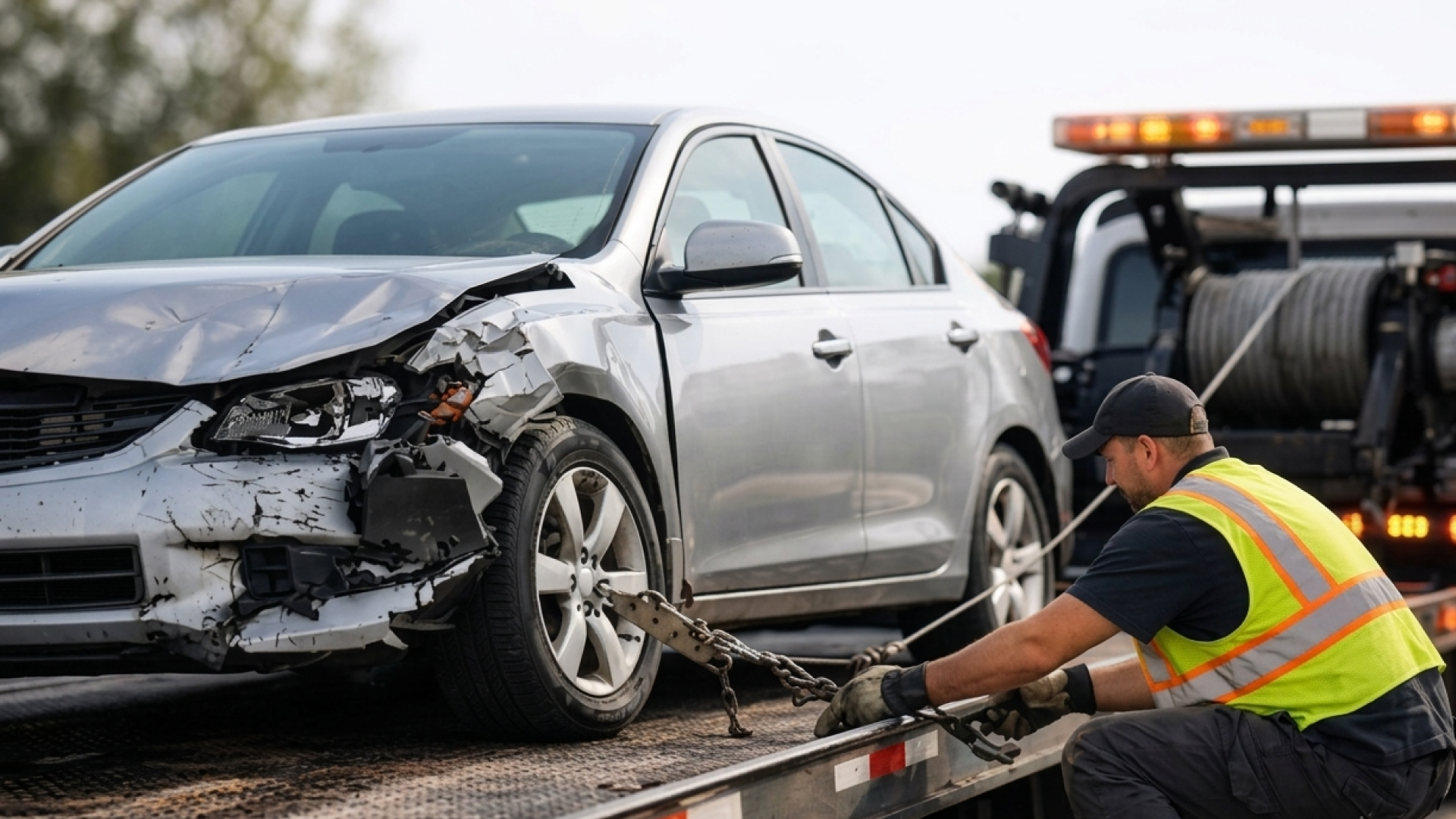
A damaged wheel can turn an ordinary breakdown into a serious towing problem. If your tire is shredded, the wheel is bent, the axle is damaged, or the vehicle has been involved in an accident, you may wonder whether a tow truck can safely move the car without making the damage worse.
In many cases, yes, a tow truck can move a vehicle with a damaged wheel. The exact towing method depends on what is damaged, whether the wheel can rotate, how the vehicle is positioned, and whether the car can be safely loaded onto the tow truck.
Trying to drive a vehicle with significant wheel or suspension damage can create additional risks. A professional towing operator can assess the situation and choose equipment designed to move the vehicle while minimizing unnecessary stress on the damaged components.
For drivers in Marrero, Harvey, Gretna, Westwego, and nearby Louisiana communities, understanding how damaged-wheel towing works can help you make a safer decision when your vehicle cannot be driven normally.
What Happens When a Car Has a Damaged Wheel?
A "damaged wheel" can mean several different things. The visible problem may be a flat or destroyed tire, but the underlying damage could involve the wheel rim, hub, axle, suspension, steering components, or brake assembly.
A tow operator needs to understand the type and location of the damage before deciding how to move the vehicle.
Common Types of Wheel Damage
Some situations are relatively straightforward, while others require specialized loading techniques.
Common examples include:
A completely flat or punctured tire
A bent or cracked wheel rim
A wheel that is no longer aligned correctly
Damage caused by hitting a curb or pothole
A broken axle or CV joint
Damaged steering or suspension components
A wheel that will not rotate
Accident-related wheel and undercarriage damage
A wheel that is partially detached or sitting at an unusual angle
A flat tire does not necessarily mean the wheel itself is damaged. In contrast, a bent rim or broken suspension component may make the vehicle unsafe to drive even if the tire still contains air.
Why the Type of Damage Matters
A vehicle with a simple flat tire may be able to receive roadside assistance and continue driving after the tire is repaired or replaced.
A vehicle with a severely bent wheel, broken axle, or damaged suspension is different. Moving it under its own power could cause further mechanical damage or create a loss-of-control hazard.
That is why the first question should not simply be, "Can a tow truck move it?" The better question is, "What towing method can move it without relying on the damaged wheel?"
Can a Tow Truck Move a Car if the Wheel Will Not Turn?
Yes, a tow truck may be able to move a vehicle even when one or more wheels cannot rotate normally.
The operator may use equipment that supports the affected part of the vehicle rather than forcing the damaged wheel to roll along the road.
The appropriate method depends on the vehicle's condition, drivetrain, weight, accessibility, and the location of the damage.
Flatbed Towing for Vehicles With Serious Wheel Damage
A flatbed towing truck carries the vehicle completely off the road. Instead of having the damaged vehicle roll behind the truck, the car is loaded onto a flat platform.
This can be particularly useful when a vehicle has:
Severe wheel damage
Suspension problems
Accident damage
Multiple damaged tires
A locked or non-rolling wheel
Drivetrain concerns
Significant undercarriage damage
With the entire vehicle supported on the flatbed, the operator does not have to depend on the damaged wheel to roll normally during transport.
Wheel-Lift Towing in Certain Situations
A wheel-lift tow truck raises part of the vehicle while the remaining wheels stay on the road. This method can be practical for certain towing situations, but it is not automatically appropriate for every vehicle with wheel damage.
If the wheel being lifted is badly damaged, the operator may need another approach. The vehicle's drivetrain and condition also need to be considered.
A professional operator can determine whether wheel-lift equipment is suitable or whether a flatbed is a safer choice.
How Is a Car With a Damaged Wheel Loaded Onto a Tow Truck?
Loading a damaged vehicle requires more care than loading a normally functioning car.
The operator first assesses the vehicle and surrounding area. This includes looking at the damaged wheel, the vehicle's position, available clearance, and whether the car can roll, steer, or move at all.
Step 1: Assess the Vehicle
The tow operator identifies visible damage and determines whether the wheels can rotate and whether the steering system is functional.
The operator may also consider:
Vehicle weight
Ground clearance
Drivetrain
Wheel position
Suspension damage
Accident damage
Road conditions
Available access around the vehicle
This assessment helps determine which equipment and loading technique are appropriate.
Step 2: Position the Tow Equipment
The truck is positioned as safely as practical based on the vehicle's location.
If the vehicle is on the side of a busy road, for example, the operator has to account for passing traffic and available working space. A vehicle in a driveway or parking lot may present a different set of challenges.
Step 3: Move or Winch the Vehicle if Necessary
If the damaged wheel prevents the vehicle from being driven onto a flatbed, a winch out may be used to pull the vehicle into position.
This is one reason professional towing equipment is valuable for disabled vehicles. The vehicle does not necessarily have to be operational for it to be loaded.
The operator uses appropriate attachment points and equipment based on the vehicle's construction and condition.
Step 4: Secure the Vehicle for Transport
Once loaded, the vehicle needs to be properly secured before transportation.
The operator checks that the vehicle is stable and that the securing method is appropriate for its position and condition.
A damaged wheel should not simply be treated like a normal functioning wheel. The condition of the vehicle determines how it should be handled.
Can You Drive a Car With a Damaged Wheel to a Repair Shop?
Sometimes, but not always.
If the issue is simply a repairable flat tire and the wheel itself is undamaged, roadside assistance may be enough. But driving becomes a different matter when the wheel, steering, suspension, axle, or brake system may be damaged.
Signs You Should Not Drive the Vehicle
Consider requesting light-duty towing instead of driving if you notice:
A wheel visibly bent or cracked
The tire is separated from the wheel
The vehicle pulls sharply to one side
Grinding or scraping comes from the wheel area
The steering wheel suddenly sits at an unusual angle
The vehicle shakes severely
A wheel appears tilted
The vehicle sits unusually low on one side
Fluid is leaking near the damaged area
The vehicle was involved in a collision
These signs can indicate problems that are not safely resolved by simply adding air to a tire.
Why a Short Drive Can Still Be a Problem
A repair shop may be only a few miles away, but distance does not determine whether a damaged vehicle is safe to drive.
A compromised wheel or suspension component can affect steering, braking, handling, and the vehicle's ability to maintain contact with the road.
If you are uncertain about the severity of the damage, explain what happened to the towing company before the truck arrives. Photos can also help the operator understand the situation when appropriate and safe to provide them.
Flat Tire vs. Damaged Wheel: What's the Difference?
These problems are often confused, but they are not the same.
A flat tire means the tire has lost air pressure. The cause could be a puncture, valve problem, sidewall damage, or another issue.
A damaged wheel usually refers to the metal or alloy rim itself being bent, cracked, or otherwise compromised.
A flat tire can sometimes be repaired or replaced on the roadside. A damaged wheel may require towing to a tire shop, repair facility, or collision center.
What If Both the Tire and Wheel Are Damaged?
This is more likely after a severe pothole impact, curb strike, or collision.
If the tire is destroyed and the rim is bent, the vehicle may not be able to roll normally. A flatbed tow truck can be a practical option because the vehicle can be transported without relying on the damaged wheel to function normally.
What Should You Tell the Tow Company?
Clear information can help the towing operator prepare for the situation.
When requesting service, describe what happened and what you can see.
Useful details include:
Your exact location and the direction you are traveling.
The vehicle's make, model, and approximate size.
Which wheel appears damaged.
Whether the vehicle can start.
Whether the vehicle can roll.
Whether the steering works normally.
Whether the vehicle was involved in an accident.
Whether the vehicle is in traffic, a driveway, a parking lot, or another location.
Any visible damage underneath the vehicle.
Whether the vehicle is carrying unusual loads or equipment.
If you are unsure whether the wheel, axle, or suspension is damaged, do not guess. Describe the symptoms you can actually see or feel.
What Should You Do While Waiting for a Tow Truck?
Your safety comes first.
If the vehicle is stopped in a dangerous location, move to a safer area only if you can do so without putting yourself at additional risk. Do not attempt to drive a vehicle that appears mechanically unsafe simply to get it out of the way.
Stay Away From Traffic When Possible
If you are on or near a busy roadway, remain in a safe location away from moving traffic whenever possible.
Use your hazard lights if the vehicle's electrical system is functioning.
If you are stopped somewhere particularly dangerous, tell the towing company about the traffic conditions when you request assistance.
Don't Attempt Makeshift Wheel Repairs
Avoid using improvised methods to hold a damaged wheel, suspension component, or axle in place.
A repair that appears temporary may not withstand the forces involved in moving the vehicle. Professional towing equipment is designed specifically for transporting disabled vehicles.
What Type of Tow Truck Is Best for a Damaged Wheel?
There is no single tow truck that is correct for every damaged-wheel situation.
A flatbed is often useful when the vehicle should not roll on its own wheels. Wheel-lift equipment may be suitable in other circumstances when the affected components and vehicle configuration allow it.
The decision should be based on the actual condition of the vehicle rather than simply its make or model.
When a Flatbed May Make Sense
A flatbed may be considered when:
The vehicle has severe wheel damage.
One or more wheels will not roll.
The vehicle has accident damage.
There is concern about additional drivetrain or suspension stress.
The vehicle needs to be transported without rolling normally.
For a disabled car that cannot safely support itself on its wheels, getting the vehicle completely onto the towing platform can simplify transportation.
Common Misconceptions About Damaged-Wheel Towing
"A Tow Truck Can't Move a Car if the Wheel Is Broken." Not necessarily. Professional towing equipment can be used to move many vehicles that cannot be driven normally.
"If the Tire Holds Air, the Car Is Safe to Drive." Not necessarily. A tire can hold air while the wheel, suspension, steering, axle, or other components remain damaged.
"The Tow Truck Can Just Pull the Car With the Damaged Wheel." The towing method should be selected based on the vehicle's condition. Forcing a damaged component to bear loads it cannot safely handle can create additional problems.
"All Wheel Damage Is the Same." It is not. A punctured tire, bent rim, broken axle, damaged suspension, and collision-related wheel damage can require very different approaches.
How Professional Towing Helps Protect a Damaged Vehicle
The purpose of professional towing is not simply to move a vehicle from one location to another. The vehicle needs to be handled according to its condition.
A trained tow operator considers how the vehicle can be loaded, supported, secured, and transported without unnecessarily stressing damaged components.
For drivers in Marrero, Harvey, Gretna, Westwego, and surrounding Louisiana areas, A&Z Towing LLC provides 24/7 towing and roadside assistance for situations including vehicle breakdowns, accidents, flat tires, dead batteries, lockouts, and vehicle recovery.
The company provides services including emergency towing, light-duty towing, flatbed towing, roadside assistance, and vehicle recovery. If you are requesting service for a damaged wheel, explain the problem when calling so the operator can understand the situation and determine what equipment may be appropriate.
What to Do After the Vehicle Reaches the Repair Shop
Once the vehicle arrives at a mechanic, tire shop, or collision repair facility, have the damaged components inspected before returning to normal driving.
Depending on the incident, the inspection may include the:
Tire
Wheel or rim
Hub and bearing
Brake components
Steering system
Suspension
Axle or CV joint
Undercarriage
Alignment
A visible wheel problem can sometimes be only part of the damage. An inspection helps identify issues that may not be obvious from outside the vehicle.
Key Takeaways for Drivers With a Damaged Wheel
If your vehicle has a damaged wheel, the safest next step depends on what actually happened.
Remember these points:
A tow truck can often move a vehicle even when a wheel is damaged.
Severe wheel or suspension damage may make driving unsafe.
A flatbed can be useful when the vehicle should not roll on its wheels.
A winch may help load a vehicle that cannot drive onto the tow truck.
Wheel-lift towing can be appropriate in some situations but not all.
Tell the towing company exactly what you can see and what happened.
Do not assume that a tire holding air means the vehicle is safe to drive.
Have the vehicle inspected after serious wheel or accident damage.
If you are stranded with a disabled vehicle, getting the right towing method matters more than simply getting the vehicle moving.
Conclusion
A damaged wheel does not automatically mean a vehicle cannot be moved by tow truck. Professional towing operators have equipment and loading methods designed for vehicles that cannot safely drive under their own power.
The key is understanding the type and severity of the damage. A flat tire may require roadside assistance, while a bent rim, broken axle, damaged suspension, or collision-related wheel problem may call for towing. In more serious situations, a flatbed can allow the entire vehicle to be transported without depending on the damaged wheel to roll normally.
If your vehicle is disabled in Marrero, Harvey, Gretna, Westwego, or a surrounding Louisiana area, describe the wheel damage and the vehicle's condition when requesting assistance. Accurate information helps the towing operator prepare for the situation and determine an appropriate way to move the vehicle.
Frequently Asked Questions
Can a tow truck move a car with a damaged wheel?
Yes. A tow truck can often move a vehicle with a damaged wheel, even when the vehicle cannot be driven normally. The appropriate towing method depends on whether the wheel rolls, the type of damage, the vehicle's condition, and how it can be safely loaded.
Can a car with a broken wheel be towed?
In many cases, yes. A vehicle with a broken or severely damaged wheel may need specialized loading equipment. A flatbed tow truck can be useful because the entire vehicle can be transported without relying on the damaged wheel to roll normally.
Is it safe to drive with a bent wheel?
A bent wheel can affect handling, tire performance, steering, and vehicle stability. If the wheel is visibly damaged or the vehicle is pulling, shaking, vibrating, or behaving differently, having it inspected and considering towing is safer than assuming it can be driven.
Can a tow truck move a car if one wheel won't turn?
Yes, depending on the vehicle and the type of damage. Towing equipment such as a winch can sometimes be used to load a non-rolling vehicle. The operator determines the appropriate method based on the damaged wheel, vehicle configuration, and surrounding conditions.
Is flatbed towing better for a car with wheel damage?
A flatbed can be particularly useful when a vehicle has serious wheel, suspension, axle, or accident damage because the vehicle can be transported on the platform. However, the appropriate towing method depends on the specific condition of the vehicle.
Can a flatbed tow truck pick up a car that cannot move?
A flatbed tow truck can often load a vehicle that cannot drive. If the vehicle cannot roll onto the platform, towing equipment such as a winch may be used to assist with loading, depending on the vehicle's condition and accessibility.
What information should I give a tow truck operator about a damaged wheel?
Tell the operator which wheel appears damaged, whether the vehicle can start and roll, whether the steering works, what caused the damage, and where the vehicle is located. Mentioning accident damage or a wheel that will not turn can also help the operator prepare.
Can roadside assistance help with a damaged wheel?
Roadside assistance may help with certain wheel and tire problems, such as a flat tire. If the wheel, suspension, axle, steering system, or other mechanical components are damaged, towing may be necessary instead of a roadside repair.
Can a car with accident-related wheel damage be towed?
Yes. Accident-damaged vehicles can often be transported by tow truck, but the loading method depends on the extent of the damage. A vehicle with damaged wheels, suspension, steering, or undercarriage may require careful loading and specialized towing equipment.
What should I do if my wheel is damaged on a Louisiana road?
Move to a safe location if you can do so without driving an unsafe vehicle, turn on your hazard lights when possible, and request professional assistance. Tell the towing provider your exact location and describe the wheel damage so the operator can prepare for the vehicle's condition.