How Do Tow Operators Safely Load a Disabled Vehicle?
Introduction
A disabled vehicle can be difficult to move, especially after a collision, mechanical failure, flat tire, or roadside breakdown. What looks like a simple towing job often requires careful assessment before the vehicle is loaded. A tow operator has to consider the vehicle’s condition, weight, drivetrain, steering, wheels, ground clearance, and the safest way to secure it for transport.
So, how do tow operators safely load a disabled vehicle? The process usually starts before the tow truck touches the car. The operator evaluates the scene, determines whether the vehicle can roll, selects appropriate equipment, positions the truck carefully, and uses rated attachment and securing points. If the vehicle cannot roll normally or is damaged, additional recovery equipment may be needed.
Safe loading protects the vehicle, the tow operator, other road users, and the destination property. It also helps prevent avoidable damage to bumpers, suspension components, wheels, body panels, steering systems, and other parts.
For drivers in Marrero, Harvey, Gretna, Westwego, and nearby Louisiana communities, understanding this process can make an unexpected towing situation less stressful. It also helps explain why a professional tow may take more preparation than simply attaching a vehicle and driving away.
What Does Safely Loading a Disabled Vehicle Mean?
Safely loading a disabled vehicle means positioning and securing the vehicle on towing equipment in a way that keeps it stable during movement while minimizing the risk of additional damage.
The correct procedure depends heavily on the condition of the vehicle. A normally functioning car with a dead battery may be relatively straightforward to load, while a collision-damaged vehicle with locked wheels, damaged steering, or missing suspension components can require specialized vehicle recovery techniques.
A tow operator typically evaluates several factors:
Whether the vehicle can roll freely
Whether the steering system works
Whether the wheels and tires are usable
Whether the drivetrain can tolerate the towing method
Whether the vehicle has collision damage
Vehicle size and approximate weight
Available clearance beneath the vehicle
Road and traffic conditions
Appropriate attachment and securing points
The goal is not simply to get the vehicle onto the truck. The goal is to load it in a controlled manner and secure it properly for transportation.
How Tow Operators Prepare Before Loading
Assessing the Scene
The first step is often a visual assessment. The operator looks at the vehicle and its surroundings before selecting a loading method.
A car stopped on a quiet residential street presents different challenges from one sitting in a busy traffic lane. The operator may need to account for passing traffic, uneven pavement, limited space, nearby objects, and the position of the disabled vehicle.
If the vehicle was involved in an accident, the operator also looks for visible damage that could affect loading. A damaged wheel, leaking fluid, broken suspension component, or compromised body structure may change the recovery approach.
Determining Whether the Vehicle Can Roll
A vehicle that rolls and steers normally is generally easier to load than one with locked wheels or significant damage.
The operator checks whether the wheels can move and whether the vehicle can be positioned safely. If the wheels are locked, damaged, or unable to support the vehicle properly, equipment such as wheel dollies or other specialized recovery tools may be necessary.
Choosing the Right Tow Equipment
Different disabled vehicles call for different towing methods. Common equipment includes flatbed towing trucks, wheel-lift systems, winches, straps, chains where appropriate, and specialized recovery equipment.
The choice is based on the vehicle and situation rather than simply using whichever method is available.
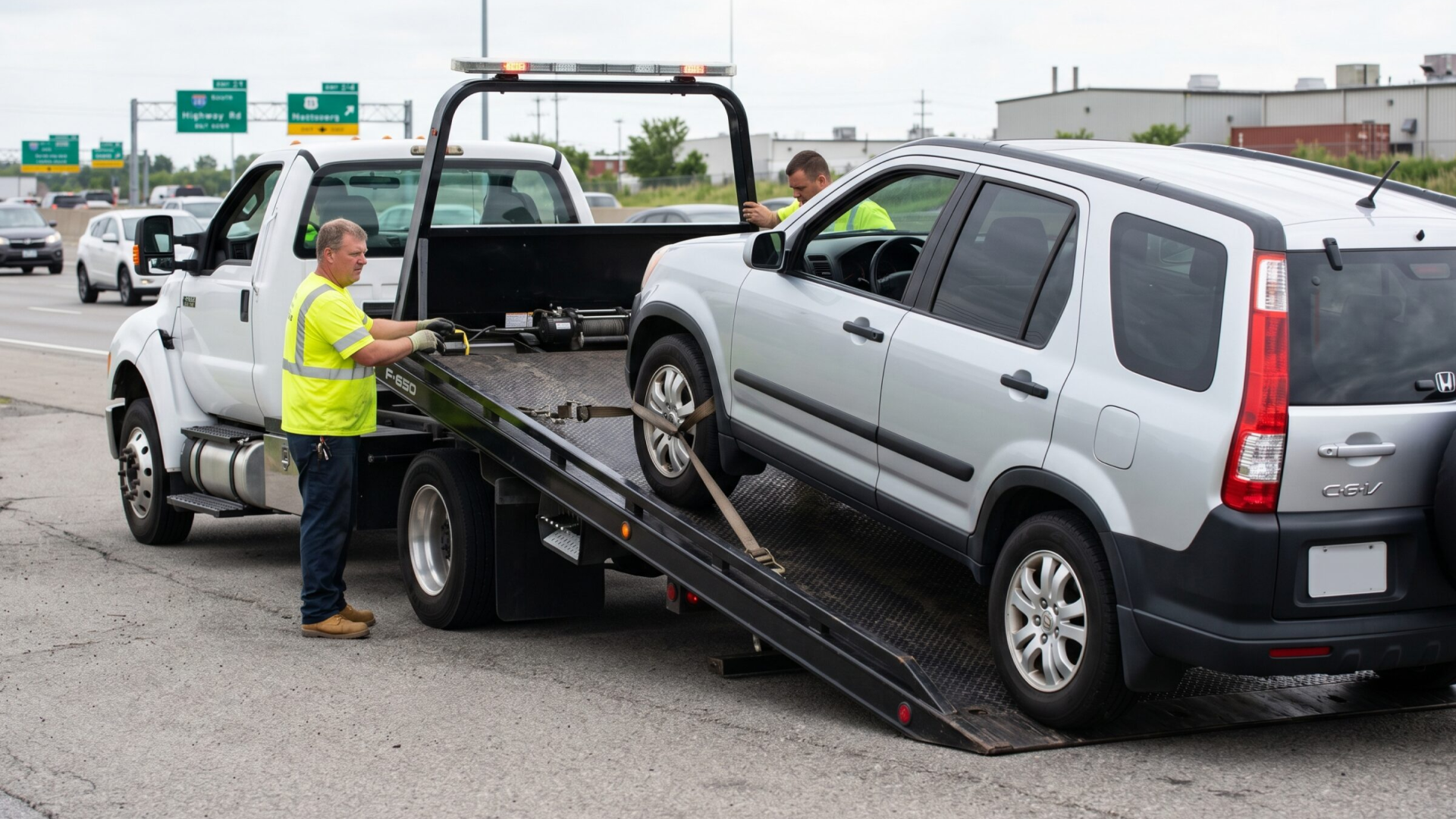
How a Flatbed Tow Truck Loads a Disabled Vehicle
Positioning the Tow Truck
With a flatbed, the truck is positioned so the loading surface can be deployed safely. The operator needs adequate space around the truck and vehicle before beginning the process.
The operator also considers the angle between the vehicle and the bed. A poor approach angle can make loading harder and may increase the risk of scraping or contacting damaged components.
Lowering the Flatbed
The flatbed is then tilted or lowered according to the truck's design. This creates a ramp-like path between the ground and the bed.
The exact procedure varies by equipment, but the principle remains the same: create a controlled path for the disabled vehicle rather than forcing it onto the truck.
Using the Winch
If the vehicle cannot move under its own power, the truck's winch can pull it onto the bed at a controlled rate.
The operator selects an appropriate attachment point and maintains control throughout the loading process. If the wheels are not rolling normally, additional equipment may be required to prevent damage.
A winch is not simply a replacement for driving the vehicle onto the truck. The operator still needs to understand the vehicle's condition and choose an appropriate attachment method.
Centering the Vehicle on the Bed
Once the vehicle reaches the flatbed, the operator positions it appropriately on the loading surface.
Proper positioning helps maintain stability and allows the vehicle to be secured correctly. The operator checks that the vehicle is sitting in a suitable position before preparing it for transport.
Securing the Vehicle
The vehicle is then secured using appropriate rated restraints and attachment points.
The securing process is a critical part of towing. A vehicle that is physically on the truck but inadequately restrained is not ready for safe transportation.
The operator checks the restraints and confirms that the vehicle is stable before moving the truck.
How Wheel-Lift Towing Works
What Is a Wheel-Lift System?
A wheel-lift system raises one end of a vehicle while the other end remains on the road. It is commonly used for vehicles that are suitable for this towing method and whose condition allows them to be safely moved.
The operator positions the lifting equipment around the appropriate wheels and raises the vehicle in a controlled manner.
Checking Wheel and Tire Condition
The condition of the tires and wheels matters. A severely damaged wheel or tire may not be suitable for supporting the vehicle during towing.
If a wheel cannot safely bear the load, the operator may need to use different equipment or a different towing method.
Considering the Drivetrain
The vehicle's drivetrain can also influence towing decisions. Front-wheel-drive, rear-wheel-drive, and all-wheel-drive vehicles can have different towing requirements.
The operator considers manufacturer recommendations and the condition of the vehicle before selecting a towing method. For some vehicles, a flatbed towing service may be the better option.
What Happens If the Vehicle Cannot Roll?
A vehicle that cannot roll normally presents a more complicated loading situation.
The problem may be caused by:
Locked brakes
A damaged tire
Bent or broken suspension
Steering failure
Collision damage
A mechanical failure
A vehicle stuck in mud or another difficult surface
In these cases, the operator may use a winch, wheel dollies, recovery straps, or other appropriate equipment.
Using Wheel Dollies
Wheel dollies can support wheels that cannot roll normally. They may be useful when a vehicle has a locked wheel or another condition that prevents conventional loading.
The operator positions the equipment carefully so the disabled wheel can be supported while the vehicle is moved.
Loading a Vehicle With Collision Damage
Accident-damaged vehicles require additional caution. Parts that appear stable may be damaged underneath, and body panels can interfere with accident towing equipment.
An operator may need to identify safe points for attaching equipment and avoid components that could bend, break, or cause further damage.
If the vehicle is severely damaged, the job may move beyond a standard tow and become a vehicle recovery operation.
Why Attachment Points Matter
One of the most important parts of safe loading is choosing an appropriate attachment point.
Tow operators should not simply attach equipment to any convenient part of the vehicle. Certain suspension, steering, bumper, or body components may not be designed to withstand pulling forces.
Using Appropriate Recovery Points
Vehicle manufacturers may provide designated towing or recovery points. Professional operators use their knowledge of the vehicle and the situation to determine appropriate attachment methods.
This becomes especially important when a vehicle has been damaged in an accident.
Avoiding Unnecessary Vehicle Damage
Incorrect attachment can cause problems such as bent components, damaged bodywork, or stress on parts that were never designed to carry towing loads.
A careful operator considers where the force will be applied and how the vehicle will respond while being loaded.
How Tow Operators Protect the Vehicle During Transport
Loading is only one part of the job. The vehicle must remain secure after it reaches the truck.
Checking the Vehicle's Position
The operator checks that the vehicle is positioned appropriately before securing it. A vehicle sitting too close to an edge or in an unsuitable position may create unnecessary risk during transportation.
Using Proper Restraints
Appropriate restraints are selected based on the towing equipment and vehicle.
The operator checks the restraints after installation and makes sure the vehicle cannot shift excessively during normal transport.
Checking Clearance
Ground clearance matters, particularly with lowered vehicles, damaged bumpers, vehicles with suspension problems, and cars with body parts hanging below their normal position.
The operator checks for possible contact with the towing equipment and road surface.
Performing a Final Inspection
Before leaving, the operator performs a final check of the vehicle and equipment. This may include inspecting attachment points, restraints, wheel positioning, bed position, lights, and surrounding clearance.
That final inspection provides an important opportunity to catch a problem before the tow truck enters traffic.
Standard Towing vs. Vehicle Recovery
Standard towing and vehicle recovery are related, but they are not always the same job.
Standard Towing
Standard towing generally involves moving a vehicle that can be safely loaded using conventional towing equipment. Examples include a car with a mechanical breakdown, dead battery, flat tire, or other problem that leaves it unable to continue driving.
Vehicle Recovery
Vehicle recovery is more involved when the vehicle is stuck, overturned, significantly damaged, off the roadway, or otherwise difficult to access.
Recovery may involve winching, specialized rigging, controlled pulling, stabilization, or other equipment.
The distinction matters because a vehicle that looks like a simple tow may require additional equipment if it cannot roll, steer, or support itself normally.
Common Mistakes Drivers Should Avoid During Loading
Drivers can help make the towing process safer by avoiding actions that interfere with the operator's work.
Do Not Try to Help Push Without Instructions: A driver may instinctively want to push a disabled vehicle. That can create unnecessary risk, particularly near traffic or if the vehicle has steering or brake problems. Wait for the tow operator's instructions.
Do Not Stand Between the Vehicle and Tow Truck: The area around a vehicle being winched or moved can be hazardous. Stay clear of the loading path and follow the operator's directions.
Remove Loose Personal Items: If practical, secure loose belongings inside the vehicle before transport. Items left unsecured can move during towing.
Tell the Operator About Known Problems: If you know the vehicle has a locked wheel, damaged suspension, steering issue, missing key, or other problem, tell the operator before loading begins. Even a small detail can affect the safest loading method.
What Drivers Should Expect During a Professional Tow
A professional towing process may look slower than expected because the operator is taking time to assess the situation.
That preparation serves a purpose. The operator needs to determine how the vehicle should be approached, which equipment is appropriate, where it can be attached safely, and how it should be secured.
For example, imagine a sedan that stops running on a busy Marrero road. If the car rolls, steers, and has no visible damage, loading may be relatively straightforward. If the same car has a locked front wheel after an accident, the operator may need a different procedure.
The visible problem may be the same—"the car won't move"—but the safe loading method can be completely different.
Best Practices for Safe Vehicle Loading
Professional towing depends on controlled procedures rather than rushing the job.
Key practices include:
Assess the vehicle before moving it.
Consider traffic and surrounding hazards.
Select equipment suited to the vehicle and its condition.
Use appropriate attachment points.
Avoid damaged components that cannot safely handle pulling forces.
Keep the vehicle properly positioned on the towing equipment.
Use appropriate restraints.
Check clearance and stability before departure.
Perform a final inspection before entering traffic.
Follow vehicle-specific towing recommendations when applicable.
These practices apply whether the vehicle needs emergency towing, light-duty towing, flatbed transportation, or more specialized recovery.
How Technology and Equipment Support Safer Towing
Modern towing equipment gives operators more options for handling disabled vehicles.
Flatbeds provide a useful method for transporting vehicles that should not be dragged with their wheels on the roadway. Wheel-lift systems allow operators to move suitable vehicles while keeping one axle elevated. Winches provide controlled pulling power when a vehicle cannot move under its own power.
The equipment itself, however, is only part of safe towing. Proper selection, positioning, attachment, and operation are equally important.
A sophisticated truck does not eliminate the need for an experienced assessment of the vehicle and scene.
Practical Takeaways for Drivers
If you need a tow, a few simple steps can make the loading process easier.
Before the Tow Truck Arrives
If you can do so safely:
Move away from moving traffic.
Turn on hazard lights.
Tell the towing company your exact location.
Explain whether the vehicle rolls and steers.
Mention accident damage or mechanical problems.
Tell the operator if the wheels are locked.
Keep passengers in a safe location.
Never put yourself in danger just to make the vehicle easier to load.
When the Operator Arrives
Give the operator any information you have about the vehicle. Then allow the operator to assess the safest loading approach.
You may see the operator spend time looking underneath the vehicle, checking wheels, positioning the truck, or preparing equipment. Those steps are part of a controlled loading process.
Why Safe Loading Matters for Roadside Assistance
Roadside assistance is not only about getting a vehicle from one place to another. It is also about managing an unexpected roadside situation safely.
A&Z Towing LLC provides 24/7 towing and roadside assistance for drivers in Marrero, Harvey, Gretna, Westwego, and surrounding Louisiana areas. Services include emergency towing, light-duty towing, flatbed towing, vehicle recovery, and roadside assistance for situations such as breakdowns, accidents, flat tires, lockouts, and dead batteries.
For a disabled vehicle, the right towing method depends on what happened and what condition the vehicle is in. Professional assessment helps determine whether the vehicle should be winched onto a flatbed, lifted with a wheel-lift system, supported with additional equipment, or handled as a recovery.
Conclusion
Safely loading a disabled vehicle requires more than connecting a tow line and pulling. Tow operators first assess the vehicle, the surrounding conditions, and the type of equipment required. They then select suitable attachment points, load the vehicle in a controlled manner, position it correctly, secure it, and perform a final inspection before transport.
The safest method can vary significantly from one vehicle to another. A car with a simple mechanical breakdown may be easy to load, while a collision-damaged or stuck vehicle may require a flatbed, winch, wheel dollies, or specialized recovery equipment.
For drivers, the most useful thing to remember is simple: tell the operator what is wrong with the vehicle, stay clear of the loading area, and let the professional determine how the vehicle should be moved.
Understanding the loading process also helps explain why professional towing involves careful preparation. The objective is not just to move a disabled vehicle—it is to move it in a controlled manner while reducing the risk of additional damage and keeping the roadside environment as safe as reasonably possible.
Frequently Asked Questions
1. How do tow operators safely load a disabled vehicle?
Tow operators first assess the vehicle's condition, wheels, steering, drivetrain, damage, and surroundings. They then select suitable equipment, position the vehicle correctly, use appropriate attachment points, load it carefully, and secure it before transportation.
2. Can a tow truck load a car that does not start?
Yes. A vehicle does not necessarily need to run to be loaded. Depending on whether its wheels and steering work, the operator may use a flatbed, winch, wheel-lift system, or additional equipment to move the vehicle safely.
3. Is flatbed towing safer for a damaged vehicle?
A flatbed can be an appropriate option for many damaged or disabled vehicles because the vehicle can be transported entirely on the bed. The operator still needs to evaluate the damage and determine the safest loading method.
4. What happens if a vehicle's wheels are locked?
Locked wheels can make conventional loading difficult. A tow operator may use wheel dollies, a winch, or other suitable equipment to move the vehicle without forcing damaged or locked wheels to roll.
5. Can a tow operator load a car after an accident?
Yes, but accident-damaged vehicles may require additional assessment. Broken suspension, damaged wheels, steering problems, leaking fluids, or structural damage can affect how the vehicle should be loaded and transported.
6. Why does a tow operator inspect the vehicle before loading?
The inspection helps identify conditions that could affect safe loading. The operator needs to know whether the vehicle rolls and steers, where equipment can be attached, what towing method is appropriate, and whether additional recovery equipment is needed.
7. How is a vehicle secured after it is loaded onto a tow truck?
The operator uses appropriate restraints and attachment methods suited to the towing equipment and vehicle. The vehicle is positioned properly, restraints are checked, and a final inspection is performed before transportation.
8. What is the difference between towing and vehicle recovery?
Towing generally involves transporting a vehicle that can be loaded using conventional equipment. Recovery is typically more complicated and may involve a stuck, overturned, severely damaged, or difficult-to-access vehicle requiring winching or specialized equipment.
9. What should I tell a towing company before the truck arrives?
Provide your location and explain whether the vehicle starts, rolls, and steers. Mention flat tires, locked wheels, accident damage, steering problems, unusual positioning, or anything else that could affect how the vehicle needs to be loaded.
10. What should I do while my disabled vehicle is being loaded?
Stay in a safe location away from traffic and the loading area. Follow the tow operator's instructions and do not stand near winch lines, between the vehicle and tow truck, or in the vehicle's path while it is being moved.