How Does a Tow Truck Handle a Vehicle That Cannot Be Driven?
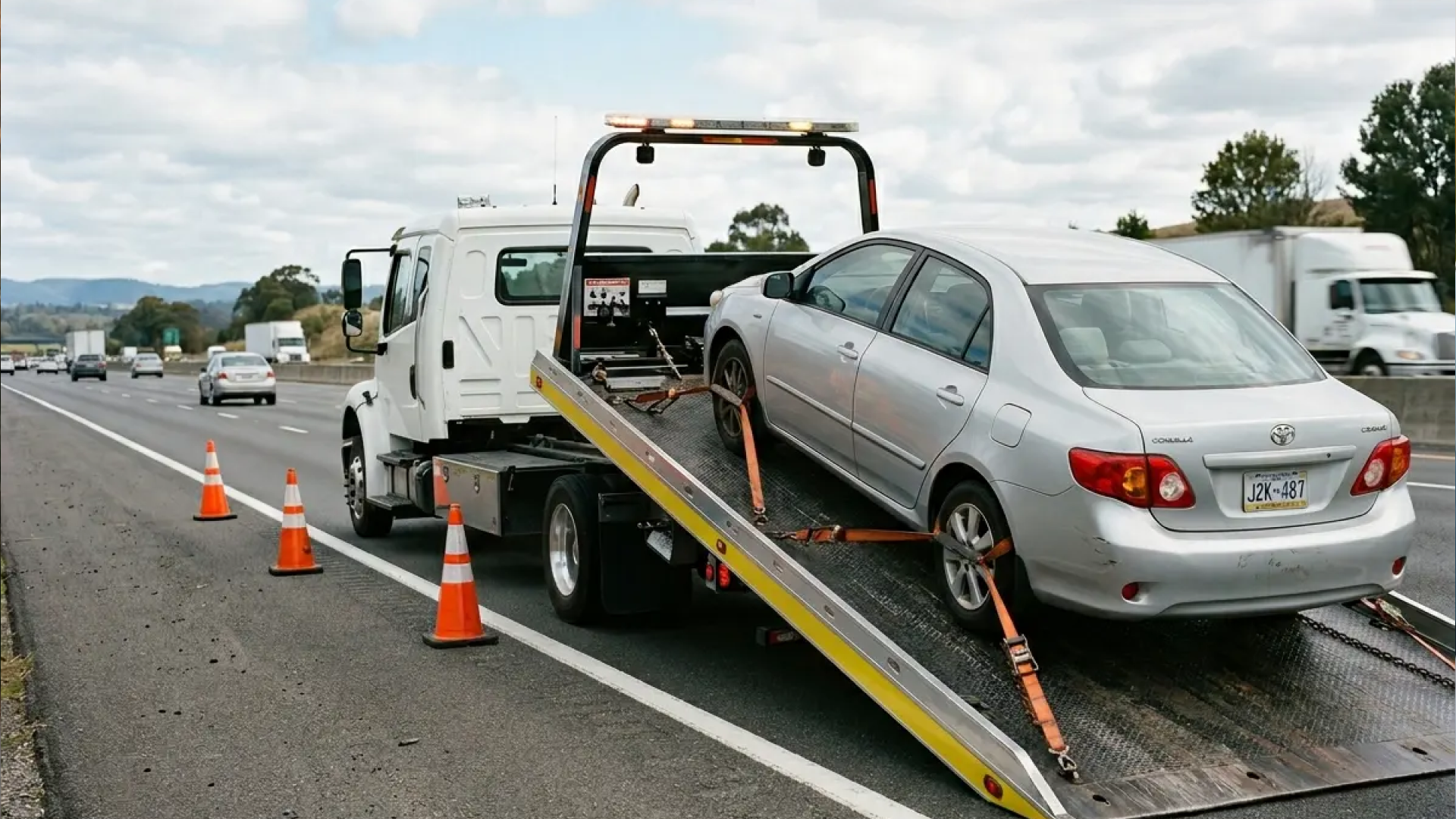
Introduction
A vehicle that cannot be driven creates a different towing situation from a car that simply needs a short-distance tow. After a collision, serious mechanical failure, flat tire, damaged suspension, dead battery, or off-road recovery, the vehicle may not be able to roll, steer, brake, or safely move under its own power. Trying to drive it anyway can cause additional damage or put the driver and other road users at risk.
So, how does a tow truck handle a vehicle that cannot be driven?
The answer depends on the vehicle's condition, location, weight, drivetrain, damage, and whether its wheels can roll normally. A professional tow operator first evaluates how the vehicle can be moved safely. The truck may use a wheel-lift, flatbed, winch, recovery equipment, or another appropriate method to load and transport the vehicle.
For drivers in Marrero, Harvey, Gretna, Westwego, and surrounding Louisiana areas, understanding this process can make a stressful roadside emergency easier to manage. It also helps explain why a tow truck operator may spend time assessing a vehicle before loading it.
What Does “Cannot Be Driven” Mean?
A vehicle is considered non-drivable when it cannot safely travel on the road under its own power.
That does not always mean the engine is completely dead. A vehicle might start and run but still be unsafe to drive because of damage to the wheels, suspension, steering, brakes, body, or drivetrain.
Common examples include:
A car involved in an accident with damaged wheels or suspension
A vehicle with a failed transmission or major engine problem
A car that will not start because of a serious mechanical issue
A vehicle with a severely damaged or missing tire
A car with steering or braking problems
A vehicle stuck in mud, soft ground, or a ditch
A vehicle that cannot roll freely because of drivetrain or wheel damage
A disabled vehicle positioned in a location where driving it would create a safety hazard
The key distinction is operational ability versus safe operation. If a vehicle technically moves but cannot be controlled safely, it should be treated as non-drivable.
How Does a Tow Truck Handle a Non-Drivable Vehicle?
The towing process usually starts with an assessment rather than immediately connecting a vehicle to the tow truck.
The operator needs to determine what happened, where the vehicle is located, whether it can roll, and which parts of the vehicle may be damaged. This information helps determine the safest loading method.
Step 1: The Tow Operator Assesses the Vehicle
Before loading, the operator looks at the vehicle's condition and surroundings.
Important factors can include:
Whether the engine starts
Whether the transmission is functioning
Whether the wheels turn
Whether the tires are inflated
Whether the steering works
Whether the brakes can be used
Whether the vehicle has collision damage
Whether the vehicle is in a ditch, on soft ground, or another difficult position
Whether there is enough space for the tow truck to approach
A vehicle with damaged steering, suspension, or wheels may require a different approach from one that simply has a dead battery.
Step 2: The Operator Determines the Loading Method
Once the condition is understood, the operator selects equipment suitable for the situation.
For many disabled cars and SUVs, common options include a flatbed tow truck or wheel-lift tow truck.
A flatbed provides a platform onto which the entire vehicle can be loaded. A wheel-lift raises part of the vehicle while the remaining wheels stay on the ground or on appropriate towing equipment.
The choice depends on the vehicle and circumstances rather than simply using the same method for every call.
Step 3: The Vehicle Is Positioned for Loading
A non-drivable vehicle may not be able to move into the ideal position by itself.
That is where towing and recovery equipment becomes useful.
If the vehicle can roll but cannot drive, the operator may position it using appropriate towing equipment. If the vehicle cannot roll normally, a winch or other recovery equipment may be necessary to move it onto the tow truck.
The operator also has to consider surrounding traffic, obstacles, the road surface, and the vehicle's final destination.
Step 4: A Winch May Be Used When the Vehicle Cannot Move
A winch is particularly useful when a vehicle cannot be driven onto a tow truck under its own power.
For example, imagine a car that has been involved in an accident and has a damaged front wheel. The engine may still run, but the damaged wheel prevents the driver from safely steering or driving the vehicle.
Instead of asking the driver to operate the damaged car, a tow operator can use suitable recovery equipment to position the vehicle for loading.
Winching must be performed carefully. The attachment point, direction of movement, surrounding space, and condition of the vehicle all matter.
Step 5: The Vehicle Is Secured for Transport
After the vehicle has been loaded, it must be secured appropriately before transportation.
The operator checks that the vehicle is positioned correctly and that the necessary restraints are properly applied.
This step matters because transportation is not simply about getting a disabled vehicle onto a truck. The vehicle must remain stable during movement, including when the tow truck accelerates, brakes, turns, or travels over uneven road surfaces.
Why Is a Flatbed Tow Truck Often Used for Non-Drivable Vehicles?
A flatbed tow truck carries the vehicle on a level platform rather than towing it with some wheels remaining on the road.
This can be useful when a vehicle has significant damage or cannot safely roll.
Flatbed towing may be appropriate for situations involving:
Accident-damaged vehicles
Vehicles with serious wheel or suspension damage
Vehicles that cannot be driven
Certain all-wheel-drive or specialty vehicles
Vehicles requiring additional protection during transport
Cars that need to be moved without placing their wheels on the road
A flatbed is not automatically required for every disabled vehicle. The appropriate towing method depends on the specific vehicle and its condition.
What Happens if the Vehicle Cannot Roll?
A vehicle that cannot roll presents an additional loading challenge.
The tow operator may use a winch and other suitable equipment to move the vehicle onto the truck. The exact process depends on why the vehicle cannot roll.
For example, locked wheels, severe collision damage, a damaged suspension component, or a vehicle stuck in soft ground can each require different handling.
The objective is to move the vehicle without unnecessarily worsening the existing damage.
How Are Accident-Damaged Vehicles Loaded?
Accident scenes can be particularly complicated because the vehicle may have damage that is not immediately obvious.
A car involved in a collision might have a damaged bumper and also have hidden steering, suspension, wheel, or underbody damage.
The tow operator needs to account for those conditions before attempting to move it.
Damaged Wheels or Suspension
If a wheel is badly damaged or the suspension is compromised, driving the vehicle can be unsafe.
The vehicle may need to be loaded using a method that avoids placing unnecessary stress on the damaged components.
Vehicles With Body Damage
Body panels can interfere with normal loading points or equipment placement.
A careful operator considers the vehicle's damaged areas before positioning towing equipment.
Vehicles in Unsafe Road Positions
An accident vehicle may also be sitting partly in a travel lane, shoulder, intersection, or another hazardous location.
The priority is to handle the vehicle without creating additional danger for the driver, tow operator, or passing traffic.
What Happens When a Vehicle Is Stuck in a Ditch or Soft Ground?
Not every non-drivable vehicle is sitting neatly on a paved road.
A vehicle can become stuck in mud, soft soil, a ditch, or another difficult area. In these situations, ordinary towing may not be enough.
Vehicle recovery focuses on getting the vehicle out of its current position before it can be transported.
Recovery Comes Before Transportation
If a vehicle is buried in mud or positioned in a ditch, the first objective may be to recover it to a location where it can be safely loaded.
The operator evaluates the vehicle's position, ground conditions, available access, and the equipment required.
Depending on the circumstances, recovery may involve controlled winching or other suitable recovery techniques.
Why Drivers Should Avoid Spinning the Wheels
A common reaction to getting stuck is to keep accelerating in an attempt to escape.
That can sometimes make the situation worse by causing the tires to dig deeper into soft ground.
If the vehicle is already severely stuck, continued attempts to drive out can also increase stress on the drivetrain or tires.
Once it becomes clear that the vehicle cannot safely free itself, professional recovery assistance can help reduce unnecessary damage.
What If the Engine Runs but the Vehicle Still Cannot Be Driven?
A running engine does not automatically make a vehicle safe to drive.
Consider a vehicle with a functioning engine but a damaged steering component. The engine can run normally, yet the vehicle may not be controllable.
The same principle applies to serious brake problems, damaged wheels, certain transmission failures, and other mechanical conditions.
A tow operator evaluates the vehicle based on its ability to move safely, not simply whether the engine starts.
Common Misconceptions About Non-Drivable Vehicles
“If the engine starts, I can drive it.” Not necessarily. A running engine does not guarantee that the steering, brakes, wheels, suspension, or drivetrain are safe.
“A tow truck can just pull any vehicle onto the road.” Recovery requires planning. A vehicle stuck in mud or damaged in an accident may need controlled positioning and specialized equipment before it can be transported.
“Flatbed towing is only for luxury vehicles.” Flatbeds can be used for many types of vehicles and situations. Their usefulness depends on the condition and transportation requirements of the vehicle.
“I should try driving the vehicle onto the tow truck.” That depends entirely on the vehicle's condition. If it cannot be safely driven, the operator may use a winch or another method rather than asking the driver to operate it.
What Should You Tell a Tow Company Before It Arrives?
Accurate information helps the towing operator prepare for the situation.
When requesting towing or roadside assistance, explain:
Your exact or approximate location.
The type of vehicle you have.
Whether the engine starts.
Whether the vehicle can roll.
Whether the wheels or tires are damaged.
Whether the vehicle was involved in an accident.
Whether it is stuck in mud, a ditch, or another difficult location.
Whether the vehicle is blocking traffic.
Whether anyone is injured or needs emergency assistance.
Photos can also be useful when it is safe to take them. A clear description of the vehicle's position and condition can help the towing company understand what equipment may be needed.
How to Stay Safe While Waiting for a Tow Truck
Your safety should come before attempting to repair or move a seriously damaged vehicle.
If the vehicle is in a dangerous traffic position, follow appropriate emergency procedures and move to a safe location when possible.
Useful precautions include:
Turn on hazard lights when appropriate.
Stay away from moving traffic.
Do not stand behind or directly beside a vehicle in an active traffic lane.
Avoid attempting repairs in an unsafe location.
Do not keep driving a vehicle that has serious mechanical or collision damage.
Tell the tow operator about hazards when they arrive.
If there is an immediate threat to life or a serious collision emergency, contact emergency services.
How A&Z Towing Helps With Non-Drivable Vehicles
A&Z Towing LLC provides 24/7 towing and roadside assistance for drivers in Marrero, Harvey, Gretna, Westwego, and surrounding Louisiana areas.
Its services include emergency towing, light-duty towing, flatbed towing, vehicle recovery, and roadside assistance for common problems such as breakdowns, accidents, flat tires, lockouts, and dead batteries.
For a vehicle that cannot be driven, the appropriate service depends on its condition and location. A damaged vehicle may require towing, while a vehicle stuck in a ditch or soft ground may first require recovery.
The practical goal is straightforward: determine what the vehicle needs, use appropriate equipment, and transport it safely to the requested destination. Contact us or learn more about us to get assistance today.
Practical Takeaways for Drivers
If your vehicle cannot be driven, do not assume that the solution is simply to pull it behind a tow truck.
The safest approach is to:
Stop driving if the vehicle is unsafe.
Move yourself away from traffic when possible.
Explain the vehicle's condition clearly when requesting assistance.
Mention accident damage, wheel damage, steering problems, or unusual positioning.
Tell the towing company if the vehicle is stuck or cannot roll.
Let the tow operator determine the appropriate loading method.
Avoid forcing a damaged vehicle to move under its own power.
Make sure the vehicle is properly secured before transportation.
Knowing these basics can make a roadside emergency less confusing and help you communicate effectively with the towing professional.
Conclusion
A vehicle that cannot be driven may require much more than a simple tow. The operator must first understand why the vehicle is immobile, whether it can roll, what components are damaged, where it is positioned, and which towing or recovery method is appropriate.
Depending on the circumstances, the process may involve a wheel-lift, flatbed, winch, or recovery equipment. Accident-damaged vehicles, vehicles with wheel or suspension problems, and vehicles stuck in mud or ditches may require additional care before transportation begins.
The most important thing for the driver is not to force a vehicle to move when doing so could cause additional damage or create a safety risk. Providing accurate information to the towing company allows the operator to prepare for the situation and select an appropriate approach.
For drivers in Marrero, Harvey, Gretna, Westwego, and nearby Louisiana communities, A&Z Towing LLC provides 24/7 towing and roadside assistance for vehicles dealing with breakdowns, accidents, and other roadside emergencies.
Frequently Asked Questions
Can a tow truck move a vehicle that does not start?
Yes. A vehicle that does not start can often be loaded using appropriate towing equipment. Depending on whether the vehicle can roll, a wheel-lift, flatbed, winch, or another suitable method may be used.
Can a tow truck move a car with a damaged wheel?
A vehicle with a damaged wheel may still be towable, but it should not automatically be driven onto the tow truck. The operator can assess the damage and determine an appropriate loading method that limits additional stress on the damaged area.
Is flatbed towing suitable for a completely non-drivable car?
Flatbed towing can be suitable for many non-drivable vehicles because the vehicle can be transported on the truck's platform. The operator determines whether a flatbed is appropriate based on the vehicle's condition, weight, damage, and location.
What happens if my vehicle cannot roll?
If a vehicle cannot roll normally, the tow operator may need to use a winch or other recovery equipment to position it for loading. The method depends on why the wheels cannot roll and the vehicle's surroundings.
Can a tow truck recover a vehicle stuck in mud or a ditch?
Yes, vehicle recovery equipment can be used in many situations involving mud, soft ground, or ditches. The operator first evaluates the vehicle's position and ground conditions before determining how to recover and transport it.
Should I drive my car if the engine starts but the vehicle is damaged?
Not necessarily. A vehicle can have a running engine while still having unsafe steering, braking, suspension, wheel, or drivetrain problems. If you cannot confidently control the vehicle safely, professional towing is a safer option.
What information should I give a towing company about a non-drivable vehicle?
Provide your location, vehicle type, whether the engine starts, whether the wheels roll, and any known damage. Also mention accidents, ditches, mud, blocked traffic lanes, or other conditions that could affect how the vehicle needs to be recovered.
Does emergency towing include vehicles damaged in accidents?
Emergency towing commonly includes assistance for vehicles that become disabled after collisions, although the exact towing method depends on the vehicle's condition and location. Accident scenes may require careful handling because steering, wheels, suspension, or other components can be damaged.
What should I do while waiting for a tow truck on a busy road?
Turn on hazard lights when appropriate and move away from moving traffic if it is safe to do so. Avoid standing near the disabled vehicle in an active traffic lane and do not attempt repairs in a dangerous location.
Does roadside assistance help with problems other than towing?
Roadside assistance can address several common problems, including dead batteries, flat tires, lockouts, and other situations where a driver needs help at the roadside. If the vehicle cannot be safely repaired or driven, towing may be necessary.