What Should You Do If Your Vehicle Becomes Disabled Far From Home?
Introduction
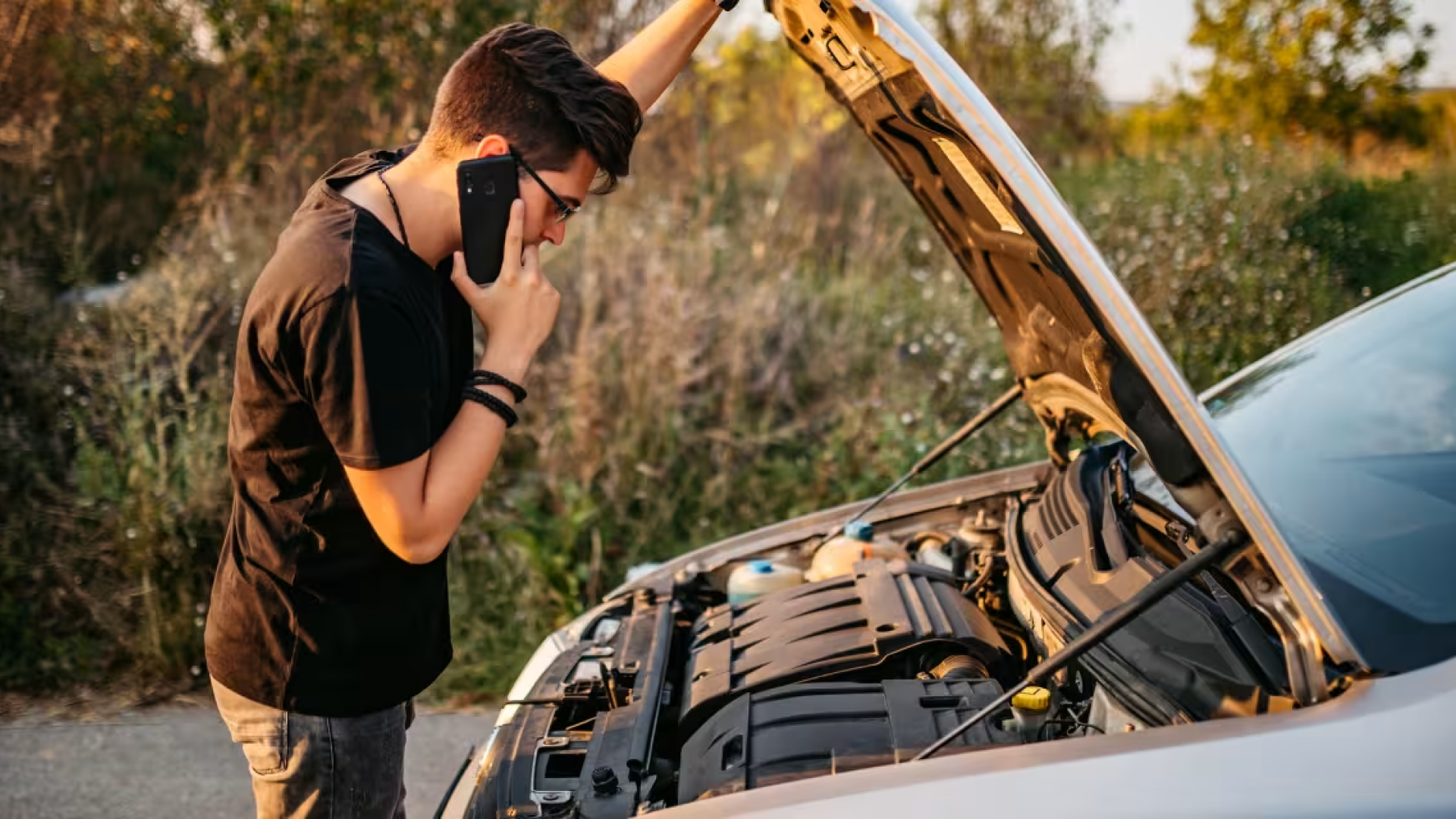
A vehicle breakdown is frustrating anywhere, but it can feel much more stressful when it happens miles from home. You may be unfamiliar with the area, unsure whether your vehicle is safe to drive, and worried about how you will get yourself, your passengers, and your vehicle to a safe location.
The first priority is not getting back on the road as quickly as possible. It is protecting everyone at the scene. A disabled vehicle can create additional risks if it is stopped near moving traffic, on a narrow shoulder, around a blind curve, or in an unfamiliar location.
Knowing what to do before calling for help can make a roadside emergency much easier to manage. From moving to a safer position and communicating your location to deciding between roadside assistance and towing, a simple process can help you make better decisions under pressure.
This guide explains what to do if your vehicle becomes disabled far from home, what information to provide a towing company, when you should avoid driving the vehicle, and how to prepare for similar emergencies in the future.
Get Yourself and Your Passengers to a Safe Location
Your first decision should be based on safety, not convenience.
If the vehicle can still move safely, steer it toward the nearest safe location. A parking lot, service station, wide shoulder, or other area away from active traffic may be preferable to stopping in a travel lane.
If the vehicle cannot be moved, keep your attention on the surrounding traffic and your immediate environment.
Turn on Your Hazard Lights
Activate your hazard lights as soon as you recognize that the vehicle is disabled or may become disabled.
Hazard lights can make the vehicle more visible to approaching drivers, particularly during nighttime, rain, fog, or other conditions that reduce visibility.
If you have warning triangles, road flares, or another approved visibility device, use them only when it is safe to do so and according to their instructions.
Stay Away From Moving Traffic
A common mistake is focusing so heavily on the vehicle that people forget about traffic.
If your vehicle is stopped near a roadway, avoid standing between your vehicle and passing traffic. Do not attempt repairs in an active travel lane.
If remaining inside the vehicle is safer, stay buckled in and keep doors closed while waiting for assistance. If you can safely move yourself and passengers to a location well away from traffic, do so.
Consider Weather and Surroundings
Being stranded far from home may expose you to conditions you did not plan for.
Extreme heat, heavy rain, thunderstorms, cold temperatures, flooding, poor visibility, and isolated roads can change the situation quickly. Keep passengers together when possible and avoid wandering away from the vehicle unless doing so is necessary for safety.
Determine Whether the Vehicle Is Safe to Drive
Not every roadside problem requires a tow, but not every vehicle that still moves should be driven.
A vehicle may technically start and move while still having a serious mechanical, electrical, tire, steering, braking, or cooling-system problem.
Problems That Usually Require Extra Caution
Avoid continuing to drive if you notice symptoms such as:
Severe brake problems
Loss of steering control
A badly damaged or flat tire
Significant engine overheating
Smoke coming from the vehicle
Fuel or other fluid leaking
Serious collision damage
Unusual grinding or mechanical noises
A warning condition accompanied by major performance problems
A vehicle that cannot maintain safe control
Trying to reach home because you are far away can turn a manageable breakdown into a more serious roadside situation.
Do Not Let Distance Influence the Safety Decision
Being 100 miles from home does not make driving an unsafe vehicle safer.
If the vehicle is not roadworthy, arrange appropriate roadside assistance or towing instead of taking a chance on a long drive. A professional can assess the situation and help determine the appropriate next step.
Identify What Happened Before Calling for Help
You do not need to diagnose the vehicle yourself. However, knowing what happened can help a towing or roadside assistance provider understand what equipment may be appropriate.
Think about what you noticed immediately before the vehicle stopped working.
Useful Details to Remember
Try to identify:
Whether the engine stopped suddenly or gradually
Whether the vehicle will restart
Any warning lights that appeared
Whether you heard unusual sounds
Whether there was smoke or an unusual smell
Whether a tire is damaged
Whether the vehicle was involved in a collision
Whether the vehicle is stuck in mud, a ditch, or another difficult location
Whether the vehicle can shift into neutral
Whether the steering and brakes appear to work normally
You do not have to provide a technical diagnosis. A simple description such as “the engine shut off and now it will not restart” is useful information.
Find Your Exact Location
When you are far from home, knowing your location is one of the most useful things you can provide to roadside assistance.
Do not rely only on saying that you are “somewhere near Marrero” or “on the highway outside Gretna.” Give as much precise information as possible.
Use Your Phone to Identify Your Location
Your smartphone may show your current location through its mapping application. Look for:
Street name
Highway or road number
Direction of travel
Nearest intersection
Nearby business
Exit number
Mile marker
Landmark
GPS location or map pin
If you are on a highway, tell the provider whether you are traveling northbound, southbound, eastbound, or westbound when you know it.
Why Direction Matters
Two vehicles can be on the same highway but several miles apart simply because they are traveling in opposite directions.
A clear location such as “westbound near Exit 4, just past the intersection” gives a driver much more useful information than a general city name.
Call the Right Type of Roadside Assistance
Once everyone is in a safe position, determine what type of help you need.
Roadside assistance can address some problems at the location, while towing is appropriate when the vehicle cannot safely continue.
Jump-Start Assistance
A dead battery may leave the vehicle unable to start even though the engine and other systems are otherwise functional.
If the battery has lost its charge, professional jump-start assistance may get the vehicle running again. If the battery is damaged or another electrical problem exists, the vehicle may still require towing.
Flat Tire Assistance
A damaged or flat tire can make continued driving unsafe.
If you do not have a usable spare, the necessary tools, or a safe location to change the tire, roadside assistance can provide help. Driving on a severely damaged tire can also cause additional vehicle damage.
Vehicle Lockout Assistance
Locking your keys inside the vehicle can happen anywhere, including during a long-distance trip.
Professional roadside assistance may be able to help with a vehicle lockout without requiring you to travel home for a spare key.
Fuel Delivery
Running out of fuel far from home creates an avoidable but stressful situation.
Roadside assistance may be able to deliver enough fuel to help you reach a nearby fuel station, depending on the service available in your area.
Towing
A tow may be appropriate when the vehicle cannot safely be driven or the problem cannot be resolved at the roadside.
Emergency towing, light-duty towing, flatbed towing, and vehicle recovery address different situations, so provide accurate information about the vehicle and what happened.
Understand When Flatbed Towing May Be Appropriate
Flatbed towing places the vehicle on a flat platform rather than towing it with some wheels rolling on the road.
The appropriate towing method depends on the vehicle, its condition, drivetrain, damage, and the circumstances surrounding the breakdown or accident.
Situations Where Flatbed Towing May Be Considered
Flatbed towing may be useful for vehicles that:
Have significant collision damage
Cannot safely roll
Require all wheels off the roadway
Have certain drivetrain considerations
Need additional protection during transport
Are being transported over a longer distance
The towing provider should determine the appropriate equipment based on the specific vehicle and situation.
Give the Towing Company Accurate Vehicle Information
A towing provider needs more than your location.
Before help is dispatched, be prepared to provide basic information about the vehicle.
Information to Provide
Tell the towing company:
Vehicle make and model
Approximate vehicle size
Your exact location
Direction of travel
Nature of the problem
Whether the vehicle starts
Whether the vehicle can roll or steer
Whether there was an accident
Whether anyone is injured
Whether the vehicle is in a ditch, mud, soft ground, or another difficult position
If you are unsure about something, say so. Accurate uncertainty is better than guessing.
Mention Special Circumstances
Some situations require additional equipment or a different recovery approach.
For example, tell the provider if the vehicle is:
In a ditch
Stuck in mud
Partially off the roadway
Involved in a collision
Blocking traffic
Parked in a restricted area
Unable to shift into neutral
Carrying unusual equipment or a heavy load
This information helps the towing provider understand the situation before arriving.
Prepare for a Long-Distance Tow
When your vehicle breaks down far from home, the nearest towing option may not necessarily be the final destination for the vehicle.
Think about where you want the vehicle taken.
Possible Tow Destinations
Depending on your circumstances, you may want the vehicle transported to:
A repair shop
A dealership
Your home
A trusted mechanic
A storage facility
Another location that can safely receive the vehicle
Ask about the destination before the tow begins so you understand the arrangement.
Consider Your Own Transportation
A vehicle tow solves the vehicle problem, but you may still need transportation.
If you have passengers, children, pets, luggage, or important belongings in the vehicle, discuss the situation with the towing provider before departure. Your personal transportation arrangements may require separate planning.
Protect Important Belongings in the Vehicle
If the vehicle is going to a repair facility or storage location, remove essential personal items when it is safe to do so.
Take items such as:
Wallets and identification
Medication
Phones and chargers
Laptops
Important documents
House keys
Work equipment
Valuables
Travel documents
Do not put yourself in danger to retrieve belongings from a damaged vehicle. Safety comes first.
Avoid Common Mistakes During a Remote Breakdown
Stress can cause people to make decisions they would normally avoid.
A few simple precautions can reduce unnecessary risk.
Do Not Keep Restarting a Vehicle That Is Overheating
If the vehicle is seriously overheating, repeatedly attempting to drive it may worsen the problem.
Allow the vehicle to cool and seek appropriate assistance rather than trying to complete a long trip with an overheating engine.
Do Not Attempt Repairs in Dangerous Traffic
Changing a tire or inspecting an engine on the side of a busy roadway can expose you to passing traffic.
If the location is unsafe, wait for professional roadside assistance.
Do Not Accept Help Without Considering the Circumstances
A person stopping to offer assistance may have good intentions, but you should still use judgment.
If you have already contacted a towing company, you can let them know someone has stopped to help. Keep personal information private and avoid unnecessary interactions if you feel uncomfortable.
Do Not Assume the Vehicle Is Fine Because It Starts
A vehicle that restarts after a breakdown may still have an underlying problem.
If the original symptoms were serious, have the vehicle inspected rather than assuming the problem has disappeared.
What to Keep in an Emergency Roadside Kit
A small roadside kit can make an unexpected breakdown easier to manage.
Consider carrying:
Phone charging equipment
Flashlight
Basic first-aid supplies
Reflective safety equipment
Water
Nonperishable snacks
Blankets appropriate for the season
Tire pressure gauge
Basic vehicle tools
Vehicle registration and insurance information
Emergency contact information
The contents should match your vehicle, travel habits, weather conditions, and the areas where you drive.
How to Prepare Before a Long Road Trip
Preparation is especially useful when you are traveling far from home.
Before leaving, check your tires, fluids, lights, battery condition, and other basic maintenance items. Make sure you have enough fuel for the planned route and know where you can stop if conditions change.
Save your preferred roadside assistance contact information in your phone before you need it.
It is also useful to share your travel plans with someone you trust when taking a long or unfamiliar route.
Keep Important Vehicle Information Accessible
Know your:
Vehicle make and model
License plate number
Insurance information
Roadside assistance coverage
Vehicle identification information
Preferred repair facility
Emergency contacts
Having this information ready can save time during a stressful breakdown.
What A&Z Towing Can Help With
A&Z Towing LLC provides 24/7 towing and roadside assistance for drivers in Marrero, Harvey, Gretna, Westwego, and surrounding Louisiana areas.
Services include emergency towing, light-duty towing, flatbed towing, vehicle recovery, and roadside assistance for common problems such as flat tires, dead batteries, lockouts, breakdowns, and accident-related situations.
For a driver stranded away from home, the most useful first step is to provide a clear location and explain exactly what happened. That allows the towing team to understand whether roadside assistance, towing, or vehicle recovery may be appropriate.
How to Handle a Breakdown Step by Step
If you remember only one process from this guide, use this sequence:
Stay calm and assess the situation.
Move the vehicle away from traffic if it can be done safely.
Turn on hazard lights.
Move passengers to a safer location when appropriate.
Determine whether the vehicle is safe to drive.
Identify your exact location.
Describe the problem to roadside assistance.
Provide the vehicle make, model, and condition.
Tell the provider about any accident, ditch, mud, or other recovery issue.
Arrange towing or roadside assistance based on the vehicle's condition.
This approach keeps the priority where it belongs: safety first, vehicle second.
Common Misconceptions About Being Stranded Far From Home
“If the vehicle still starts, I should drive it home.” Not necessarily. Starting is only one part of determining whether a vehicle is safe to drive. Serious tire, brake, steering, overheating, collision, or mechanical problems can make continued driving unsafe.
“A towing company only helps after an accident.” Towing services are also used for breakdowns, disabled vehicles, unsafe vehicles, flat tires, dead batteries, lockouts, vehicle recovery, and other roadside situations.
“I need to know exactly what is wrong before calling.” You do not need to diagnose the vehicle. Explain the symptoms, what happened before it stopped working, and whether the vehicle can start, roll, steer, and brake.
“Being far away means I have to leave my vehicle behind.” Not necessarily. Depending on the circumstances, towing may allow the vehicle to be transported to a repair facility or another appropriate destination.
Conclusion
A disabled vehicle far from home can turn an ordinary trip into a stressful situation, but knowing the right sequence of actions can make the experience more manageable.
Start with personal safety. Move away from traffic when possible, use hazard lights, and avoid attempting repairs in a dangerous location. Next, determine whether the vehicle can safely continue or whether professional roadside assistance or towing is needed.
Your location and vehicle information are especially valuable when requesting help. Give the towing provider a precise location, explain what happened, identify any accident or recovery conditions, and describe whether the vehicle can start, roll, steer, and brake.
Most importantly, do not let the distance from home pressure you into driving a vehicle that may be unsafe. Getting yourself and your passengers somewhere safe is the first priority. Once that is handled, professional towing or roadside assistance can help address the vehicle problem and get your trip moving toward a safer resolution.
Frequently Asked Questions
Does A&Z Towing provide 24/7 emergency towing in Marrero, LA?
Yes. A&Z Towing LLC provides 24/7 towing and roadside assistance in Marrero, Harvey, Gretna, Westwego, and surrounding Louisiana areas. Drivers can request help for emergency towing, breakdowns, accidents, and other roadside situations.
How quickly can A&Z Towing respond to a roadside emergency?
Response time depends on factors such as your exact location, traffic, weather, current service demand, and the type of assistance required. Providing an accurate location and clear vehicle information can help the towing provider coordinate the appropriate response.
What types of vehicles can A&Z Towing tow?
A&Z Towing provides towing services for light-duty vehicles and other vehicles that can be safely handled with the appropriate towing equipment. Provide the vehicle's make, model, condition, and location when requesting service.
Does A&Z Towing offer flatbed towing for cars and SUVs?
Yes. A&Z Towing offers flatbed towing for situations where flatbed equipment is appropriate. The correct towing method depends on the vehicle, its condition, drivetrain, damage, and circumstances at the scene.
Can A&Z Towing help if my vehicle breaks down on the roadside?
Yes. Roadside assistance is available for common breakdown situations. Depending on the problem, assistance may include a jump start, flat-tire help, lockout assistance, fuel delivery, towing, or other appropriate roadside support.
Does A&Z Towing provide jump-start and dead battery assistance?
Yes. A&Z Towing provides roadside assistance for dead-battery situations. If the vehicle does not restart after assistance or has another electrical or mechanical problem, towing may be necessary.
Can A&Z Towing help with a flat tire or vehicle lockout?
Yes. Flat-tire and vehicle lockout assistance are among the roadside situations A&Z Towing can help with. Tell the provider your location and explain the vehicle's condition when requesting assistance.
Does A&Z Towing provide vehicle recovery for cars stuck in ditches or off-road areas?
Yes. A&Z Towing provides vehicle recovery for situations such as vehicles stuck in difficult locations. Recovery requirements can vary significantly, so provide details about the vehicle's position, terrain, accessibility, and condition.
What areas near Marrero, LA does A&Z Towing serve?
A&Z Towing serves Marrero, Harvey, Gretna, Westwego, and surrounding Louisiana areas. When requesting service, provide your exact location so the towing provider can determine the appropriate service response.
How can I request towing or roadside assistance from A&Z Towing?
Contact Us and provide your exact location, vehicle make and model, description of the problem, and any relevant details such as an accident, flat tire, dead battery, lockout, ditch, or difficult recovery position. This information helps determine the appropriate assistance.