

Introduction
When a vehicle breaks down, gets damaged in an accident, or becomes unsafe to drive, choosing the right towing service matters. A standard passenger car may need light-duty towing, while a larger work truck or commercial vehicle could require medium-duty equipment. Using the wrong towing method can create unnecessary delays, increase the risk of vehicle damage, and complicate roadside assistance.
Understanding the differences between light-duty and medium-duty towing helps drivers make better decisions during unexpected breakdowns. The two services differ in the types of vehicles they handle, towing capacity, equipment, recovery requirements, and overall complexity.
For drivers in Marrero, Harvey, Gretna, Westwego, and surrounding Louisiana communities, knowing which service fits a particular situation can make arranging roadside assistance less stressful. This guide explains how each towing category works, which vehicles they typically serve, and what to consider when requesting professional towing.
What Is Light-Duty Towing?
Light-duty towing is designed primarily for passenger vehicles and other relatively small vehicles that can be transported safely using appropriately rated towing equipment. It is commonly used for everyday roadside emergencies involving cars, compact SUVs, minivans, and certain light pickup trucks.
A vehicle might need light-duty towing after an engine failure, a flat tire that cannot be safely changed, an accident, a dead battery that cannot be resolved with a jump-start, or a mechanical problem that makes driving unsafe.
Vehicles Commonly Handled by Light-Duty Towing
Light-duty towing typically serves vehicles such as:
Sedans and compact cars
Hatchbacks and station wagons
Passenger SUVs and crossovers
Minivans
Many light pickup trucks
Certain small utility vehicles
The vehicle's actual weight, dimensions, condition, and manufacturer requirements determine which equipment is appropriate. A large SUV or electric vehicle, for example, may require specialized handling even though it is classified as a passenger vehicle.
How Light-Duty Towing Works
A light-duty tow truck may use a wheel-lift system, a flatbed, or another suitable towing arrangement.
A wheel-lift truck raises designated wheels using a metal lifting mechanism, allowing the vehicle to be transported with the remaining wheels positioned according to the towing setup. A flatbed truck carries the vehicle on a platform, keeping all four wheels off the road during transportation.
The appropriate method depends on the vehicle's drivetrain, ground clearance, damage, and towing instructions. All-wheel-drive vehicles, electric vehicles, and cars with significant collision damage may require a flatbed or another manufacturer-approved transport method.
When Is Light-Duty Towing the Right Choice?
Light-duty towing is often appropriate when a passenger vehicle cannot safely continue its journey but can be loaded and transported using standard light-duty equipment.
For example, a driver traveling through Marrero might experience a transmission problem that prevents the car from moving. If the vehicle is accessible, its weight is within the truck's rated capacity, and no complicated recovery is required, light-duty towing may be sufficient.
However, a vehicle stuck in a deep ditch or positioned awkwardly after a collision may require vehicle recovery equipment and additional planning, even if the vehicle itself is small.
What Is Medium-Duty Towing?
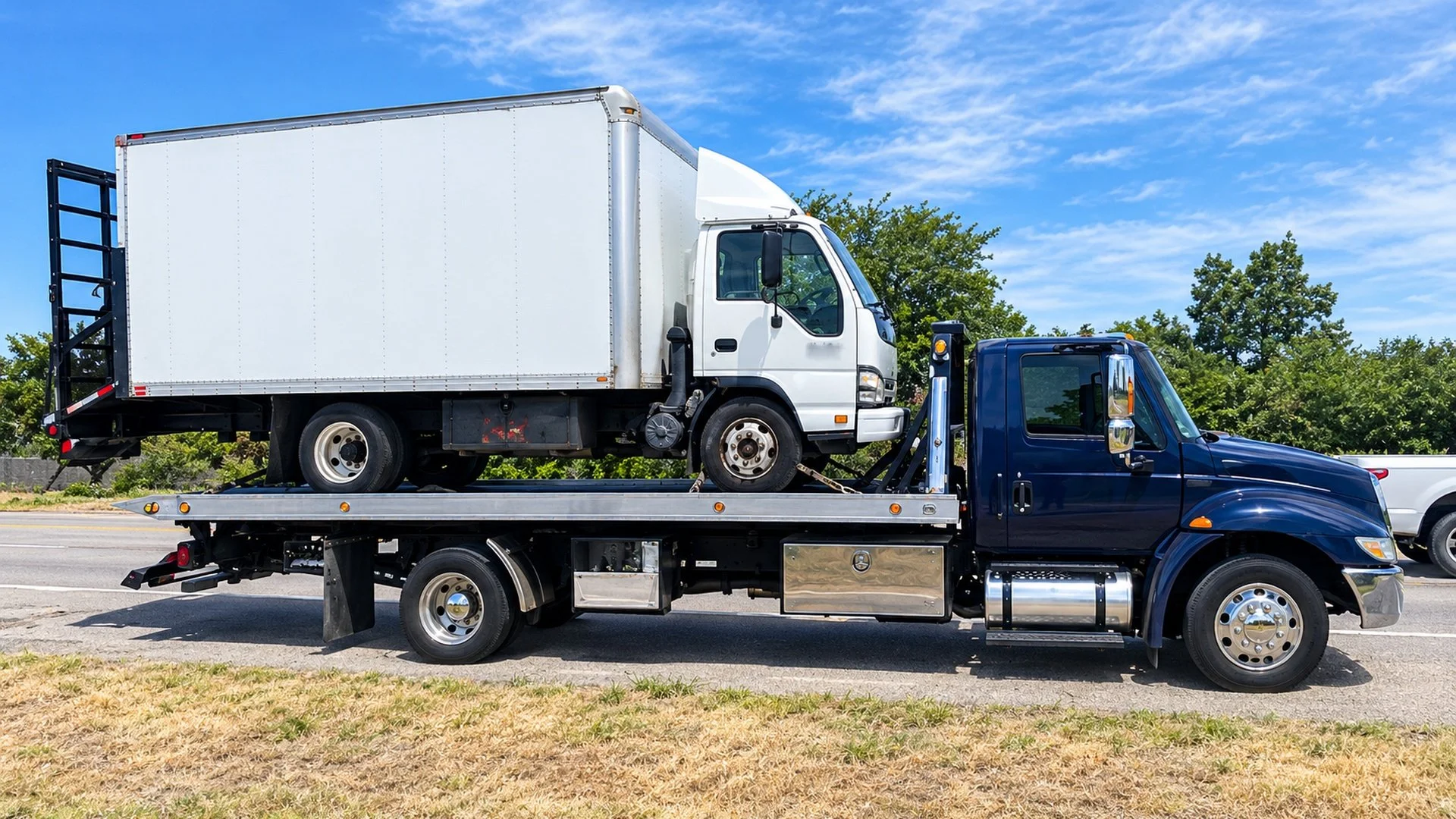
Medium-duty towing is intended for larger or heavier vehicles that exceed the practical capabilities of many light-duty tow trucks. It fills the gap between standard passenger-vehicle towing and heavy-duty towing for large commercial vehicles.
This service commonly supports certain commercial trucks, delivery vehicles, larger work vehicles, and other vehicles whose weight or configuration requires more capable towing equipment.
The exact vehicle categories handled by a medium-duty tow truck vary by equipment, local classification practices, and the truck's rated capacity. Vehicle weight and towing requirements matter more than the name of the category alone.
Vehicles Commonly Handled by Medium-Duty Towing
Depending on the equipment and operating limits, medium-duty towing may accommodate:
Box trucks and delivery trucks
Certain commercial work trucks
Larger utility vehicles
Some shuttle buses and small buses
Larger service vehicles
Certain recreational vehicles
Heavier pickup trucks and specialized vehicles
Not every vehicle in these categories automatically requires medium-duty towing. A lightly loaded work truck might be suitable for a properly equipped light-duty tow truck, while a heavier version of the same model may need medium-duty equipment.
The vehicle's loaded weight, axle configuration, condition, and intended transport method should be assessed before dispatch.
How Medium-Duty Towing Works
Medium-duty towing uses equipment rated for larger vehicles and more demanding transport conditions. Depending on the truck and the job, this may include a higher-capacity wheel-lift system, a suitable flatbed, or specialized towing and recovery equipment.
The operator must consider the vehicle's weight distribution, dimensions, axle configuration, attachment points, and condition. A loaded delivery truck, for instance, can present different handling requirements from an empty vehicle of the same model.
Some breakdowns also require additional planning because the disabled vehicle may occupy a narrow road, commercial loading area, or busy intersection. Safe positioning, suitable equipment, and coordination with the driver help reduce avoidable risks.
When Is Medium-Duty Towing Necessary?
Medium-duty towing is appropriate when a vehicle exceeds the safe operating limits of light-duty equipment or requires a towing configuration better suited to its size and weight.
Imagine a delivery truck experiencing a mechanical failure in Harvey. The truck cannot continue to its next stop, and its loaded weight exceeds the capacity of a typical light-duty tow truck. A properly equipped medium-duty service may be the suitable option.
If the vehicle is heavily loaded, unusually large, or difficult to access, the towing provider may need more information before determining whether medium-duty or heavy-duty equipment is required.
Key Differences Between Light-Duty and Medium-Duty Towing
Both services transport disabled vehicles, but they are designed for different operating requirements. The main distinction is the combination of vehicle weight, dimensions, towing equipment, and recovery complexity.
1. Vehicle Size and Weight
Light-duty towing generally serves passenger cars, smaller SUVs, minivans, and many light trucks. Medium-duty towing is designed for larger vehicles, including certain commercial trucks and work vehicles.
Vehicle size alone does not determine the correct category. A compact commercial vehicle carrying a heavy load may exceed a truck's rated capacity, while a larger but lightweight vehicle might be within its limits.
The towing provider should evaluate the actual vehicle and its condition instead of relying exclusively on its appearance.
2. Towing Equipment and Capacity
Light-duty tow trucks are configured for smaller vehicles and their associated towing requirements. Medium-duty trucks use equipment rated for heavier loads and may provide different lifting, loading, or recovery capabilities.
Every tow truck has specific limits. These can include gross vehicle weight ratings, axle ratings, towing ratings, and restrictions associated with particular lifting or loading configurations.
A professional operator should verify that the complete towing setup is suitable for the disabled vehicle. Selecting equipment based only on an estimated vehicle category can create avoidable safety problems.
3. Typical Towing Situations
Light-duty towing frequently addresses personal vehicle breakdowns, minor collision situations, and roadside incidents involving passenger vehicles.
Medium-duty towing more commonly supports commercial vehicle breakdowns, disabled delivery trucks, and heavier work vehicles that cannot be handled safely by ordinary passenger-car towing equipment.
Both categories may encounter mechanical failures, flat tires, and accident damage. The difference is usually the vehicle and equipment involved, rather than the type of emergency itself.
4. Loading and Recovery Complexity
A passenger car parked on a flat shoulder may be relatively straightforward to load. A commercial truck with a damaged wheel, uneven weight distribution, or limited access can require a more involved towing plan.
Medium-duty jobs may involve additional clearance checks, load assessments, and coordination around commercial traffic or roadside hazards.
However, light-duty towing can also become complex. A small car stuck below road level or damaged in a collision may require specialized recovery methods rather than a routine tow.
5. Cost Considerations
Light-duty towing often costs less than medium-duty towing because many jobs involve smaller vehicles and less demanding equipment. However, there is no universal price difference that applies to every situation.
The final charge may depend on distance, vehicle weight, accessibility, loading difficulty, time of service, and the equipment required. After-hours dispatch, winching, accident recovery, and difficult pickup locations may affect the quote.
Before authorizing service, ask what the estimate includes and whether additional recovery or mileage charges may apply.
Light-Duty vs. Medium-Duty Towing: How to Choose
The safest way to choose is to provide accurate information about the disabled vehicle and let the towing provider match the job to properly rated equipment.
Step 1: Identify the Vehicle
Tell the dispatcher whether the vehicle is a sedan, SUV, pickup truck, box truck, shuttle bus, or another type. Include the make, model, and year when possible.
If it is a commercial vehicle, mention whether it is carrying cargo, tools, equipment, or other substantial weight.
Step 2: Explain What Happened
Describe the problem clearly. For example, explain whether the engine will not start, the transmission has failed, a wheel is damaged, or the vehicle was involved in a collision.
Mention whether the vehicle can roll, steer, and brake. These details help the operator assess loading requirements and determine whether special equipment may be necessary.
Step 3: Share the Vehicle's Approximate Weight
If you know the vehicle's curb weight, loaded weight, or relevant weight rating, share that information. For commercial vehicles, explain whether the truck is empty, partially loaded, or carrying a full load.
Do not assume the curb weight tells the entire story. Cargo, passengers, accessories, and vehicle modifications can significantly change the weight involved in a towing job.
Step 4: Describe the Pickup Location
Explain whether the vehicle is in a parking lot, on a highway shoulder, in a narrow street, or in a ditch. Mention low overhead clearance, restricted access, soft ground, or heavy traffic if relevant.
For drivers in Marrero, Gretna, Westwego, and Harvey, accurate location details help the dispatcher understand the roadside conditions and plan an appropriate response.
Step 5: Confirm the Recommended Service
Ask whether light-duty or medium-duty towing is suitable and whether the proposed truck can safely handle the vehicle.
If the vehicle requires a flatbed, wheel-lift arrangement, or recovery equipment, clarify that before dispatch. The goal is to send the right equipment the first time whenever the available information allows.
Common Misconceptions About Towing Categories
A Larger Vehicle Always Requires Medium-Duty Towing
Not necessarily. Some larger SUVs and pickup trucks remain within the limits of suitable light-duty equipment. Their weight, configuration, and manufacturer towing requirements determine what is appropriate.
Conversely, a smaller commercial vehicle carrying a heavy load may exceed those limits.
Any Tow Truck Can Transport Any Vehicle
Tow trucks are designed for specific operating conditions. A truck's ability to move a vehicle does not automatically mean it can transport it safely.
Weight ratings, axle limits, securement methods, and drivetrain requirements all matter. Using appropriately rated equipment protects the vehicle, the operator, and other road users.
Medium-Duty Towing Is Only for Large Businesses
Medium-duty towing can benefit individual owners as well as commercial operators. A privately owned work truck, larger recreational vehicle, or other heavy vehicle may need the same appropriately rated service.
The correct towing category depends on the vehicle and circumstances, not whether the owner uses it for business.
A Flatbed Automatically Solves Every Towing Problem
Flatbeds are useful for many passenger vehicles, damaged cars, and vehicles requiring all wheels to remain off the ground. However, a flatbed must still have adequate capacity, suitable loading equipment, and enough space to access the vehicle.
A vehicle stuck in mud, positioned below road level, or trapped in a difficult location may require recovery work before it can be loaded.
Safety Tips Before a Tow Truck Arrives
A breakdown can leave drivers exposed to passing traffic, poor weather, and other hazards. Taking a few precautions while waiting can reduce unnecessary risk.
Protect Yourself and Your Passengers
If possible, move the vehicle out of active traffic without creating additional danger. Turn on the hazard lights and follow local traffic laws.
If the vehicle is on a highway shoulder or in a dangerous position, remain aware of approaching traffic. Do not stand behind or directly beside the vehicle where passing traffic could strike you.
If the vehicle is in an unsafe location, contact emergency services when appropriate. Do not attempt a dangerous crossing or roadside repair simply to prepare for towing.
Share Important Vehicle Details
Before the tow truck arrives, gather the information you can safely provide:
Vehicle make, model, and approximate weight
Current location and nearby landmarks
Description of the mechanical problem or accident damage
Whether the wheels roll and the steering functions
Any electric-vehicle, all-wheel-drive, or manufacturer-specific towing requirements
Whether the vehicle is carrying a heavy load
Do not crawl underneath a disabled vehicle or attempt to inspect damaged components in an unsafe location.
Remove Valuables and Secure Personal Items
If it is safe to do so, take essential belongings, identification, medication, and valuables with you. Follow the operator's instructions about remaining inside or exiting the vehicle during loading.
For commercial vehicles, tell the towing provider about cargo and any special handling considerations before work begins.
Why the Right Towing Service Matters in Louisiana
Drivers around Marrero, Harvey, Gretna, and Westwego encounter a mix of residential streets, commercial routes, parking areas, and busy roadways. A breakdown can happen close to home or in a location where stopping creates an immediate traffic concern.
Louisiana weather can also complicate roadside situations. Heavy rain, standing water, and slippery surfaces may affect vehicle access, visibility, and recovery conditions.
The appropriate towing service should account for both the disabled vehicle and the environment around it. A passenger car with a mechanical failure may need routine light-duty towing, while a loaded delivery truck or work vehicle may require medium-duty equipment.
If a vehicle has entered a ditch or become stuck in soft ground, the operator may need to evaluate the recovery conditions before deciding how to move it. Towing and vehicle recovery are related services, but recovery can involve additional equipment and planning.
A&Z Towing LLC provides towing and roadside assistance for drivers in Marrero, Harvey, Gretna, Westwego, and surrounding Louisiana areas. When requesting assistance, describe the vehicle and the situation as accurately as possible so the service provider can assess the appropriate equipment.
How to Avoid Unnecessary Towing Delays
A few simple steps can help dispatchers make a better initial assessment and reduce confusion.
First, give the exact location, including the direction of travel on a divided road, nearby intersections, or recognizable landmarks. If the vehicle is in a parking structure, commercial loading zone, or restricted-access area, mention any height or access limitations.
Second, explain the symptoms instead of offering only a general description such as “the truck is broken.” A vehicle that rolls but will not start presents different loading considerations from one with locked wheels or severe collision damage.
Third, be honest about cargo and vehicle modifications. Added equipment, trailers, rooftop accessories, and heavy loads can affect the towing requirements.
Finally, ask for an estimate and confirm the proposed service before authorizing work. If the operator determines that a different truck or recovery method is necessary, request an explanation of the change and any resulting cost difference.
Good communication does not eliminate every delay, especially when traffic, weather, or recovery conditions are difficult. It does help the towing provider prepare for the job more accurately.
Conclusion
The key difference between light-duty and medium-duty towing is the type of vehicle and the equipment needed to transport it safely. Light-duty towing typically handles passenger cars, smaller SUVs, minivans, and many light trucks. Medium-duty towing is designed for heavier vehicles, including certain commercial trucks, delivery vehicles, and work vehicles.
Neither category should be selected by appearance alone. Actual vehicle weight, cargo, drivetrain, damage, access conditions, and towing equipment ratings all influence the correct choice.
Before requesting service, identify the vehicle, describe the problem, provide accurate location details, and mention any unusual loading or recovery requirements. These details help the towing provider determine what equipment is suitable and whether additional recovery work may be needed.
For drivers in Marrero, Harvey, Gretna, Westwego, and nearby Louisiana communities, understanding these differences makes it easier to request appropriate towing assistance during an unexpected breakdown. The priority is always safe handling, properly rated equipment, and a transport method suited to the vehicle.
Frequently Asked Questions
1. What is the main difference between light-duty and medium-duty towing?
Light-duty towing generally serves passenger cars, smaller SUVs, minivans, and many light trucks. Medium-duty towing handles heavier vehicles, such as certain commercial trucks and delivery vehicles, that require more capable towing equipment. The vehicle's actual weight and configuration determine the appropriate service.
2. Which vehicles typically require medium-duty towing?
Medium-duty towing may be appropriate for box trucks, delivery vehicles, larger work trucks, certain shuttle buses, and some recreational vehicles. The correct category depends on the vehicle's loaded weight, dimensions, condition, and the tow truck's rated capacity.
3. Can a pickup truck be towed using light-duty equipment?
Yes, many pickup trucks can be handled by properly equipped light-duty tow trucks. However, larger models, heavily modified trucks, and pickups carrying substantial cargo may require medium-duty equipment. The towing provider should evaluate the truck's weight and configuration before selecting a method.
4. Is medium-duty towing more expensive than light-duty towing?
Medium-duty towing may cost more because it can require larger equipment and more involved handling. However, the actual price depends on distance, vehicle weight, accessibility, recovery requirements, time of service, and the provider's rates. Request an estimate that explains possible additional charges.
5. Does light-duty towing include flatbed towing?
Yes, light-duty towing can include flatbed transport for suitable passenger vehicles and smaller trucks. A flatbed may be appropriate for damaged vehicles, certain all-wheel-drive models, and vehicles that should not be transported with their wheels rolling on the road. Capacity and manufacturer instructions still apply.
6. Can medium-duty towing handle a loaded delivery truck?
A properly rated medium-duty tow truck may be able to transport a loaded delivery truck, depending on its weight, dimensions, and configuration. The dispatcher needs accurate information about the cargo and vehicle. Some heavier or unusually configured vehicles may require heavy-duty equipment instead.
7. How do I know what type of towing my vehicle needs?
Provide the vehicle's make, model, approximate weight, condition, and location. Explain whether it can roll, steer, and brake, and mention any cargo or drivetrain requirements. A qualified towing provider can use these details to determine which equipment is appropriate.
8. Is medium-duty towing the same as heavy-duty towing?
No. Medium-duty towing generally serves vehicles between typical passenger vehicles and the largest commercial vehicles. Heavy-duty towing is designed for larger or heavier vehicles, such as certain large buses, tractor-trailers, and heavy commercial trucks. Exact classifications depend on equipment capacity and operating requirements.
9. Can a tow truck recover a vehicle stuck in a ditch?
Yes, towing and recovery providers may be able to recover vehicles stuck in ditches, mud, or other difficult locations. The appropriate method depends on the vehicle's position, ground conditions, accessibility, and potential damage. Recovery may require specialized equipment beyond a routine tow.
10. What information should I provide when requesting towing in Marrero, LA?
Provide your exact location, vehicle make and model, description of the problem, and whether the vehicle can roll or steer. Mention cargo, accident damage, drivetrain requirements, and access restrictions. Accurate information helps the dispatcher assess the appropriate towing equipment and prepare for the job. Contact Us today if you need assistance.
