

What to Expect When Requesting Nighttime Roadside Assistance
Introduction
A vehicle breakdown is stressful during the day, but the experience can feel much more unsettling after dark. A flat tire on an unlit road, a dead battery in a parking lot, or an engine that suddenly stops working on the highway can leave drivers wondering what to do next. Limited visibility, passing traffic, and fewer nearby businesses make nighttime roadside emergencies more challenging to handle safely.
Knowing what to expect when requesting nighttime roadside assistance can make the situation easier to manage. From explaining your location to understanding estimated arrival times and choosing between roadside repairs and towing, a little preparation helps you make informed decisions when you need help most.
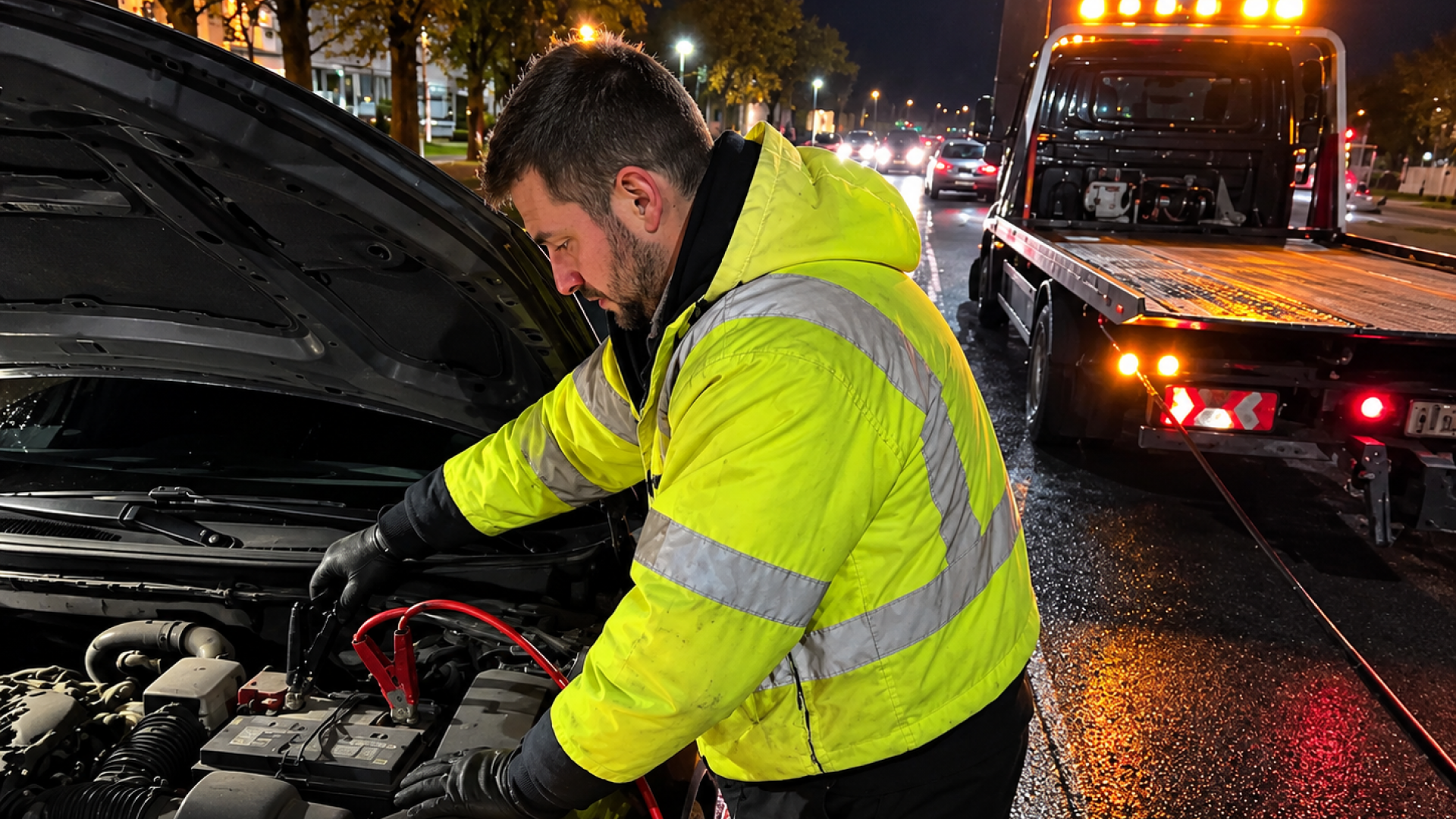
Nighttime roadside assistance generally involves contacting a service provider, describing the problem, confirming your location, and waiting in a safe place while help is arranged. Depending on the circumstances, the responding professional may provide a jump-start, help with a flat tire, assist with a lockout, or arrange emergency towing if the vehicle cannot be driven safely.
For drivers in Marrero, Harvey, Gretna, Westwego, and surrounding Louisiana communities, understanding this process can help reduce uncertainty during an unexpected breakdown.
What Is Nighttime Roadside Assistance?
Nighttime roadside assistance is help provided to motorists whose vehicles experience mechanical problems, tire issues, battery failures, lockouts, or other unexpected difficulties after dark. Depending on the provider and the situation, assistance may be available late in the evening, overnight, on weekends, and during holidays.
The goal is to address the immediate problem safely or transport the vehicle to an appropriate destination when an on-site solution is not practical.
Common Services Available After Dark
The specific services available depend on the provider, vehicle type, equipment, and circumstances surrounding the emergency.
Common nighttime roadside services include:
Emergency towing: Transporting a disabled vehicle when it cannot be driven safely.
Battery jump-starts: Helping restart a vehicle with a discharged battery when appropriate.
Flat tire assistance: Helping replace a damaged tire with a usable spare, when the vehicle and conditions permit.
Vehicle lockout assistance: Helping drivers regain access to locked vehicles using suitable methods.
Fuel delivery: Bringing fuel to a stranded motorist when offered by the service provider.
Vehicle recovery: Assisting with vehicles stuck in a ditch, mud, or another difficult position when the situation is suitable for the available vehicle recovery equipment.
Flatbed towing: Transporting a vehicle on a flatbed towing platform when its condition, drivetrain, or manufacturer's towing requirements make this method appropriate.
Not every provider offers every service. When calling, describe the problem clearly so the dispatcher can determine what type of assistance may be needed.
How Nighttime Assistance Differs From Daytime Help
The basic service process is similar during the day and at night, but darkness creates additional safety and logistical concerns.
Drivers may have difficulty identifying road signs, locating safe places to stop, or describing their exact position. Roadside workers also need to account for reduced visibility, approaching traffic, poor lighting, and limited access to certain locations.
A vehicle stranded on a busy highway shoulder presents a different situation from one parked in a well-lit shopping center. The location, traffic conditions, and severity of the problem can influence how assistance is arranged.
What Happens After You Request Nighttime Roadside Assistance?
Understanding the process can help you prepare the information a dispatcher needs and avoid unnecessary delays.
Step 1: Explain What Happened to Your Vehicle
The first step is to describe the problem as accurately as possible. Explain whether the vehicle stopped running while driving, failed to start, developed a flat tire, became locked, or was involved in a collision.
Mention any warning lights, unusual sounds, smoke, leaking fluids, or other symptoms you noticed before stopping.
For example, saying, "My car will not start, and the dashboard lights are flickering," provides more useful information than simply reporting that the vehicle is broken down.
If there has been an accident, tell the dispatcher whether the vehicle is blocking traffic, has sustained significant damage, or appears unsafe to approach.
Step 2: Provide Your Exact Location
Location information is particularly important during nighttime roadside emergencies because familiar landmarks may be difficult to recognize in the dark.
Share as much of the following information as possible:
The road name or highway number.
Your direction of travel.
The nearest exit, intersection, or recognizable landmark.
The nearest mile marker, if available.
Your location pin or GPS coordinates, if you can access them.
Whether the vehicle is on the shoulder, in a parking lot, on a residential street, or somewhere else.
Drivers traveling through Marrero, Harvey, Gretna, and Westwego should identify the specific road and direction rather than relying only on the city name.
If you are unsure of your location, use your phone's map application while safely stopped. Do not walk along a highway or stand in traffic to search for a road sign.
Step 3: Answer Questions About the Vehicle
The dispatcher may ask about the vehicle's make, model, approximate size, and condition. This information helps determine which equipment and service may be suitable.
Be prepared to explain whether the vehicle has all-wheel drive, four-wheel drive, low ground clearance, significant collision damage, or a wheel that cannot rotate.
These details can affect towing decisions. For instance, some vehicles require flatbed towing or another manufacturer-approved method to prevent drivetrain damage.
If the vehicle is carrying a heavy load, is unusually large, or is stuck off the roadway, mention that as well.
Step 4: Confirm the Service and Estimated Arrival Time
After gathering the details, the dispatcher can explain the available assistance, any relevant service charges, and the expected response window.
Ask whether the estimate accounts for current traffic, distance, road access, and the type of equipment required. Arrival times can change because of weather, other emergencies, congestion, or difficulty locating a vehicle.
An estimated arrival time is not the same as a guarantee. If your location is hazardous or your situation changes while waiting, contact the provider again with updated information.
Step 5: Wait in a Safe Location
Once assistance has been arranged, prioritize your safety over trying to diagnose or repair the vehicle yourself.
If the car is in a safe, accessible parking area, remain nearby if it is safe to do so. On a busy highway, narrow shoulder, or other hazardous roadway, staying inside the vehicle may not be the safest choice in every situation.
Follow local emergency guidance and use your judgment about the immediate surroundings. If you can reach a protected area away from traffic without crossing lanes or entering another danger, that may be preferable.
If there is an immediate threat, a serious collision, fire, or injury, call 911.
Step 6: Explain the Problem to the Responding Professional
When help arrives, describe the symptoms again and answer any questions about what happened before the vehicle stopped working.
The professional may assess whether a roadside service is appropriate or whether towing is safer. A successful jump-start, for example, does not necessarily mean the battery or charging system is healthy.
If towing is necessary, confirm the intended destination and ask how the vehicle will be loaded and transported. Before the vehicle leaves, remove essential personal belongings if it is safe to do so and clarify any arrangements for retrieving the vehicle.
How Long Does Nighttime Roadside Assistance Take?
There is no single response time that applies to every nighttime breakdown. The wait depends on the provider's availability, the distance to your location, road conditions, traffic, weather, and the type of assistance required.
A simple roadside call in an accessible parking lot may be easier to handle than a recovery involving a vehicle stuck off a dark roadway.
Factors That Affect Response Time
Location and distance: A vehicle stranded far from a main road may take longer to reach than one parked near a well-known intersection.
Traffic and road access: Congestion, construction, road closures, and restricted access can affect travel time even late at night.
Service complexity: A battery jump-start may require different equipment and preparation than recovering a vehicle from a ditch.
Weather conditions: Heavy rain, flooding, poor visibility, and other hazardous conditions can affect travel and recovery operations.
Demand for assistance: Several simultaneous breakdowns or emergencies can affect how quickly a provider can dispatch help.
How to Avoid Unnecessary Delays
You can make the process more efficient by providing accurate information from the beginning.
Share a precise location and direction of travel.
Describe the symptoms rather than guessing at the diagnosis.
Identify special vehicle requirements.
Keep your phone available for calls or messages.
Notify the dispatcher if your location changes.
If you cannot see the responding vehicle approaching, do not assume your request has been forgotten. Call the provider to confirm the status and provide any updated directions.
What Should You Do While Waiting for Help at Night?
Your actions while waiting can influence your safety. The right choice depends on whether you are parked in a secure area, stranded on a highway, or dealing with a dangerous vehicle problem.
Make Yourself Visible Without Creating More Risk
If your vehicle is stopped in a safe location, activate the hazard warning lights when appropriate. At night, these lights can help other motorists recognize a stationary vehicle.
Do not stand behind the vehicle, walk into traffic, or attempt to place warning devices in a live traffic lane. Only use warning triangles or similar equipment if you can position them without exposing yourself to moving vehicles.
Avoid unnecessary repairs on a narrow shoulder. Even routine tasks can become dangerous when passing traffic is close and visibility is limited.
Decide Whether to Stay Inside the Vehicle
There is no universal rule that staying inside is always safer or that getting out is always better.
On a high-speed road, a vehicle may be struck from behind. In some circumstances, remaining inside with your seat belt fastened is the safer option. In other situations, such as smoke inside the cabin or a vehicle stopped in an immediately dangerous position, leaving the vehicle and moving to a protected area may be necessary.
Never exit toward moving traffic. If you leave the vehicle, move away from the roadway and avoid standing directly in front of or behind it.
Keep Your Phone Available
A charged phone helps you communicate with the dispatcher, check your location, and contact emergency services if conditions worsen.
If your battery is low, reduce unnecessary screen use and keep the phone accessible. Avoid sharing your live location or personal information publicly when a direct message to the service provider is sufficient.
If you are traveling alone and feel unsafe, consider contacting someone you trust to let them know where you are and what assistance you have requested.
Watch for Warning Signs That Require Emergency Help
Roadside assistance is not a substitute for emergency response.
Call 911 if someone is seriously injured, there is an active fire, you are in immediate danger from traffic, or another urgent threat exists. If you smell strong fuel vapors, see smoke, or suspect a hazardous leak, move away from the vehicle when safe and follow emergency instructions.
Do not attempt to restart a vehicle that may have a serious fuel leak or other dangerous mechanical problem.
Will the Roadside Technician Repair Your Vehicle or Tow It?
The decision depends on the cause of the breakdown, the vehicle's condition, and whether an on-site service can restore safe operation.
Roadside assistance aims to address a problem where possible. Towing is appropriate when the vehicle cannot be repaired safely at the location or should not be driven.
When a Roadside Repair May Be Possible
Some problems can be addressed without transporting the vehicle.
A discharged battery may respond to a jump-start if the battery and electrical system are suitable for the procedure. A flat tire may be addressed by installing a usable spare, provided the wheel, tire, and surrounding conditions allow it.
A lockout may be resolved through appropriate vehicle-entry methods.
However, these services do not guarantee that the vehicle will be ready for continued travel. A battery that repeatedly loses charge, a tire damaged beyond repair, or an engine that overheats may require further inspection.
When Towing Is the Safer Choice
Towing may be necessary if the vehicle has sustained collision damage, has a serious mechanical failure, cannot be restarted, or is unsafe to drive.
A vehicle with steering or braking problems should not be driven simply because it can still move. Continuing to operate it may increase the risk of another incident.
The towing method also matters. Flatbed towing can be suitable for many disabled vehicles, including some all-wheel-drive models and vehicles with significant damage. Other vehicles may be transported using a wheel-lift or another approved method, depending on the manufacturer's instructions and the vehicle's condition.
Ask the responding professional to explain the recommended method if you are unsure why a particular type of tow truck is being used.
What Does Nighttime Roadside Assistance Cost?
The cost varies by service, distance, vehicle type, recovery difficulty, and the provider's pricing structure. A simple jump-start and a long-distance tow are different services and should not be assumed to have the same price.
Nighttime availability does not automatically mean a particular surcharge applies, but drivers should ask about any after-hours or other additional charges before authorizing non-emergency work when circumstances permit.
Questions to Ask About Pricing
Before service begins, ask for a clear explanation of the expected charges.
Useful questions include:
Is there a dispatch or service-call fee?
What is included in the quoted price?
Is towing priced by distance, a base fee, or another method?
Are there additional charges for difficult recovery, special equipment, or after-hours service?
Will the price change if the destination changes?
What payment methods are accepted?
The final cost may differ if the situation turns out to be more complicated than initially described. Ask the provider to explain any proposed change before additional work proceeds, unless immediate action is necessary to address an emergency.
If you have roadside coverage through an insurer, vehicle manufacturer, or membership program, check whether the service is covered, what limits apply, and whether you need authorization before arranging assistance.
Common Mistakes to Avoid During a Nighttime Breakdown
A stressful situation can lead drivers to make decisions that create additional risks or delay assistance.
Guessing Your Location: Providing only a town name can make it difficult to find you, especially when roads have similar names or the vehicle is near a highway interchange. Share a map pin, road name, travel direction, and nearby landmark whenever possible.
Attempting Unsafe Repairs: Changing a tire beside fast-moving traffic, checking an engine in poor visibility, or attempting a recovery without suitable equipment can put you in danger. Wait for qualified help rather than taking unnecessary risks.
Assuming a Vehicle Is Safe Because It Starts: A jump-start may get the engine running, but it does not establish that the battery, alternator, tires, brakes, or other systems are functioning correctly. If the original problem remains unexplained or warning signs persist, ask whether towing or professional inspection is appropriate.
Failing to Mention Special Vehicle Requirements: Low-clearance sports cars, all-wheel-drive vehicles, electric vehicles, and heavily damaged cars may have specific transportation requirements. Tell the dispatcher about these details before a truck is assigned so the service provider can assess the appropriate equipment.
Accepting Unclear Pricing: When possible, confirm the service type, estimated charges, and intended destination before authorizing work. In an urgent situation, prioritize immediate safety. You can still ask clear questions without delaying emergency assistance.
How to Prepare for Nighttime Roadside Emergencies
A few simple preparations can make a breakdown less stressful, even if you rarely drive late at night.
Keep Essential Items in Your Vehicle
Consider carrying:
A phone charging cable and a compatible power bank.
A flashlight or headlamp.
A first-aid kit.
A reflective vest for use when safe.
Drinking water and basic emergency supplies.
A properly maintained spare tire and the tools needed to use it, if your vehicle is equipped for a spare.
Store emergency items where you can reach them without unloading the vehicle beside traffic. Equipment is useful only when you can access it safely.
Review Your Vehicle's Emergency Procedures
Read your owner's manual to understand how to activate hazard lights, access the spare tire, and identify any towing restrictions. Electric and hybrid vehicles may have specific procedures for breakdowns and transportation.
Routine maintenance also matters. Check tire condition, battery health, fluid levels, and warning lights before long trips.
Save a Reliable Roadside Assistance Contact
Knowing whom to call before a breakdown occurs saves time when you are stressed or working with a low phone battery.
Drivers in Marrero, Harvey, Gretna, Westwego, and nearby Louisiana communities can keep the contact information for a suitable local towing and roadside assistance provider readily available. Confirm that the provider offers the service you may need and ask about its coverage area.
If you regularly travel after dark, review your roadside coverage and understand any limits on towing distance, eligible services, and payment.
Conclusion
Requesting nighttime roadside assistance does not have to be a confusing experience. The process generally involves explaining the vehicle problem, sharing an accurate location, confirming the service and estimated arrival time, and waiting in the safest available place until help arrives.
Your safety should remain the priority throughout the process. Use hazard lights when appropriate, stay away from moving traffic, avoid risky roadside repairs, and call 911 when there is an immediate threat or serious emergency.
Remember that not every breakdown can be resolved on the spot. A jump-start, tire change, or lockout service may be sufficient in some situations, while mechanical failures, collision damage, and certain drivetrain concerns require towing.
With accurate information, realistic expectations, and a reliable roadside assistance contact, drivers can respond more confidently to nighttime vehicle problems. If your vehicle becomes disabled in Marrero, Harvey, Gretna, Westwego, or surrounding Louisiana areas, A&Z Towing LLC provides 24/7 towing and roadside assistance for drivers who need help getting through an unexpected roadside emergency.
Frequently Asked Questions
1. What should I do first when my car breaks down at night?
Move to a safe location if possible, activate your hazard lights when appropriate, and assess immediate dangers. Share your exact location and the vehicle's symptoms with a roadside assistance provider. Call 911 if there is a serious injury, fire, or immediate threat.
2. Is roadside assistance available in the middle of the night?
Some towing and roadside assistance providers operate 24 hours a day, including overnight, weekends, and holidays. Availability depends on the provider, location, service required, and current demand. Confirm that the provider offers the assistance you need before relying on a particular service.
3. How long does it take for a tow truck to arrive at night?
Arrival times vary according to distance, traffic, weather, demand, road access, and the type of equipment needed. Ask for an estimated arrival window when requesting help, and provide accurate directions to reduce locating difficulties.
4. Should I stay inside my car while waiting for roadside assistance at night?
It depends on your location and the immediate hazards. Remaining inside with your seat belt fastened may be safer on some roads, while moving to a protected area may be necessary in other circumstances. Never exit toward moving traffic, and follow emergency instructions if danger increases.
5. Can roadside assistance jump-start a dead battery at night?
A technician may be able to jump-start a vehicle if the battery and electrical system are suitable for the procedure. If the battery is damaged, the vehicle has an electrical fault, or the engine still will not start, further diagnosis or towing may be necessary.
6. Will roadside assistance change a flat tire after dark?
A roadside provider may replace a flat tire with a usable spare when the vehicle, equipment, and location make the service safe. If the tire is severely damaged, no spare is available, or the vehicle is in a hazardous position, towing or another solution may be recommended.
7. Is nighttime towing more expensive than daytime towing?
Pricing depends on the provider's rates, towing distance, vehicle type, recovery difficulty, and any applicable after-hours charges. Ask for a breakdown of the expected cost before authorizing non-emergency service whenever possible.
8. What information should I give a tow truck dispatcher?
Provide your exact location, direction of travel, vehicle make and model, description of the problem, and any relevant towing requirements. Mention whether the vehicle is blocking traffic, has accident damage, or is stuck off the roadway so the dispatcher can assess the equipment needed.
9. Can a tow truck recover a car stuck in a ditch at night?
A qualified recovery provider may be able to recover a vehicle from a ditch or another difficult position, depending on its location, condition, terrain, and available equipment. Tell the dispatcher about the surrounding hazards and avoid attempting to pull the vehicle out yourself.
10. When should I request towing instead of roadside repair?
Request towing when the vehicle has serious mechanical damage, steering or brake problems, significant collision damage, or another condition that makes driving unsafe. If an on-site repair cannot resolve the issue safely, transporting the vehicle to a repair facility may be the better option.
