When Is Flatbed Towing a Better Choice for a Disabled Vehicle?
Introduction
A vehicle that will not start is frustrating. A vehicle that has been damaged in an accident, has a flat tire, has steering problems, or cannot safely roll creates a much bigger problem: how do you move it without causing additional damage?
That is where the type of tow truck matters.
Flatbed towing is often a better choice when a disabled vehicle needs to be transported with all four wheels completely off the road. Instead of pulling the vehicle behind the tow truck on its own wheels, a flatbed uses a level platform to carry the vehicle. This can reduce rolling-related concerns and provide a stable way to transport certain damaged, disabled, or specialty vehicles.
However, flatbed towing is not automatically the right choice for every roadside situation. The vehicle's condition, drivetrain, steering, suspension, ground clearance, location, and the type of damage all affect which towing method is appropriate.
For drivers in Marrero, Harvey, Gretna, Westwego, and nearby Louisiana communities, understanding when flatbed towing makes sense can help you make a safer decision during an already stressful roadside emergency.
What Is Flatbed Towing?
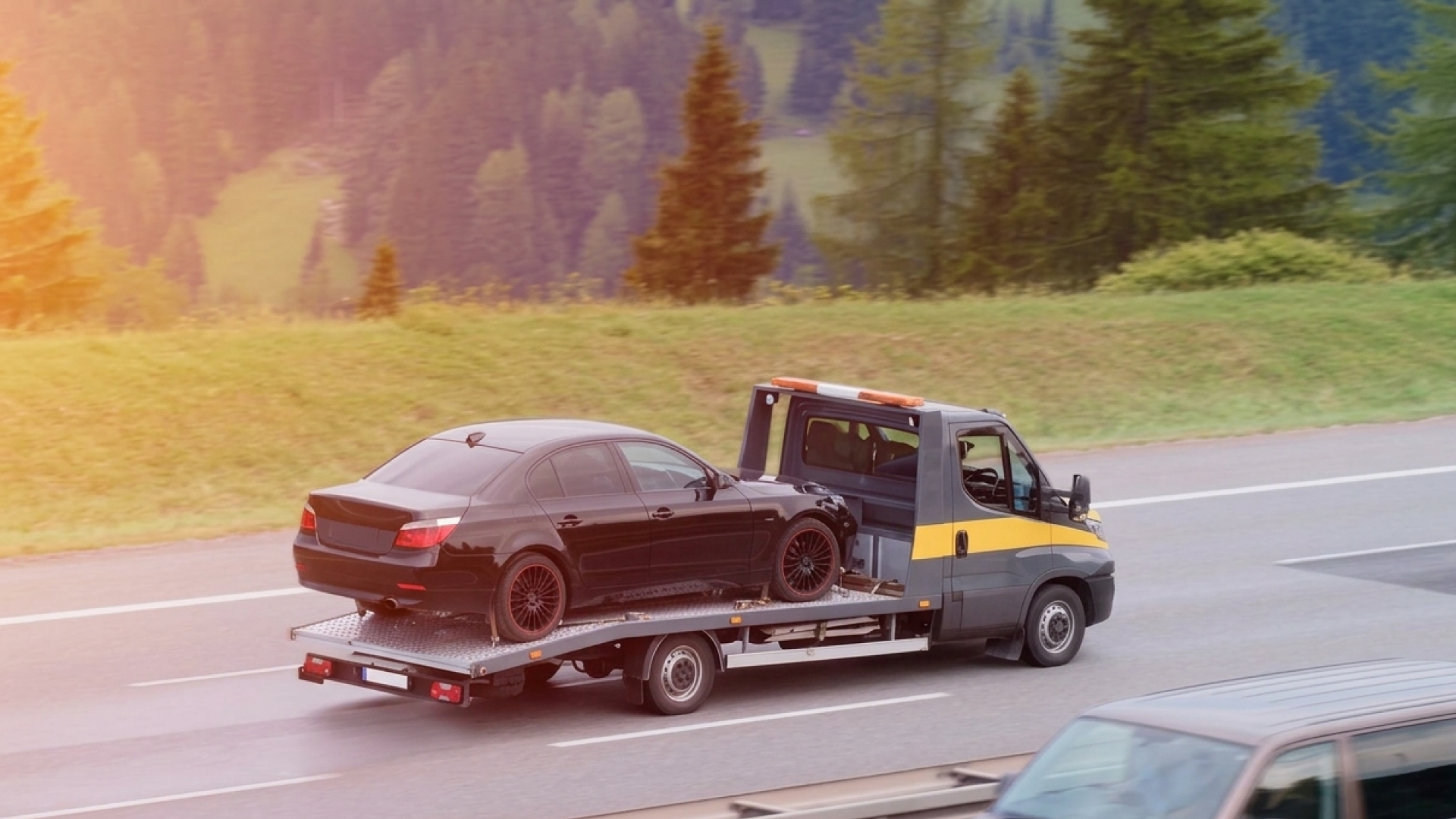
Flatbed towing is a transportation method in which the disabled vehicle is loaded onto a long, level platform attached to the tow truck. Once properly secured, the vehicle is carried rather than pulled with its tires rolling on the road.
A typical flatbed tow involves several basic steps:
The tow operator positions the flatbed truck in a safe location.
The platform is lowered or tilted to create a loading surface.
A winch and appropriate equipment are used to move the vehicle onto the platform if it cannot drive up itself.
The vehicle is positioned correctly on the bed.
The operator secures the vehicle using suitable tie-down equipment.
The platform is returned to its transport position.
The vehicle is transported to its destination.
This approach can be particularly useful when keeping the disabled vehicle's wheels off the pavement is desirable.
How Is Flatbed Towing Different From Standard Towing?
With some conventional towing methods, two wheels may remain on the road while the other end of the vehicle is lifted. A light-duty towing truck, for example, raises either the front or rear wheels while the remaining wheels roll during transportation.
Flatbed towing carries the entire vehicle.
That distinction matters because some vehicles or damage situations make rolling the vehicle on its own tires less desirable or impractical.
When Is Flatbed Towing a Better Choice?
Flatbed towing can be a particularly suitable option when the vehicle cannot safely be driven or when keeping all four wheels off the road is beneficial.
After a Serious Collision
An accident can affect much more than the visible body panels.
A collision may damage steering components, suspension parts, wheels, tires, axles, or other systems that affect how the vehicle moves. Even if the engine still runs, that does not necessarily mean the vehicle should be driven.
Flatbed transportation can help avoid putting additional road stress on a vehicle with significant damage.
For example, imagine a sedan involved in a front-end collision. The headlights and bumper are damaged, but the more important concern is that one front wheel is no longer positioned correctly. Attempting to drive the vehicle could create additional problems or make it harder to control.
A flatbed can transport the vehicle without requiring the damaged wheels to roll along the roadway.
When the Vehicle Has Steering or Suspension Damage
Steering and suspension problems deserve special attention because they can affect the vehicle's ability to move in a controlled manner.
A vehicle with a damaged tie rod, suspension component, wheel assembly, or steering system may not track properly. In such cases, moving it under its own power can be unsafe.
Flatbed towing provides an alternative because the vehicle can be loaded and transported rather than driven.
Why Steering Damage Matters
A vehicle does not need to look severely damaged to have a serious steering problem. After an impact, unusual wheel positioning, difficulty steering, or a vehicle that pulls dramatically to one side can indicate that driving may not be appropriate.
A tow operator can assess the loading situation and determine what equipment is needed to move the vehicle safely.
When the Vehicle Cannot Roll Normally
A flatbed may also be useful when the vehicle's wheels cannot rotate normally.
This can happen because of:
Severe tire damage
Locked wheels
Axle problems
Drivetrain damage
Suspension failure
Collision damage
A mechanical failure that prevents normal movement
Trying to pull a vehicle with a wheel that cannot roll freely can create additional complications. Loading the vehicle completely onto a flatbed eliminates the need for the disabled vehicle to travel on its own wheels.
For Certain All-Wheel-Drive or Four-Wheel-Drive Vehicles
Drivetrain configuration can affect towing requirements.
Some all-wheel-drive and four-wheel-drive vehicles have specific towing considerations because their drivetrains are designed to transfer power between multiple wheels. Incorrect towing procedures can potentially create mechanical problems depending on the vehicle and manufacturer's requirements.
A flatbed keeps all four wheels off the ground, which can be a practical transportation method for many AWD and 4WD vehicles.
The vehicle owner's manual should still be consulted because towing requirements differ by make, model, drivetrain, and configuration.
For Vehicles With Very Low Ground Clearance
Sports cars, modified vehicles, and some luxury vehicles have limited ground clearance.
A standard towing approach may create clearance concerns when the vehicle is being loaded or transported. A flatbed can provide a more controlled loading process, although the tow operator still needs to consider the vehicle's approach angle, ground clearance, and available equipment.
If a vehicle has an aftermarket suspension, lowered ride height, or other modifications, tell the towing company before service arrives.
When the Vehicle Is Disabled in a Difficult Location
A breakdown does not always happen in a convenient parking lot.
A vehicle may stop working:
On a busy roadway
Near an intersection
On a narrow shoulder
In a parking structure
In a residential driveway
On uneven ground
Near a curb
In an area with limited space
The location can affect how the vehicle needs to be loaded.
If the vehicle cannot move under its own power, the tow operator may need to use a winch or specialized loading technique to position it safely on the flatbed.
When You Want the Vehicle Transported Without Road Contact
One of the clearest benefits of a flatbed is simple: the disabled vehicle is carried rather than rolling on the roadway.
This can be useful for vehicles with mechanical, tire, wheel, suspension, or drivetrain problems where additional rolling is undesirable.
It can also be useful when transporting a vehicle over a longer distance or when the owner wants all four wheels secured on the transport platform.
Flatbed Towing After an Accident: What Drivers Should Know
After a collision, emotions are usually running high. The immediate priorities should be personal safety, moving away from traffic when it is safe to do so, and contacting the appropriate emergency towing services when necessary.
Do not assume a vehicle is safe to drive simply because it starts.
Look for signs such as:
Fluid leaking underneath the vehicle
A wheel sitting at an unusual angle
Difficulty steering
Severe tire or wheel damage
Smoke or unusual smells
Significant body damage near mechanical components
Warning lights appearing after the collision
Parts hanging underneath the vehicle
If there is uncertainty about whether the vehicle can safely move, professional towing is often the safer route than attempting to drive it to a repair facility.
A&Z Towing LLC provides emergency towing and flatbed towing for drivers in Marrero, Harvey, Gretna, Westwego, and surrounding Louisiana areas.
Flatbed Towing vs. Wheel-Lift Towing
The right towing method depends on the vehicle and the situation.
Flatbed Towing
Flatbed towing carries the entire vehicle on a platform.
It can be useful for:
Heavily damaged vehicles
Vehicles that cannot roll properly
Many AWD or 4WD vehicles
Vehicles with steering or suspension concerns
Low-clearance or specialty vehicles
Situations where all four wheels should remain off the roadway
Wheel-Lift Towing
Wheel-lift towing raises one end of the vehicle while the other wheels remain on the ground.
It can be appropriate for certain routine towing situations where the vehicle can safely roll and its configuration allows this method.
The key point is that the towing method should match the vehicle's condition and manufacturer's requirements, rather than simply choosing whichever truck arrives first.
What Should You Tell the Towing Company?
The information you provide when requesting service can help the operator prepare the appropriate equipment.
Try to describe:
Your exact location — Include the road name, nearby landmark, direction of travel, or parking area.
Vehicle type — Give the year, make, and model if known.
What happened — Explain whether it is a breakdown, accident, flat tire, lockout, or another problem.
Whether the vehicle starts — This helps the operator understand whether it may be able to move under its own power.
Whether the wheels roll — Mention locked wheels or severe tire damage.
Visible damage — Describe damaged wheels, suspension, steering, bumpers, or other major components.
Drivetrain information — Tell them if the vehicle is AWD or 4WD when known.
Access limitations — Mention narrow driveways, parking garages, soft ground, or other obstacles.
Photos can also be useful when it is safe to take them. A clear picture of the vehicle and surrounding area may help the towing company understand the recovery situation before arrival.
Common Misconceptions About Flatbed Towing
“If My Car Starts, I Don't Need a Flatbed.”
Not necessarily.
A vehicle can start while still having serious steering, suspension, drivetrain, or wheel damage. Starting the engine only tells you that the engine can operate; it does not confirm that the entire vehicle is safe to drive.
“Flatbeds Are Only for Wrecked Cars.”
Flatbeds are not limited to accident vehicles.
They can also be used for disabled vehicles with mechanical problems, vehicles that cannot roll normally, certain AWD or 4WD vehicles, specialty vehicles, and other situations where carrying the vehicle is appropriate.
“Any Tow Truck Can Tow Any Vehicle.”
Tow trucks are not interchangeable.
Vehicle size, weight, drivetrain, wheel condition, damage, ground clearance, and location can all affect the equipment and towing method required.
Giving accurate information when requesting service helps the towing provider determine what is needed.
“I Should Try Driving the Vehicle to See If It Still Works.”
Testing a seriously damaged vehicle by driving it can create unnecessary risk.
If the vehicle has obvious mechanical, steering, suspension, wheel, or collision damage, professional assessment and towing may be more appropriate than attempting to drive it.
How Professional Flatbed Towing Works
A professional tow is more than simply placing a vehicle on a truck.
Step 1: Assess the Vehicle
The operator considers the vehicle's condition, position, wheels, steering, drivetrain, and surrounding environment.
Step 2: Plan the Loading Process
The operator determines how the vehicle should be approached and whether a winch, ramps, or other equipment will be necessary.
Step 3: Load the Vehicle
If the vehicle cannot drive onto the platform, a winch can be used to move it onto the flatbed in a controlled manner.
Step 4: Secure the Vehicle
Once positioned correctly, the vehicle is secured using appropriate tie-down equipment so it remains stable during transportation.
Step 5: Transport the Vehicle
The operator transports the vehicle to the requested destination while keeping the disabled vehicle off the roadway.
This process is especially useful when the vehicle cannot safely travel on its own tires.
How to Prepare for a Flatbed Tow
A few simple steps can make the process easier.
Remove valuable personal belongings from the vehicle before transportation if possible. Make sure you have the keys available if the towing provider needs them for loading or unloading.
If the vehicle is involved in an accident, avoid standing in active traffic lanes or around damaged components that may create additional hazards.
When calling for service, provide as much accurate information as possible. A clear description of the vehicle's condition can help the towing company determine whether flatbed towing, standard towing, or vehicle recovery equipment is appropriate.
Flatbed Towing for Drivers in Marrero and Nearby Louisiana Areas
Roadside emergencies can happen anywhere, from local streets in Marrero to busy routes around Harvey, Gretna, and Westwego.
A&Z Towing LLC provides 24/7 towing and roadside assistance for drivers dealing with breakdowns, accidents, flat tires, dead batteries, lockouts, and other vehicle emergencies.
Services include emergency towing, light-duty towing, flatbed towing, vehicle recovery, and roadside assistance. When a vehicle cannot safely continue driving, professional towing can help move it toward a repair shop, home, or another appropriate destination.
What To Do Before the Tow Truck Arrives
While waiting for assistance, focus on staying safe.
If your vehicle is in a dangerous traffic location and it is safe to move it, get to a safer position. Turn on your hazard lights and remain aware of surrounding traffic.
If you are on a highway or busy roadway, avoid standing directly beside the vehicle when traffic is moving close to the shoulder.
Have your vehicle information and location ready for the towing operator. If conditions are unsafe, follow instructions from emergency personnel.
Conclusion
Flatbed towing can be a better choice when a disabled vehicle should not be driven or when its wheels should remain completely off the roadway during transportation.
It is particularly useful for many accident-damaged vehicles, vehicles with steering or suspension problems, vehicles that cannot roll normally, certain AWD and 4WD vehicles, low-clearance vehicles, and situations requiring controlled loading.
The most important consideration is not simply whether a tow truck is available. It is whether the towing method matches the vehicle's condition, configuration, and location.
If you are unsure whether your vehicle needs a flatbed, explain exactly what happened and describe any visible damage when requesting assistance. A professional towing operator can then determine the appropriate equipment and loading method.
For drivers in Marrero, Harvey, Gretna, Westwego, and surrounding Louisiana communities, A&Z Towing LLC offers 24/7 towing and roadside assistance when a vehicle cannot safely continue its journey. Contact us today to learn more or request immediate help.
Frequently Asked Questions
1. When should I choose flatbed towing for a disabled vehicle?
Flatbed towing is often appropriate when a vehicle has significant accident damage, steering or suspension problems, locked or damaged wheels, drivetrain concerns, very low clearance, or another condition that makes rolling the vehicle on its own tires undesirable.
2. Is flatbed towing safer for a vehicle damaged in an accident?
It can be a suitable option for accident-damaged vehicles because the entire vehicle is carried on the flatbed instead of requiring its wheels to roll during transportation. The appropriate method depends on the type and severity of the damage.
3. Can a flatbed tow a car that does not start?
Yes. A flatbed can transport a vehicle that will not start. If the vehicle cannot drive onto the platform, the tow operator may use a winch and appropriate loading equipment to position it on the flatbed.
4. Is flatbed towing better for AWD and 4WD vehicles?
A flatbed can be a practical towing method for many AWD and 4WD vehicles because all four wheels remain off the ground. However, towing requirements vary by vehicle, so the owner's manual and manufacturer recommendations should be considered.
5. Can a flatbed tow a vehicle with a flat or damaged tire?
Yes. Flatbed towing can be useful when a damaged tire prevents the vehicle from being driven safely. The operator can load and secure the vehicle rather than requiring the damaged tire to roll during transportation.
6. Can a flatbed tow a vehicle with steering or suspension damage?
A flatbed may be appropriate when steering or suspension damage makes normal driving unsafe. The operator will need to assess the vehicle and determine how it can be loaded without creating additional problems.
7. What is the difference between flatbed towing and wheel-lift towing?
Flatbed towing carries the entire vehicle on a platform, while wheel-lift towing raises one end of the vehicle and leaves the other wheels on the ground. The appropriate method depends on the vehicle, its condition, drivetrain, and towing requirements.
8. Can a flatbed tow a vehicle after a collision?
Yes. Flatbeds are commonly useful for vehicles that have been involved in collisions, particularly when the vehicle has damaged wheels, suspension, steering, or other components that make driving unsafe or impractical.
9. What information should I give a towing company when requesting a flatbed?
Provide your location, vehicle year and model if known, whether the vehicle starts, whether the wheels roll, the type of problem or accident, visible damage, drivetrain information, and any access limitations such as a narrow driveway or parking garage.
10. What should I do if I am unsure whether my vehicle needs flatbed towing?
Describe the vehicle's condition and what happened when you call for assistance. Mention any accident damage, steering problems, damaged wheels, flat tires, drivetrain concerns, or inability to roll. The towing operator can use that information to determine the appropriate towing method.