Can a Tow Truck Transport a Vehicle With Steering or Brake Problems?
Introduction
A vehicle with steering or brake problems should not be treated like an ordinary breakdown. If the steering wheel will not respond properly, the brakes feel dangerously weak, or a brake component has failed, driving the vehicle to a repair shop can put you, your passengers, and other motorists at risk.
The good news is that a tow truck can usually transport a vehicle with steering or brake problems. The key is choosing the right towing method and giving the towing company accurate information about the vehicle's condition before it arrives.
Steering and brake failures can also affect how a vehicle needs to be loaded, secured, moved, and unloaded. A vehicle that cannot steer or stop under its own power may require a flatbed tow truck or specialized recovery equipment rather than a conventional towing setup.
For drivers in Marrero, Harvey, Gretna, Westwego, and nearby Louisiana communities, understanding these differences can help you make a safer decision during an already stressful roadside emergency.
Can a Tow Truck Move a Vehicle With Steering or Brake Problems?
Yes, a tow truck can generally transport a vehicle with failed or damaged steering or brakes, but the appropriate towing method depends on the severity of the problem and whether the wheels can roll and steer safely.
A professional tow operator assesses the vehicle before deciding how to move it. Factors can include:
Whether the steering wheel turns normally
Whether the front or rear wheels are damaged
Whether the vehicle's brakes function at all
Whether the wheels roll freely
Whether the vehicle was involved in an accident
Whether the transmission can be placed in neutral
Whether the vehicle is parked in a difficult position
Whether additional recovery equipment is needed
A vehicle that still rolls but has limited steering may require a different approach from one with a locked steering system or damaged suspension.
The safest choice is to explain the problem before the tow truck arrives. Tell the dispatcher exactly what happened rather than simply saying that the vehicle "won't drive."
Why Steering Problems Affect Towing
Steering allows the vehicle's wheels to follow the intended direction. If a steering component has failed, the wheels may not respond correctly while the vehicle is being moved.
This can make ordinary towing more complicated.
A damaged tie rod, steering rack, ball joint, steering column, or other component may prevent the front wheels from tracking properly. Accident damage can create similar problems, particularly if the suspension or wheel assembly has been affected.
If the steering is severely compromised, the vehicle may need to be loaded onto a flatbed rather than moved with its wheels on the road.
Why Brake Problems Matter During Transportation
A vehicle's brakes are essential for stopping under its own power, but a disabled vehicle still has to be safely loaded and positioned during towing.
If the brakes do not work, the tow operator needs to account for that condition during loading and unloading. A vehicle with no functioning brakes can roll unexpectedly if it is not properly controlled and secured.
This is one reason drivers should never assume that a vehicle with failed brakes can simply be driven slowly to a nearby mechanic.
When Is Flatbed Towing the Better Choice?
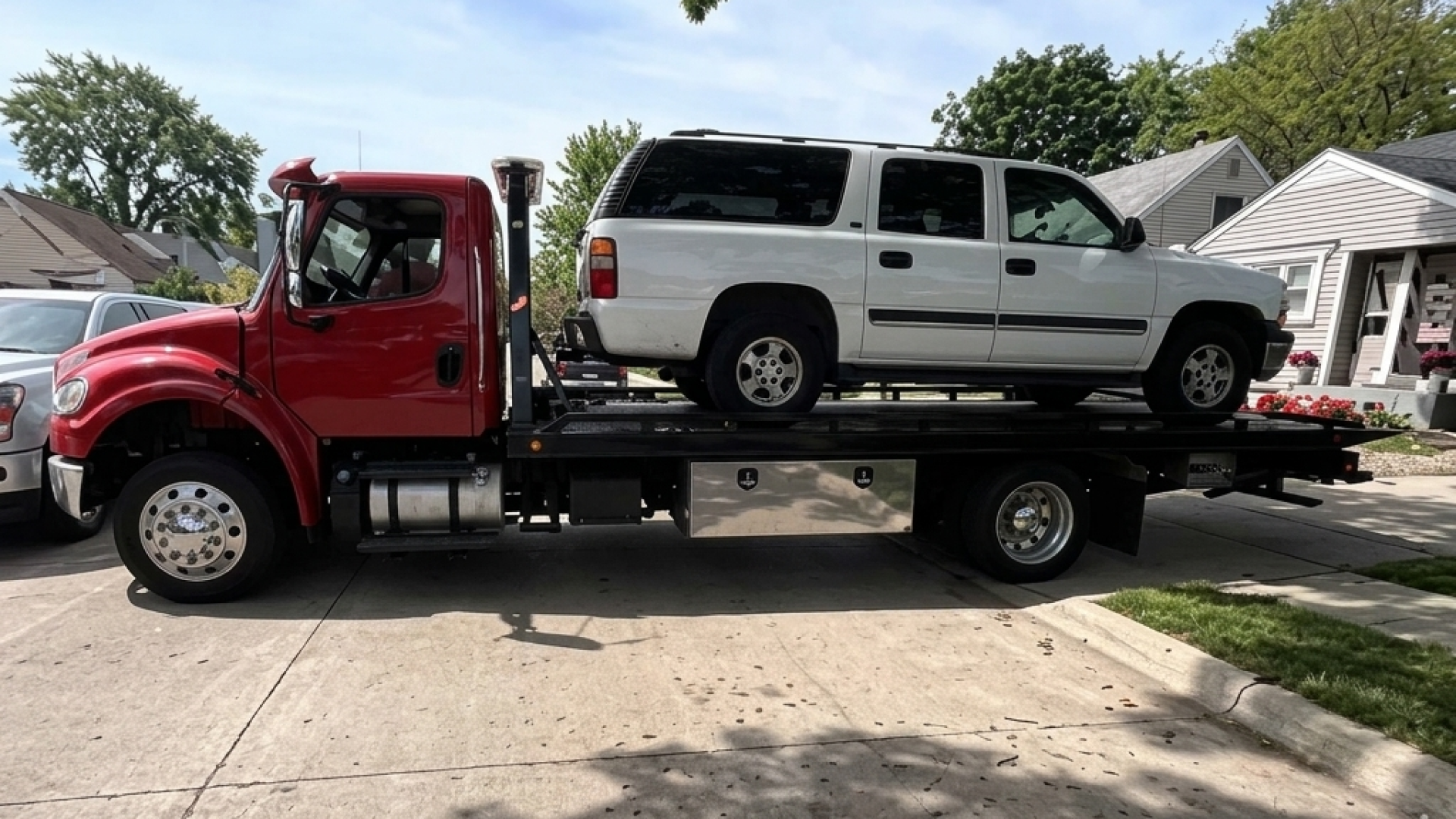
Flatbed towing is often a practical option for vehicles that cannot safely roll or steer on their own.
A flatbed tow truck uses a level platform to carry the vehicle rather than requiring all four wheels to remain on the roadway during transportation. This can reduce the need to have the disabled vehicle travel on its own wheels.
Flatbed towing may be particularly useful when a vehicle has:
Severe steering failure
Significant brake failure
Accident-related wheel or suspension damage
A locked wheel
Multiple damaged tires
Drivetrain problems
Low ground clearance
Difficulty rolling normally
The specific towing method should always be determined by the operator after considering the vehicle's condition.
How a Flatbed Tow Works
The operator positions the flatbed as safely as possible and uses appropriate loading equipment to bring the disabled vehicle onto the platform.
If the vehicle cannot move under its own power, a winch may be used to pull it onto the bed. Once positioned, the vehicle is secured according to the towing equipment and the vehicle's condition.
This approach can be useful when steering or braking systems are not reliable enough for normal road movement.
Does Every Vehicle With Brake Failure Need a Flatbed?
Not necessarily.
Brake problems range from reduced braking performance to complete brake failure. The vehicle's location, wheel condition, steering function, transmission, and other factors also influence the towing method.
A professional tow operator can determine what equipment is appropriate after learning what happened.
The important point is that drivers should not make the decision based only on how far the repair shop is from their location. A vehicle with a serious brake or steering problem should not be driven simply because the destination is nearby.
Can a Tow Truck Transport a Vehicle That Cannot Steer?
Yes. A vehicle that cannot steer properly can often be transported with appropriate towing equipment.
The challenge is that a disabled steering system can prevent the wheels from following the tow path. That makes ordinary movement on the vehicle's own wheels more difficult and potentially unsafe.
Depending on the situation, a tow operator may use a flatbed, light-duty towing wheel-lift equipment, dollies, a winch, or other appropriate towing tools.
What If the Steering Wheel Is Locked?
A locked steering wheel does not automatically mean the vehicle cannot be towed.
Modern vehicles can have electronic steering locks, mechanical steering locks, or other systems that behave differently depending on the vehicle's design. The operator may need to use specific procedures or equipment to move the vehicle safely.
Tell the towing company if the steering wheel is locked before service begins. This information can help the operator arrive with the right equipment.
What If the Wheels Are Pointing Sideways?
Wheels that are stuck at an unusual angle can complicate loading and movement.
The operator may need to reposition the vehicle using specialized equipment rather than attempting to pull it normally. If the steering components are damaged, forcing the wheels into position could create additional problems.
Professional towing equipment is designed to help manage these situations without relying on the disabled steering system to perform normally.
What Happens if the Brakes Do Not Work at All?
Complete brake failure should be treated as a serious towing situation.
Do not attempt to drive the vehicle to a repair facility using the parking brake, engine braking, or other improvised methods unless a qualified professional specifically determines that the vehicle can be moved safely.
A vehicle without functioning service brakes can behave unpredictably, particularly on slopes, in traffic, or during emergency situations.
When requesting towing, clearly tell the dispatcher that the brakes are not working. The operator can then consider the appropriate loading and securing method.
Brake Failure After an Accident
Brake problems following a collision require additional caution.
A crash can damage brake lines, calipers, rotors, suspension components, wheels, or other parts. Damage may not always be visible from outside the vehicle.
If the vehicle was involved in an accident and you suspect brake or steering damage, avoid moving it unnecessarily. Let the towing professional assess the situation.
Can a Tow Truck Move a Vehicle With Both Steering and Brake Problems?
Yes, a vehicle with both steering and brake problems can often be transported, but it may require more careful handling and specialized equipment.
This combination is particularly important because the vehicle may have limited ability to control its direction and no reliable way to stop itself.
A flatbed tow truck may be a suitable option in many cases because the vehicle can be transported on the truck's platform rather than relying on its own steering and braking systems during road travel.
However, the exact equipment depends on the vehicle and the circumstances.
Tell the Dispatcher Exactly What Is Wrong
Instead of saying, "My car won't move," provide specific information:
Explain whether the steering wheel turns.
State whether the brakes work.
Mention whether the vehicle rolls.
Describe any accident damage.
Explain whether a wheel is locked.
Tell the dispatcher if the vehicle is in a ditch, on soft ground, or in another difficult location.
Provide the vehicle's make, model, and approximate condition.
These details can help the towing company determine what type of truck and equipment may be needed.
What Should You Do Before the Tow Truck Arrives?
Your first priority should be personal safety.
If your vehicle is stopped in a dangerous location, turn on the hazard lights if they work and move yourself and passengers to a safe location when it is possible to do so without creating another hazard.
Avoid standing directly in traffic lanes or beside a damaged vehicle in an unsafe area.
Do Not Attempt a Test Drive
If you already know there is a steering or brake problem, do not keep driving to "see if it gets better."
Intermittent steering or brake problems can become complete failures without much warning. A short trip to a repair shop may seem convenient, but it can expose everyone nearby to unnecessary risk.
Remove Important Personal Items
Before the vehicle is transported, prepare your vehicle and remove valuables and personal belongings if it is safe to do so.
Take items such as:
Wallets and documents
Electronics
Work equipment
House or vehicle keys that are not needed for towing
Medication and personal necessities
Important paperwork
Do not delay emergency towing in a dangerous location simply to retrieve belongings.
Common Steering and Brake Problems That May Require Towing
Not every steering or brake warning requires the same response. Some common issues include:
Steering Rack Failure The steering rack is a major part of the steering system. Serious rack problems can make steering difficult or unreliable.
Tie Rod Damage Tie rods connect steering components to the wheels. Damage can affect wheel alignment and steering control.
Ball Joint or Suspension Damage A damaged ball joint or suspension component can affect the position and movement of a wheel. Continuing to drive may worsen the problem.
Brake Fluid Loss A major loss of brake fluid can significantly reduce braking ability. A driver should not assume that adding fluid alone makes the vehicle safe to drive.
Damaged Brake Lines Brake lines carry hydraulic fluid through the braking system. A damaged line can lead to serious loss of braking performance.
Brake Caliper Problems A failed or seized caliper can create braking issues, overheating, pulling, or wheel-related problems.
Accident-Related Damage After a collision, steering and braking components may be damaged even if the vehicle appears capable of moving. Professional towing can help prevent additional vehicle damage.
Steering Problems vs. Brake Problems: Why the Towing Approach Can Differ
Steering and braking are both critical safety systems, but they create different challenges during towing.
A steering failure primarily affects directional control. A brake failure primarily affects the vehicle's ability to stop or remain stationary.
When both systems are compromised, the towing operator has to consider both issues together.
For example, a car with a failed steering rack but working brakes may still require equipment that keeps the steering wheels from needing to guide the vehicle normally. A car with working steering but no brakes may require additional precautions during loading, positioning, and unloading.
The safest towing method depends on the actual mechanical condition rather than simply the name of the failed part.
Can You Tow a Vehicle With a Flatbed if It Has a Damaged Wheel?
In many cases, yes.
A flatbed can be useful for vehicles with damaged wheels or tires because the vehicle can be carried rather than relying on the damaged wheel to rotate normally on the roadway.
However, severe wheel or suspension damage can make loading more complicated. A winch, specialized straps, dollies, or vehicle recovery equipment may be necessary.
If you know a wheel is damaged, tell the towing company before service begins.
Why Professional Towing Is Safer Than Improvised Towing
A damaged vehicle can behave differently from a normal vehicle. Steering may be unpredictable, wheels may lock, brakes may not hold, and damaged suspension components can shift under load.
Why professional towing is safer than asking a friend for help comes down to proper equipment and expertise. Improvised towing methods can create severe safety hazards if the equipment is not appropriate for the vehicle.
Professional towing involves selecting equipment based on factors such as vehicle size, drivetrain, wheel condition, steering capability, location, and type of damage.
For drivers dealing with an emergency in Marrero, Harvey, Gretna, Westwego, or surrounding Louisiana communities, calling a local towing company can be a practical way to get the vehicle off the roadway and transported to a repair facility.
How A&Z Towing Can Help With Steering or Brake Problems
A&Z Towing LLC provides 24/7 towing and roadside assistance for drivers dealing with vehicle breakdowns and roadside emergencies in Marrero, Harvey, Gretna, Westwego, and surrounding Louisiana areas.
Its towing services include emergency towing, light-duty towing, flatbed towing, vehicle recovery, and roadside assistance.
When requesting service for a vehicle with steering or brake problems, what information you give a tow truck dispatcher is crucial. Clear information helps the towing team understand whether the vehicle rolls, steers, brakes, or requires recovery equipment.
A&Z Towing can also assist drivers dealing with other common car problems that require towing, including flat tires, dead batteries, lockouts, and breakdowns.
The goal is not simply to move the vehicle. Proper towing starts with understanding its condition and choosing an appropriate method for transportation.
Practical Tips for Preventing Towing Complications
Drivers cannot prevent every mechanical failure, but basic vehicle care can reduce the likelihood of unexpected problems.
Pay attention to warning signs such as:
A steering wheel that suddenly feels loose
Excessive steering vibration
The vehicle pulling sharply to one side
A brake pedal that feels unusually soft
Grinding or unusual braking noises
Brake warning lights
Fluid leaks
Difficulty stopping
A wheel that appears damaged or misaligned
Do not ignore significant changes in steering or braking behavior.
A problem that seems minor while leaving the driveway can become much more serious once the vehicle is traveling at road speed.
What Information Should You Give a Towing Company?
A useful towing request should answer four basic questions: where you are, what happened, what the vehicle can still do, and what type of vehicle you have.
Tell the towing provider:
Your exact location or nearest identifiable landmark.
The vehicle's make, model, and approximate size.
Whether the engine starts.
Whether the vehicle rolls.
Whether the steering works.
Whether the brakes work.
Whether there is collision or suspension damage.
Whether the vehicle is blocking traffic or in another hazardous position.
The more accurate the information, the easier it is for the towing provider to prepare for the job.
Conclusion
A tow truck can transport a vehicle with steering or brake problems, but the right towing method depends on the vehicle's condition. A serious steering failure, complete brake failure, damaged wheel, accident-related suspension problem, or combination of issues may require a flatbed or specialized towing equipment.
The most important decision is not whether the repair shop is close enough to drive to. It is whether the vehicle can be moved without creating an unnecessary safety risk.
If the steering or brakes are unreliable, avoid driving the vehicle and explain the problem clearly when requesting towing. A professional operator can assess the situation and determine how the vehicle should be loaded, secured, and transported.
For drivers in Marrero, Harvey, Gretna, Westwego, and surrounding Louisiana areas, A&Z Towing LLC provides 24/7 towing and roadside assistance for breakdowns, accidents, vehicle recovery, and other roadside emergencies. Contact us for fast, professional service.
Frequently Asked Questions
Can a tow truck tow a car with no brakes? Yes. A vehicle with completely failed brakes can generally be transported with appropriate towing equipment. The towing method depends on the vehicle's condition, location, wheel movement, steering function, and whether specialized equipment is needed.
Can a tow truck move a car that cannot steer? Yes. A vehicle with steering failure can often be transported, but the operator may need a flatbed, wheel-lift equipment, dollies, or other appropriate equipment. Tell the towing company about the steering problem before the truck arrives.
Is flatbed towing better for a vehicle with steering problems? A flatbed tow truck can safely transport a vehicle with mechanical problems when it cannot steer properly because it carries the vehicle rather than requiring normal steering during road transportation. The towing professional should determine the appropriate equipment based on the vehicle's condition.
Can I drive my car to a mechanic if the brakes are failing? Driving with failing or unreliable brakes is risky and should generally be avoided. A brake problem can worsen unexpectedly. If braking performance is seriously compromised, contact a towing provider and have the vehicle transported instead.
Can a car be towed if the steering wheel is locked? A locked steering wheel does not necessarily prevent towing. The operator may use specialized equipment or procedures depending on the vehicle's design and condition. Tell the towing company that the steering is locked when requesting service.
Can a damaged vehicle with both steering and brake problems be towed? Yes. Vehicles with both steering and brake problems can often be transported using suitable towing or recovery equipment. Severe mechanical or collision damage may require a flatbed or additional equipment.
What should I tell the tow company about a steering or brake problem? What you should tell a towing company about your vehicle before it arrives includes explaining whether the steering works, whether the brakes work, whether the vehicle rolls, whether any wheels are damaged, and whether the vehicle was involved in an accident. Also provide the vehicle's make, model, and exact location.
Should I try to move my car if the brakes stop working? Do not attempt to drive a vehicle with completely failed brakes. If you are already stopped, focus on getting yourself and passengers to a safe location and contact a professional towing provider for assistance.
Can a tow truck transport a vehicle after an accident? Yes. Tow trucks can transport many accident-damaged vehicles. If steering, brakes, wheels, suspension, or other components are damaged, the operator may use a flatbed or specialized recovery equipment.
Does towing equipment depend on the type of vehicle damage? Yes. The vehicle's steering, brakes, wheels, drivetrain, ground clearance, accident damage, and ability to roll can all affect the appropriate towing method. Providing accurate information helps the towing provider prepare for the situation.