Wheel Lift vs Flatbed Towing: Key Differences for Modern Vehicles
Introduction
Not every vehicle should be towed the same way. A compact car with a simple breakdown may be handled differently from an all-wheel-drive SUV, a vehicle involved in an accident, or a car with serious wheel or suspension damage.
Two of the most common towing methods are wheel lift towing and flatbed towing. Both can safely move vehicles when the appropriate equipment and procedures are used, but they work in very different ways. Understanding those differences can help you make a better decision when your vehicle needs towing in Marrero, Harvey, Gretna, Westwego, or surrounding Louisiana areas.
The right towing method depends on factors such as your vehicle's drivetrain, condition, ground clearance, weight, damage, and the distance it needs to travel. Modern vehicles can also have low clearances, electronic systems, specialized tires, and all-wheel-drive configurations that require extra consideration.
This guide explains how wheel lift and flatbed towing work, which vehicles are generally better suited to each method, what happens during a tow, and what drivers should consider before requesting roadside assistance.
What Is Wheel Lift Towing?
Wheel lift towing uses a hydraulic or mechanical lifting system to raise one end of a vehicle off the ground. The remaining wheels stay on the road while the vehicle is transported by the tow truck.
A wheel lift is typically positioned beneath the vehicle's appropriate wheels. Once the vehicle is secured, the lifting mechanism raises those wheels clear of the pavement.
This method is different from older tow-truck designs that relied primarily on chains or hooks. Modern wheel lift equipment is designed to provide controlled support and secure the vehicle during transportation.
How Wheel Lift Towing Works
The basic process usually involves several steps:
The tow operator assesses the vehicle and determines whether a wheel lift is appropriate.
The truck is positioned so the lifting equipment can safely reach the vehicle.
The appropriate wheels are secured to the wheel lift.
The vehicle is raised carefully from the ground.
Safety equipment is checked before transportation begins.
The vehicle is moved to its destination while the operator monitors the setup.
The exact procedure can vary depending on the vehicle, its condition, and the equipment being used.
When Wheel Lift Towing Can Be a Good Choice
Wheel lift towing can be practical for vehicles that are in relatively good condition and can safely have one end lifted from the ground.
It is commonly useful for situations such as:
Short-distance towing
Disabled vehicles with usable rolling wheels
Vehicles that need to be moved from a roadside location
Certain front-wheel-drive or rear-wheel-drive vehicles
Situations where maneuverability around tight spaces matters
The key consideration is not simply whether a vehicle has four wheels. The operator needs to determine whether lifting one end is compatible with the vehicle's drivetrain and condition.
What Is Flatbed Towing?
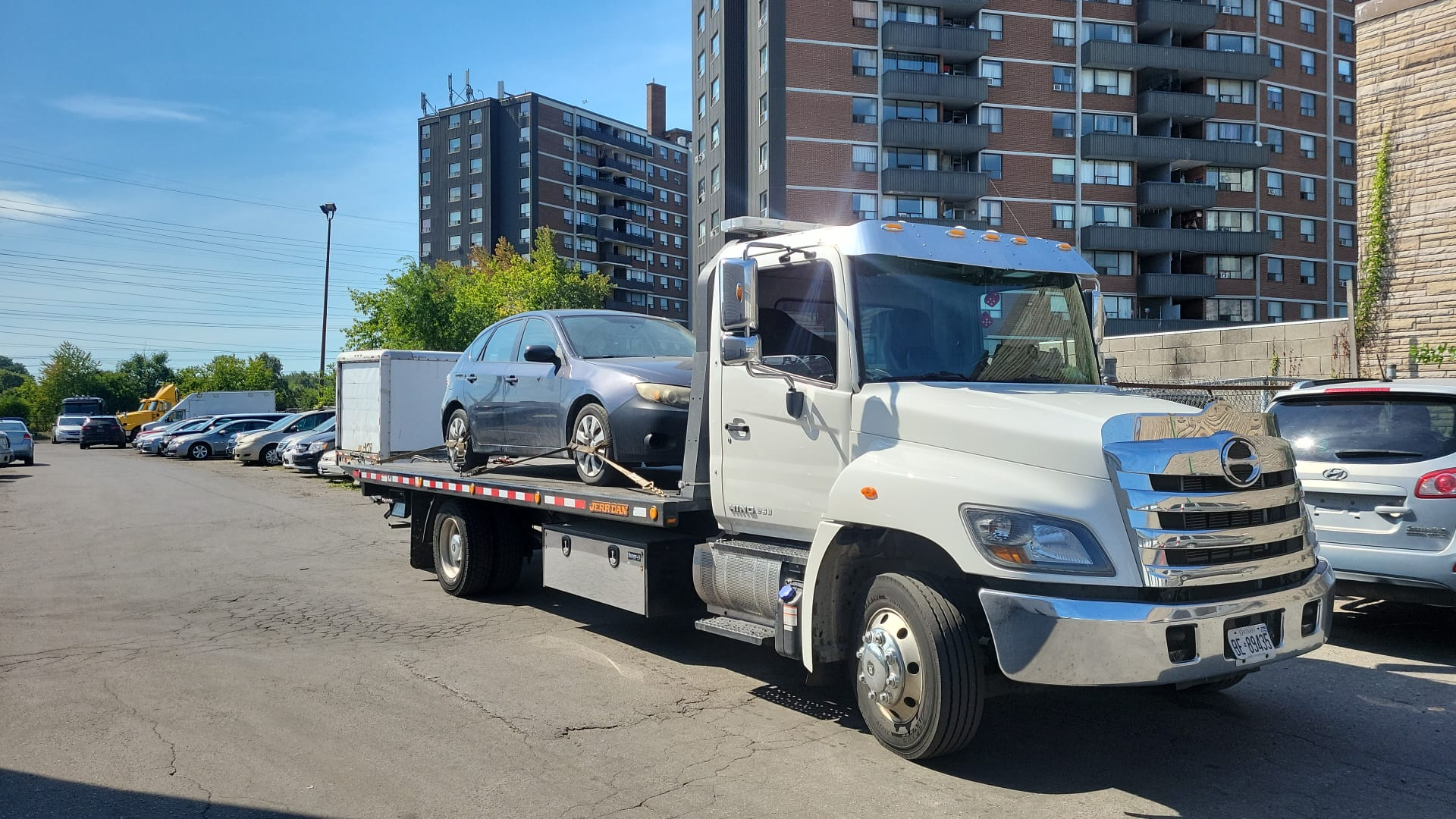
Flatbed towing places the entire vehicle on a level platform attached to the tow truck. Instead of leaving two wheels on the road, the vehicle is loaded onto the bed and transported completely off the pavement.
This is one reason flatbed towing is often preferred for vehicles that should not have their wheels turning during transportation.
Flatbed trucks can also be useful when a vehicle has significant damage or cannot roll normally.
How Flatbed Towing Works
A typical flatbed towing process may look like this:
The operator positions the truck near the disabled vehicle.
The flatbed is lowered or tilted to create a loading surface.
A winch or other appropriate equipment is used to move the vehicle onto the bed when necessary.
The vehicle is positioned securely.
The vehicle is tied down using appropriate securement points and equipment.
The operator verifies that the load is secure before transportation.
If the vehicle cannot move under its own power, the loading method becomes particularly important.
When Flatbed Towing Can Be a Better Choice
Flatbed towing is often appropriate for vehicles where keeping all four wheels off the ground is beneficial.
Examples can include:
All-wheel-drive vehicles
Vehicles with significant collision damage
Vehicles with damaged wheels or tires
Low-clearance vehicles
Certain luxury or specialty vehicles
Vehicles that should not be driven or rolled normally
Longer-distance transportation
Flatbed towing is not automatically required for every modern vehicle, but it can provide an additional level of protection in situations where wheel movement could create problems.
Wheel Lift vs Flatbed Towing: The Main Differences
The biggest difference is simple: wheel lift towing raises part of the vehicle, while flatbed towing carries the entire vehicle on a platform.
That basic distinction affects how each method should be used.
Vehicle Position
With wheel lift towing, two wheels generally remain on the road while the other two are lifted.
With flatbed towing, all four wheels are lifted off the road and the vehicle rests on the truck's platform.
Drivetrain Considerations
Drivetrain configuration matters because some vehicles are not designed to have certain wheels turning while being towed.
Front-wheel-drive, rear-wheel-drive, four-wheel-drive, and all-wheel-drive vehicles can have different towing requirements.
For example, an AWD vehicle may require all four wheels to remain stationary during transportation. In such a situation, a flatbed can be a suitable option because the entire vehicle is carried.
Always follow the vehicle manufacturer's towing instructions rather than assuming that one towing method works for every drivetrain.
Vehicle Damage
A vehicle with minor mechanical trouble and functional wheels may be suitable for wheel lift towing.
A vehicle involved in a collision may have bent suspension components, damaged tires, steering problems, or other issues that make partial lifting inappropriate.
A flatbed can be advantageous when the vehicle needs to be transported without relying on its damaged wheels to roll normally.
Ground Clearance
Low vehicles can present additional challenges during loading and towing.
Sports cars, modified vehicles, and some luxury vehicles may have limited ground clearance. A careful loading procedure is necessary to prevent contact between the vehicle and towing equipment.
Flatbed towing can be particularly useful when the operator needs greater control over how the vehicle is loaded and transported.
Distance
The distance of the tow can also influence the choice.
For a short relocation, wheel lift towing may be practical when the vehicle and drivetrain are compatible with the setup.
For longer transportation, carrying the entire vehicle on a flatbed can be preferable in situations where minimizing wheel movement is desirable.
The vehicle's condition remains more important than distance alone.
Which Towing Method Is Safer for Modern Vehicles?
There is no universal answer that makes one method safer for every vehicle.
Both wheel lift and flatbed towing can be appropriate when the equipment is correctly selected and the vehicle is properly secured.
The safer choice depends on the vehicle and the circumstances surrounding the breakdown.
Modern Vehicles Require More Careful Assessment
Today's vehicles can include:
Advanced driver-assistance systems
Electronic parking brakes
All-wheel-drive systems
Low-profile tires
Complex suspension systems
Specialized wheels
Hybrid or electric drivetrains
Sensors and electronic components
These features do not automatically mean a flatbed is required. They do mean the towing operator should evaluate the vehicle before deciding how to move it.
If the vehicle owner's manual specifies a particular towing procedure, that information should be considered when selecting the towing method.
When Flatbed Towing Makes More Sense
There are several situations where a flatbed is often a strong option.
All-Wheel-Drive and Four-Wheel-Drive Vehicles
AWD and 4WD vehicles can have specific towing requirements because the wheels and drivetrain components may remain mechanically connected.
A flatbed allows the entire vehicle to be transported with all wheels off the ground.
The exact requirements vary by vehicle, so the owner's manual remains the best source for manufacturer-specific instructions.
Accident-Damaged Vehicles
A collision can create damage that is not immediately visible.
A vehicle may appear capable of rolling but still have problems with its suspension, steering, wheels, or underbody.
If a car has been involved in an accident, the towing operator should inspect its condition before deciding how it should be loaded.
Vehicles With Wheel or Tire Damage
If one or more wheels cannot roll normally, a conventional wheel lift may not be suitable.
Flatbed towing can allow the vehicle to be moved without requiring the damaged wheel to support normal rolling during transportation.
Low-Clearance Vehicles
A low sports car or modified vehicle can require careful loading.
The operator may need to use appropriate loading techniques and equipment to reduce the risk of underbody contact.
When Wheel Lift Towing Makes Sense
Wheel lift towing can be a practical choice when the vehicle's condition and drivetrain allow it.
Short-Distance Vehicle Moves
A disabled vehicle that needs to be moved a relatively short distance may be efficiently handled with a wheel lift.
This can be useful for relocating a vehicle from a dangerous roadside position to a safer location or transporting it to a nearby repair facility.
Tight Locations
Tow trucks using wheel lift equipment can sometimes maneuver effectively in locations where positioning a larger flatbed may be more difficult.
Parking lots, narrow streets, and confined areas can require careful vehicle positioning.
Vehicles With Usable Wheels
If the vehicle has functioning wheels and the appropriate wheels can be lifted safely, wheel lift towing may be an efficient option.
The operator should still verify drivetrain requirements before beginning the tow.
Common Misconceptions About Wheel Lift and Flatbed Towing
Drivers sometimes assume that flatbed towing is always superior or that wheel lift towing is only for older vehicles. Neither assumption is accurate.
“Flatbed Towing Is Always Necessary for Modern Cars”
Modern vehicles do not automatically require flatbed transportation.
Some can be safely towed using a wheel lift when the manufacturer's requirements and the vehicle's condition allow it.
“Wheel Lift Towing Is Unsafe”
Wheel lift towing can be safe when the appropriate vehicle is matched with the correct equipment and secured properly.
Problems usually arise when the towing method does not match the vehicle's drivetrain, damage, or manufacturer requirements.
“A Vehicle That Starts Can Always Be Wheel Lift Towed”
A vehicle may start but still have serious problems.
For example, a car can have steering, suspension, tire, drivetrain, or collision damage that makes driving or partial towing inappropriate.
Starting the engine is not enough to determine the correct towing method.
What Should You Tell the Towing Company?
Providing accurate information can help the towing operator prepare for the situation.
When requesting towing service, be ready to explain:
The vehicle's year, make, and model.
Where the vehicle is located.
Whether the vehicle starts.
Whether it can roll normally.
Whether the vehicle was involved in an accident.
Whether the tires or wheels are damaged.
Whether the vehicle has AWD, 4WD, or another drivetrain configuration.
Where you need the vehicle transported.
If you are unsure about the drivetrain or vehicle specifications, provide the make and model. The towing professional can use that information when assessing the appropriate equipment.
How to Prepare Your Vehicle for Towing
Once professional towing has been requested, there are a few practical steps drivers can take.
Move to a Safe Location If Possible
If your vehicle is disabled in an unsafe position but can still be moved without creating additional danger, move it away from active traffic when it is safe to do so.
If the vehicle cannot move, stay in a safe location and communicate your position clearly to the towing provider.
Remove Personal Items
Take important belongings out of the vehicle before it is transported whenever possible.
Check common storage areas such as the center console, glove compartment, door pockets, and cargo area.
Share Important Vehicle Information
Tell the operator about mechanical problems, collision damage, unusual noises, leaking fluids, damaged tires, or other issues you have noticed.
Small details can help the operator understand how the vehicle should be approached and loaded.
What to Do During a Roadside Emergency
A breakdown can become more dangerous when the vehicle is stopped near moving traffic.
Turn on your hazard lights and remain aware of surrounding vehicles. If your location is unsafe, prioritize your personal safety rather than attempting repairs in an active traffic area.
If you have a flat tire, dead battery, lockout, or mechanical failure, professional roadside assistance may be safer than attempting a repair in hazardous conditions.
For drivers in Marrero, Harvey, Gretna, Westwego, and nearby Louisiana communities, A&Z Towing LLC provides 24/7 towing and roadside assistance for common roadside emergencies.
Services include emergency towing, light-duty towing, flatbed towing, vehicle recovery, jump-start assistance, flat-tire assistance, lockout help, and other roadside support.
Choosing the Right Towing Method
The best towing method is determined by the vehicle, not simply by preference.
A useful way to think about the decision is:
Wheel lift: Often suitable for compatible vehicles with functioning wheels and appropriate drivetrain configurations.
Flatbed: Often preferred when all wheels should remain off the road, such as with certain AWD vehicles, damaged vehicles, low-clearance vehicles, or specialty vehicles.
Vehicle recovery: May require specialized equipment when the vehicle is stuck, off the roadway, or unable to roll normally.
A professional towing operator can assess the situation and select equipment based on the vehicle's condition.
Conclusion
Wheel lift and flatbed towing are both valuable methods for transporting disabled vehicles, but they serve different situations.
Wheel lift towing raises one end of the vehicle and can be practical for compatible vehicles, short-distance moves, and certain roadside situations. Flatbed towing carries the entire vehicle and can be especially useful for AWD vehicles, collision-damaged vehicles, vehicles with wheel problems, low-clearance cars, and situations where keeping all four wheels off the road is beneficial.
The most important factor is choosing a towing method that matches the vehicle's drivetrain, condition, and manufacturer's requirements. If you are unsure which method is appropriate, provide the towing professional with your vehicle information and describe what happened before requesting service.
For drivers dealing with a breakdown or roadside emergency in Marrero, Harvey, Gretna, Westwego, and surrounding Louisiana areas, A&Z Towing LLC offers 24/7 towing and roadside assistance to help get disabled vehicles where they need to go.
Frequently Asked Questions
Does A&Z Towing provide 24/7 emergency towing in Marrero, LA?
Yes. A&Z Towing LLC provides 24/7 towing and roadside assistance in Marrero and surrounding Louisiana areas for drivers dealing with breakdowns, accidents, disabled vehicles, and other roadside emergencies.
How quickly can A&Z Towing respond to a roadside emergency?
Response time depends on factors such as the driver's location, traffic, current service demand, weather, and the type of assistance required. Providing an accurate location can help the towing provider coordinate the service.
What types of vehicles can A&Z Towing tow?
A&Z Towing provides towing for many light-duty vehicles, including cars, SUVs, and similar vehicles. The appropriate towing equipment depends on the vehicle's size, drivetrain, condition, and towing requirements.
Does A&Z Towing offer flatbed towing for cars and SUVs?
Yes. Flatbed towing is available for cars, SUVs, and other compatible vehicles. Flatbed transportation can be useful when all four wheels need to remain off the ground during transportation.
Can A&Z Towing help if my vehicle breaks down on the roadside?
Yes. Roadside assistance is available for common breakdown situations, including dead batteries, flat tires, vehicle lockouts, and other problems that leave a vehicle disabled.
Does A&Z Towing provide jump-start and dead battery assistance?
Yes. A&Z Towing provides roadside assistance for drivers dealing with dead or discharged vehicle batteries. If the vehicle cannot be safely restarted or has another mechanical problem, towing may also be necessary.
Can A&Z Towing help with a flat tire or vehicle lockout?
Yes. Roadside assistance can help with common emergencies such as flat tires and vehicle lockouts. Drivers should provide their exact location and vehicle information when requesting assistance.
Does A&Z Towing provide vehicle recovery for cars stuck in ditches or off-road areas?
Yes. Vehicle recovery is available for situations where a vehicle is stuck or cannot safely return to the roadway under its own power. The equipment required depends on the vehicle's position and condition.
What areas near Marrero, LA does A&Z Towing serve?
A&Z Towing serves Marrero, Harvey, Gretna, Westwego, and surrounding Louisiana areas. Service availability can depend on the location and current conditions.
How can I request towing or roadside assistance from A&Z Towing?
Contact A&Z Towing and provide your location, vehicle information, the problem you are experiencing, and your destination if towing is required. Clear information helps the towing provider determine the appropriate assistance and equipment.