Can You Safely Drive on a Flat Tire?
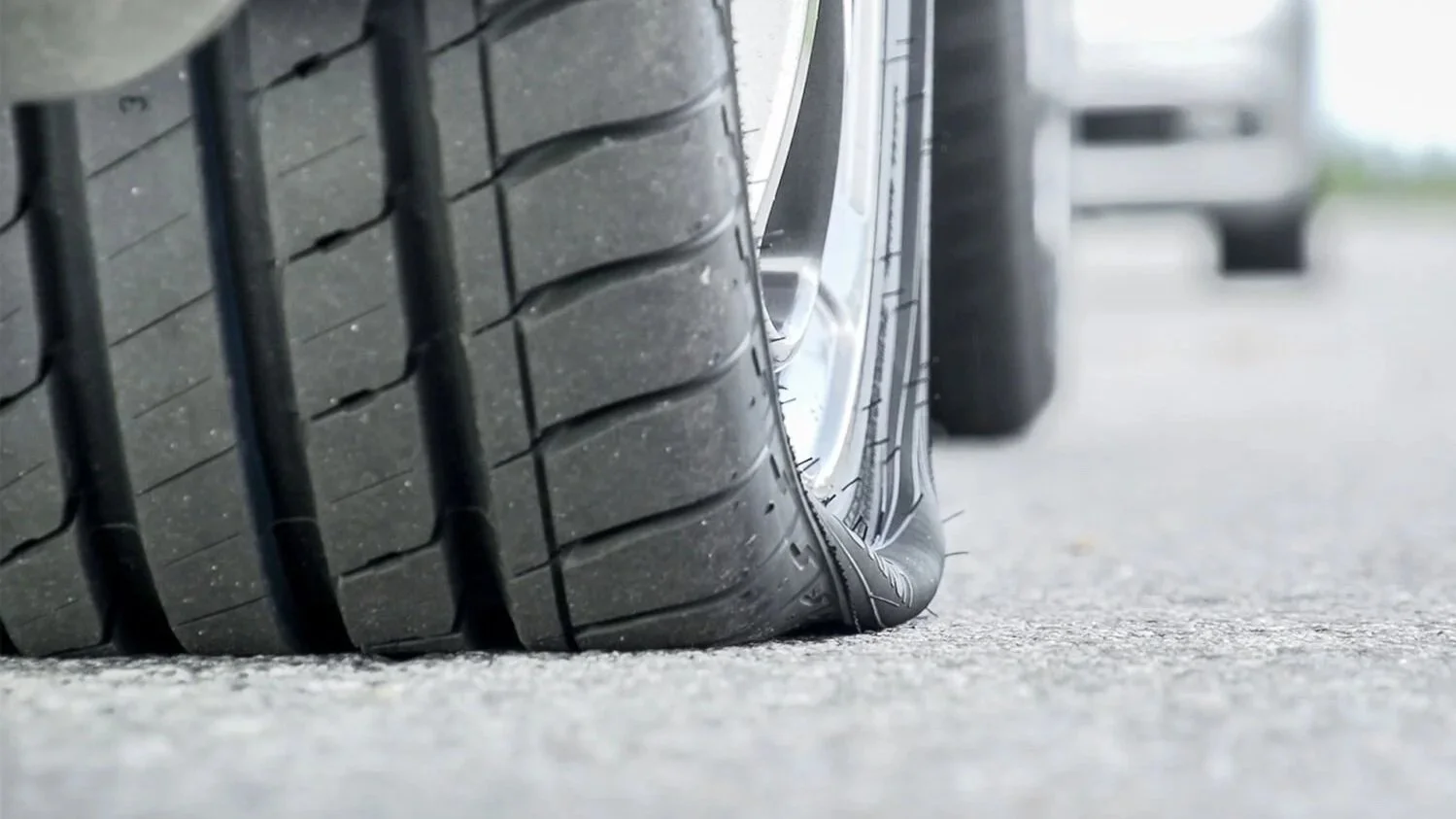
A flat tire can turn an ordinary drive into an unexpected roadside emergency. You may notice the steering feels different, the vehicle pulls to one side, or a tire-pressure warning appears on the dashboard. The temptation may be to drive a short distance to a gas station, repair shop, or safer parking area.
In most situations, driving on a flat or severely underinflated tire is not a good idea. Continuing to drive can cause additional damage to the tire and potentially the wheel, while also affecting how the vehicle handles. The safest response is usually to slow down, maintain control, and move to a safe location when possible.
If you cannot safely change the tire yourself, professional roadside assistance can help. A&Z Towing provides tire-change assistance as part of its roadside services in Marrero and surrounding Louisiana communities, along with emergency towing and vehicle recovery.
Quick Answer
You generally should not drive on a flat tire. A completely or severely deflated tire can affect steering, handling, braking, and vehicle stability while potentially causing additional tire or wheel damage. If you get a flat, slow down safely, move away from traffic when possible, and contact roadside assistance if you cannot safely change the tire.
Key Takeaways
Driving on a flat tire can cause additional damage to the tire and wheel.
A flat tire can change how a vehicle handles and responds to steering.
Continuing to drive may turn a repairable tire problem into a more serious problem.
Do not assume a short distance is automatically safe.
Move to a safe location if you can do so without creating additional danger.
Do not attempt a roadside tire change in an unsafe location.
Professional roadside assistance can help with a tire change when appropriate.
If the vehicle cannot safely continue, towing may be necessary.
A&Z Towing provides tire-change assistance, emergency towing, and vehicle recovery.
Why Driving on a Flat Tire Is Risky
A tire is designed to support the vehicle while maintaining a specific shape and contact with the road.
When a tire loses most or all of its air, that structure changes.
The tire can become compressed between the road and wheel, and the vehicle may no longer handle normally.
A flat tire can affect vehicle control
You may notice:
Steering feels heavier or different.
The vehicle pulls toward one side.
The vehicle feels unstable.
Acceleration feels unusual.
The tire makes noise.
The vehicle appears lower on one corner.
These changes are signs that the vehicle should not simply be driven as normal.
Driving on a Flat Tire Can Damage the Tire Further
One of the biggest problems with continuing to drive is that the tire may sustain additional damage.
A tire that might otherwise have been inspected or repaired can become more severely damaged after being driven while flat.
The sidewall and internal structure can be affected as the tire flexes against the road and wheel.
A small problem can become a bigger one
Imagine that a nail punctures the tire and causes it to lose air.
If you stop soon after noticing the problem, the tire may have a better chance of being assessed appropriately.
If you continue driving several miles on the deflated tire, the tire can experience additional stress.
That does not mean every punctured tire can be repaired. It simply means driving on a flat tire can make the damage worse.
Your Wheel Can Also Be Damaged
The tire is not the only component at risk.
When there is little or no air supporting the vehicle, the wheel can be exposed to impacts that the properly inflated tire would normally absorb.
Driving over potholes, road debris, or uneven pavement with a flat tire can increase the risk of wheel damage.
Wheel damage can create another problem
A damaged wheel may affect:
Tire fitment.
Air retention.
Vehicle handling.
Alignment.
Future tire performance.
Avoiding unnecessary driving on a flat tire can help reduce the possibility of creating additional damage.
A Flat Tire Can Affect Steering and Handling
A vehicle with a flat tire may not respond to steering inputs normally.
The vehicle can pull toward the damaged tire or feel unstable.
This can be particularly concerning when traveling at higher speeds or around other vehicles.
Don't try to maintain normal speed
If you suddenly realize you have a flat tire while driving, avoid abrupt steering or braking.
Reduce your speed gradually while maintaining control.
Look for a safe location where you can stop without placing yourself unnecessarily close to moving traffic.
Can You Drive a Short Distance on a Flat Tire?
This is one of the most common questions drivers ask.
The fact that a destination is nearby does not automatically make driving on a flat tire safe.
Even a short distance can cause additional damage depending on the tire, vehicle, road conditions, and extent of air loss.
What about driving to a gas station?
A gas station may seem like the obvious solution, especially if you think you can add air to the tire.
However, if the tire is completely flat or significantly damaged, driving there may cause more damage.
If you are unsure whether the tire can safely support the vehicle, it is better to stop and seek appropriate assistance rather than taking the risk.
What If the Tire Is Only Low on Air?
A tire that is low on air is not necessarily the same as a completely flat tire.
However, significant underinflation can still affect handling and increase tire stress.
If you notice a tire-pressure warning, check the tire when it is safe to do so.
Don't ignore repeated pressure loss
If the same tire repeatedly loses air, there may be a puncture, leak, or other issue.
Simply adding air without identifying why the pressure is falling may leave you vulnerable to another roadside problem.
Have the tire inspected when appropriate.
What Should You Do When You Get a Flat Tire?
Your first priority should be safety.
If you are driving when the tire goes flat, maintain control and reduce your speed gradually.
Follow these steps
Avoid sudden steering movements.
Slow down carefully.
Move to a safe location when possible.
Turn on your hazard lights as appropriate.
Avoid driving farther than necessary.
Assess whether the tire can be changed safely.
Contact roadside assistance if you cannot safely change it.
If you are stopped on a busy road or highway, do not put yourself in danger simply to inspect or repair the tire.
Should You Change the Tire Yourself?
Some drivers are comfortable changing a tire.
Others may not have the necessary tools, may not have a usable spare, or may be stopped somewhere that makes a tire change dangerous.
There is nothing wrong with choosing professional roadside assistance when changing the tire yourself is not practical or safe.
Consider roadside assistance if:
You do not have a spare tire.
Your spare is also damaged or unusable.
You do not have the necessary tools.
The vehicle is stopped near fast-moving traffic.
You cannot safely lift or remove the wheel.
The tire has significant damage.
You are uncomfortable changing a tire.
The vehicle has another mechanical problem.
A&Z Towing provides tire-change assistance as part of its roadside services.
What If You Have a Spare Tire?
If your vehicle has a usable spare tire and you are in a safe location, you may be able to replace the damaged tire.
Follow the instructions provided by your vehicle manufacturer and use the equipment intended for your vehicle.
Do not attempt a tire change if the location itself is unsafe.
A spare tire is not always a permanent replacement
Some vehicles use temporary spare tires with specific limitations.
If your vehicle is equipped with a temporary spare, follow the vehicle manufacturer's instructions regarding its use.
Do not assume that every spare tire is designed for unlimited driving.
What If You Don't Have a Spare Tire?
Many drivers are not sure whether their vehicle has a spare until they experience a flat.
If there is no usable spare available, roadside assistance may be the most practical option.
A&Z Towing provides tire-change assistance and towing services for drivers who need help with disabled vehicles.
If the tire cannot be changed or the vehicle cannot safely continue, towing may be appropriate.
What If You Get a Flat Tire on a Highway?
A highway breakdown requires additional caution because of the speed and volume of surrounding traffic.
If you experience a flat tire, focus on maintaining control and getting the vehicle to a safer location if possible.
Avoid standing next to moving traffic
Do not spend unnecessary time beside the vehicle if you are exposed to active traffic.
If changing the tire would place you in an unsafe position, wait for professional assistance instead.
Tell the towing or roadside assistance provider that you are on a highway and provide your direction of travel, exit, or other location details.
What If the Flat Tire Happens at Night?
A flat tire can be more difficult to deal with after dark because visibility is reduced.
Use hazard lights when appropriate and move to a safe location if possible.
Avoid attempting repairs in a location where passing drivers may have difficulty seeing you.
If the vehicle is in an unsafe position, tell the roadside assistance provider that it is nighttime and explain the surrounding conditions.
For additional guidance, see our article on 24-hour towing in Marrero, LA.
What If the Flat Tire Happens During Bad Weather?
Rain, extreme heat, poor visibility, and other challenging weather can make a roadside tire change more difficult.
If conditions make it unsafe to work beside the vehicle, do not attempt the repair simply because you have the necessary tools.
Safety comes before convenience
A tire can be replaced later.
Your safety should take priority over reaching your destination as quickly as possible.
Contact professional assistance when weather or road conditions make the situation unsafe.
What If You Hit a Pothole Before the Tire Goes Flat?
A pothole can damage a tire or wheel.
If the tire loses pressure after hitting a pothole, avoid assuming that adding air will completely solve the problem.
Look for signs of damage if it is safe to inspect the vehicle.
Watch for:
Visible tire damage.
Sidewall bulges.
Cuts.
Wheel damage.
Continued air loss.
Steering changes.
Unusual vibration.
If the vehicle does not feel normal after a significant impact, professional assistance may be appropriate.
What If a Nail or Screw Is Stuck in the Tire?
A nail or screw can create a puncture and cause the tire to lose air gradually.
If you find an object embedded in the tire, avoid automatically removing it.
Removing the object may allow air to escape more quickly.
Instead, have the tire assessed appropriately.
If the tire is already flat and you cannot safely change it, contact roadside assistance.
When Does a Flat Tire Require Towing?
Not every flat tire requires a tow.
If the tire can safely be replaced with a usable spare, a tire change may be enough.
However, towing may be appropriate when:
There is no usable spare.
The tire cannot be removed.
The wheel is damaged.
Multiple tires are damaged.
The vehicle has additional mechanical problems.
The vehicle cannot safely move.
The vehicle was involved in an accident.
The vehicle is stuck.
A&Z Towing provides emergency towing, light-duty towing, flatbed towing, and vehicle recovery in addition to roadside assistance.
Common Mistakes After Getting a Flat Tire
Continuing to drive
The most important mistake to avoid is continuing to drive on a severely flat tire simply because your destination is nearby.
Stopping somewhere dangerous
Do not attempt to change the tire in an unsafe location if you can move to a safer place without creating additional risk.
Removing a puncturing object
Do not automatically pull a nail or screw from the tire.
Ignoring tire-pressure warnings
A warning may indicate that a tire needs attention before it becomes completely flat.
Making sudden steering movements
A flat tire can affect handling. Avoid abrupt maneuvers.
Assuming the tire is the only problem
If you hit a pothole or curb before the tire went flat, there may also be wheel or other vehicle damage.
Frequently Asked Questions
Can you safely drive on a flat tire?
Generally, no. Driving on a flat tire can affect handling and potentially cause additional damage to the tire and wheel. Move to a safe location when possible and arrange for appropriate assistance.
How far can I drive on a flat tire?
There is no universal safe distance for driving on a flat tire. Even a short distance can cause additional damage depending on the vehicle, tire, road conditions, and extent of air loss.
Can I drive to a gas station with a flat tire?
It is generally better not to drive on a completely flat or severely damaged tire simply to reach a gas station. Continuing to drive can damage the tire or wheel.
What should I do if my tire goes flat while driving?
Maintain control, reduce speed gradually, move to a safe location if possible, use hazard lights when appropriate, and avoid unnecessary driving on the damaged tire. Contact roadside assistance if you cannot safely change the tire.
Can driving on a flat tire damage the wheel?
Yes. With little or no air supporting the vehicle, the wheel can be exposed to impacts and forces that a properly inflated tire would normally absorb.
Can a flat tire damage the car?
It can. Driving on a flat tire may cause additional tire or wheel damage and can affect vehicle handling. The extent of damage depends on the circumstances.
Is it safe to change a flat tire on the side of the highway?
Changing a tire beside fast-moving traffic can be dangerous. If you cannot safely move to a suitable location, consider professional roadside assistance instead.
Should I remove a nail from my flat tire?
Avoid automatically removing an embedded nail or screw. Removing it may allow air to escape more quickly. Have the tire assessed by an appropriate professional.
Can roadside assistance change a flat tire?
Yes. A&Z Towing provides tire-change assistance as part of its roadside services in Marrero and surrounding Louisiana communities.
What if I don't have a spare tire?
If there is no usable spare, contact roadside assistance. Depending on the situation, a tire change may not be possible and the vehicle may require towing.
What if my wheel is damaged too?
Tell the towing provider about the wheel damage. A damaged wheel can affect whether the vehicle can safely move and may require towing rather than simply changing the tire.
Does A&Z Towing provide emergency towing?
Yes. A&Z Towing provides 24/7 emergency towing for breakdowns, accidents, and roadside emergencies in Marrero and surrounding Louisiana communities.
Does A&Z Towing provide vehicle recovery?
Yes. A&Z Towing provides vehicle recovery for stuck, off-road, and difficult vehicle situations.
When to Call A&Z Towing for a Flat Tire
A flat tire does not always mean you need a tow. If you have a usable spare and are in a safe location, you may be able to replace the tire and continue your trip.
However, changing a tire is not always safe or practical.
If you are on a busy highway, do not have the necessary equipment, have significant tire or wheel damage, or cannot safely replace the tire, professional roadside assistance can help.
A&Z Towing provides tire-change assistance as part of its roadside services in Marrero and surrounding Louisiana communities. The company also provides 24/7 emergency towing, light-duty towing, flatbed towing, and vehicle recovery.
When requesting assistance, provide your exact location and explain what happened. Mention whether the tire is completely flat, whether the wheel appears damaged, and whether the vehicle can move.
Conclusion
A flat tire is more than an inconvenience. Once a tire loses most or all of its air, continuing to drive can affect vehicle handling and potentially cause additional damage to the tire and wheel.
If you experience a flat, slow down carefully, maintain control, and move to a safe location when possible. Avoid driving farther than necessary simply because your destination or a gas station appears to be nearby.
If you have a usable spare and can safely change the tire, replacing it may solve the problem. But if the location is dangerous, you lack the necessary equipment, the tire or wheel is damaged, or the vehicle has another problem, professional roadside assistance may be the safer choice.
A&Z Towing provides tire-change assistance, 24/7 emergency towing, light-duty towing, flatbed towing, and vehicle recovery in Marrero and surrounding Louisiana communities.
When in doubt, prioritize safety over convenience. A few extra minutes spent arranging professional assistance can be preferable to turning a flat tire into a larger vehicle problem.