What Is the Difference Between Vehicle Recovery and a Standard Tow?
Introduction
A vehicle that will not move can leave you wondering whether you need a standard tow or a more specialized recovery service. Although the terms are sometimes used interchangeably, towing and vehicle recovery are not always the same job.
A standard tow is generally used when a vehicle can be safely loaded, lifted, or connected to a tow truck and transported to another location. Vehicle recovery is different. It is usually needed when a vehicle is stuck, difficult to access, damaged in an unusual position, or unable to be moved safely without specialized equipment and recovery techniques.
Understanding the difference can help you describe the situation accurately when calling for roadside assistance. It can also help you avoid attempting a dangerous DIY recovery with another vehicle, chain, or improvised equipment.
For drivers in Marrero, Harvey, Gretna, Westwego, and surrounding Louisiana areas, knowing what type of help you need can make the roadside assistance process easier. A&Z Towing LLC provides emergency towing, light-duty towing, flatbed towing, vehicle recovery, and roadside assistance for a wide range of breakdowns and vehicle emergencies.
What Is a Standard Tow?
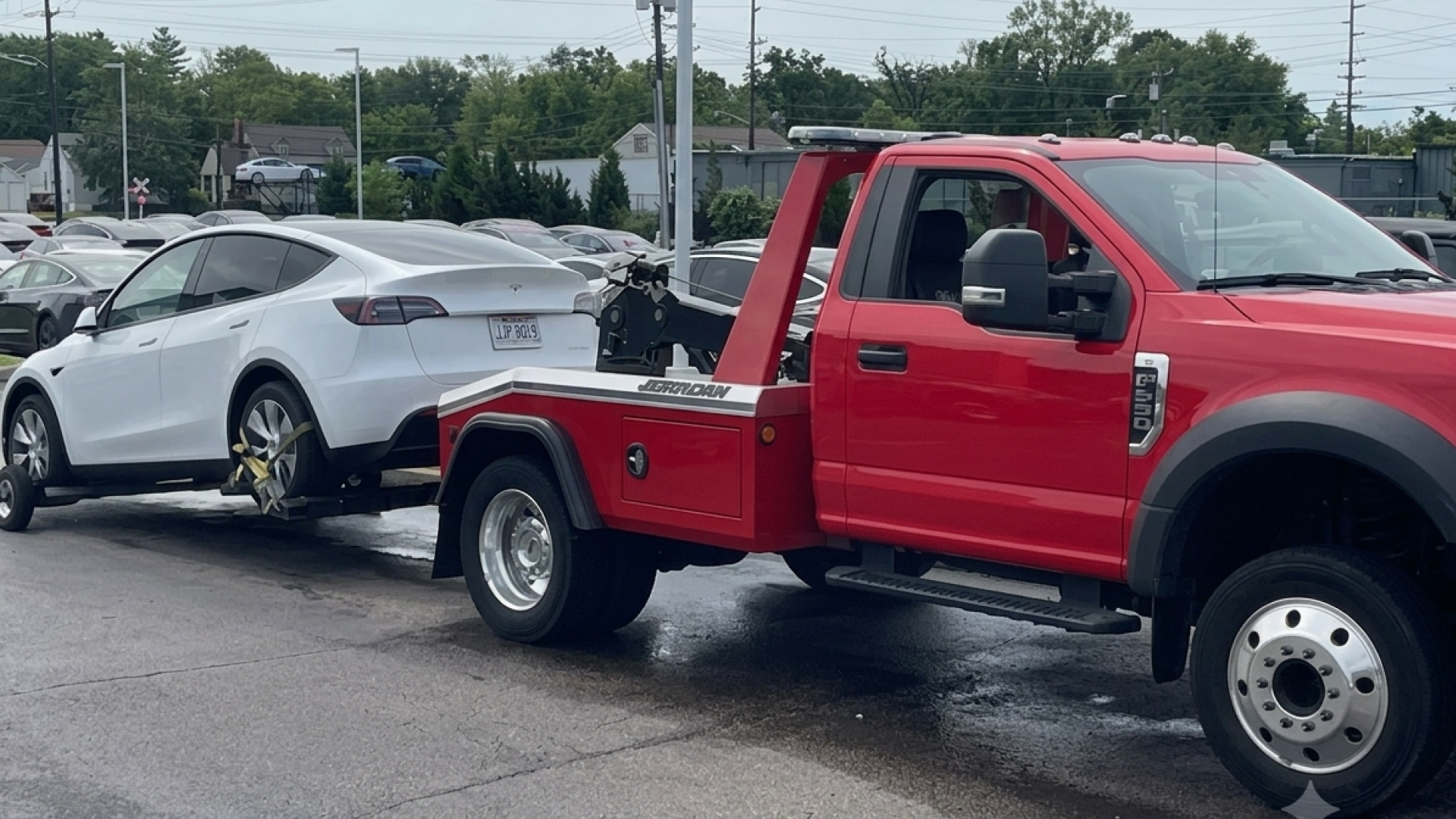
A standard tow is the transportation of a vehicle from one location to another using a tow truck or similar towing equipment. The vehicle is usually in a position where it can be accessed and moved without first requiring a specialized extraction.
For example, imagine your car stops running in a parking lot. The vehicle is on level pavement, the wheels are accessible, and there is plenty of room for a tow truck to position itself. If the car cannot be driven but can be loaded or connected safely, a standard tow may be appropriate.
Common reasons for a standard tow include:
Mechanical breakdowns
Vehicles that will not start
Flat tires when the vehicle cannot be safely driven
Accident-damaged vehicles that remain accessible
Dead batteries when a jump-start is not the right solution
Vehicle transportation between locations
Moving an inoperable vehicle to a repair facility
The main purpose is transportation. The tow operator secures the vehicle and moves it from point A to point B using equipment appropriate for the vehicle and situation.
How Does a Standard Tow Work?
The exact process depends on the vehicle and the type of tow truck being used, but a typical tow may involve these steps:
The driver provides the vehicle's location and explains what happened.
The towing professional assesses the vehicle and surrounding area.
Appropriate towing equipment is selected.
The vehicle is connected or loaded using approved procedures.
The vehicle is secured for transport.
The tow truck transports it to the requested destination.
A standard tow is relatively straightforward when the vehicle is accessible and there are no major obstacles preventing movement. You can learn more about this process in our guide on what happens during a professional towing service.
When Is Flatbed Towing Used?
Flatbed towing places the vehicle on a level platform rather than leaving its wheels on the road during transportation. This can be useful for certain disabled, damaged, specialty, or all-wheel-drive vehicles, depending on the manufacturer's requirements and the circumstances.
Flatbed towing can also provide a practical option when keeping all four wheels off the roadway is preferred. The appropriate towing method should be determined based on the vehicle, its condition, location, and manufacturer's recommendations.
What Is Vehicle Recovery?
Vehicle recovery involves more than simply transporting a vehicle that is already ready to be towed. Recovery is the process of safely extracting, stabilizing, repositioning, or accessing a vehicle when its location or condition makes ordinary towing difficult or unsafe.
A recovery situation may involve a vehicle stuck in mud, positioned in a ditch, partially off the roadway, trapped on uneven ground, or involved in an accident that prevents normal towing.
The goal is often to make the vehicle accessible and stable enough to be moved safely. In some cases, the vehicle may then be transported using a standard tow truck or flatbed.
What Situations Require Vehicle Recovery?
Vehicle recovery may be appropriate when a vehicle is:
Stuck in mud
Partially or completely in a ditch
Off the roadway
Stuck on uneven or soft ground
Unable to move after an accident
Positioned at an awkward angle
Trapped in an area that a normal tow truck cannot easily access
Immobilized after leaving the paved road
Obstructed by terrain or another physical condition
The exact equipment required depends heavily on the circumstances. If you find your car trapped off the pavement, professional winch-out services in Marrero, LA are often required.
A vehicle sitting safely on pavement with a mechanical problem is a very different situation from a vehicle sitting several feet down an embankment. Both vehicles may ultimately need transportation, but the first problem is primarily towing while the second involves recovery.
Vehicle Recovery vs. Standard Towing: The Main Difference
The simplest distinction is this:
Standard towing moves an accessible vehicle. Vehicle recovery first deals with the challenge of safely getting an inaccessible, stuck, unstable, or difficult-to-move vehicle into a position where it can be moved or transported.
The difference is primarily about the vehicle's condition and location rather than simply the distance it needs to travel.
Standard Towing
A standard tow is generally appropriate when:
The vehicle is accessible.
The vehicle is on a reasonably stable surface.
There is enough room for the tow truck to position safely.
The vehicle can be connected or loaded using normal towing procedures.
The primary need is transportation.
Vehicle Recovery
Recovery may be necessary when:
The vehicle is stuck.
The vehicle has left the normal roadway.
The vehicle is in a ditch or difficult position.
The terrain prevents ordinary towing.
The vehicle needs to be repositioned before it can be transported.
Specialized recovery equipment is needed.
What Equipment Is Used for Vehicle Recovery?
Recovery equipment varies according to the vehicle and environment. A professional operator may use specialized winching and rigging equipment to control the vehicle during extraction.
Potential recovery equipment can include:
Heavy-duty winches
Recovery straps
Rigging equipment
Snatch blocks
Tow points and appropriate attachment equipment
Wheel-lift equipment
Flatbed tow trucks
Stabilization equipment
Not every recovery requires every piece of equipment. The operator evaluates the situation before determining how the vehicle should be moved.
Examples of Standard Towing and Vehicle Recovery
Real-world examples make the difference easier to understand.
Example 1: Car That Will Not Start
You turn the key or press the start button, but the car will not start. It is parked on level pavement and there are no obstacles around it. If a jump-start or other roadside repair does not solve the problem, a standard tow may be all that is needed.
Example 2: Vehicle Stuck in Mud
A vehicle leaves a driveway or roadway and becomes stuck in soft mud. The wheels spin, and the vehicle cannot move under its own power. This is more likely to require recovery rather than a simple tow because the vehicle first needs to be extracted from the soft surface.
Example 3: Vehicle in a Ditch
A car slides off the road and comes to rest partly in a ditch. Its position makes it difficult to attach ordinary towing equipment safely. This is a recovery situation. The vehicle may need to be carefully repositioned or winched before it can be loaded for transportation.
Example 4: Accident on the Roadway
A vehicle is involved in a collision but remains on a paved roadway and can be accessed by a tow truck. Depending on its condition, a standard tow or flatbed tow may be sufficient. If the vehicle is overturned, trapped, or located in a difficult position, recovery procedures may also be necessary.
Can a Vehicle Need Both Recovery and Towing?
Yes. Recovery and towing are often two stages of the same roadside incident.
Consider a vehicle that has left the roadway and become stuck in a ditch. First, the recovery portion may involve safely extracting the vehicle. Once it is back in an accessible position, the vehicle may be loaded onto a flatbed or otherwise secured for transportation.
In that situation, recovery solves the access and extraction problem while towing solves the transportation problem. This is why it helps to give the towing company as much information as possible when requesting assistance.
What Information Should You Give a Towing Company?
When requesting roadside assistance, describe what happened and where the vehicle is located. Useful information includes:
Your exact location or a nearby landmark
Whether the vehicle is on a public road, private property, parking lot, or roadside shoulder
The make, model, and approximate size of the vehicle
Whether the vehicle starts and whether the wheels can roll
Whether the vehicle is damaged or stuck in mud, sand, snow, or soft ground
Whether it is in a ditch or partially off the road
Any obvious hazards around the vehicle
Providing clear details ensures the dispatcher sends the right team—whether you need standard assistance or specialized equipment, as outlined in our guide on what information to give a tow truck.
Frequently Asked Questions
1. What is the main difference between vehicle recovery and a standard tow? A standard tow usually transports an accessible vehicle from one location to another. Vehicle recovery involves extracting, stabilizing, repositioning, or accessing a vehicle that is stuck, off the roadway, damaged, or difficult to move safely.
2. Does a vehicle stuck in a ditch need recovery or towing? A vehicle in a ditch may need recovery before it can be towed. The exact method depends on the vehicle's position, terrain, accessibility, and damage.
3. Can a tow truck pull a vehicle out of mud? Some stuck vehicles can be recovered with appropriate winching or recovery equipment. The correct approach depends on how deeply the vehicle is stuck, surface conditions, and vehicle weight.
4. Is flatbed towing the same as vehicle recovery? No. Flatbed towing is a method of transporting a vehicle on a flat platform. Recovery refers to extracting or repositioning a difficult-to-access vehicle.
5. Can a damaged vehicle require both recovery and towing? Yes. An accident-damaged vehicle may first need to be safely extracted or repositioned before it can be loaded and transported.
6. Should I try to pull my stuck vehicle out myself? It is generally safer to avoid improvised recovery attempts when a vehicle is deeply stuck, off-road, or in a ditch to prevent damage or safety hazards.
7. What information should I give a towing company during a recovery emergency? Provide your location, vehicle type, condition, and details about ditches, mud, uneven terrain, or obstacles affecting the recovery.
8. Can roadside assistance include vehicle recovery? Yes. When a vehicle cannot be safely moved through ordinary towing procedures, specialized vehicle recovery may be necessary.
9. Is vehicle recovery more complicated than a normal tow? Recovery can be more involved because the vehicle may need to be extracted or repositioned before transportation.
10. What should I do if I am unsure whether I need towing or recovery? Describe the situation rather than trying to select the service yourself so the towing provider can determine the appropriate assistance.