What Is the Safest Way to Prepare a Vehicle for Professional Towing?
Introduction
A vehicle can need a tow for many reasons. It may have a dead battery, a flat tire, mechanical failure, collision damage, or simply refuse to start. Whatever caused the problem, preparing your vehicle before it is towed can make the process safer and easier for everyone involved.
The safest way to prepare a vehicle for professional towing is to first move yourself and passengers to a safe location, secure the vehicle, remove personal belongings, provide the tow operator with accurate information, and follow the instructions given by the towing professional. The exact preparation also depends on whether the vehicle can roll, steer, start, or shift into neutral.
Trying to move a disabled vehicle yourself can create additional damage or put you in the path of traffic. Professional towing equipment is designed to handle situations that are difficult or unsafe for an ordinary driver.
For drivers in Marrero, Harvey, Gretna, Westwego, and surrounding Louisiana communities, knowing how to prepare your vehicle before the tow truck arrives can reduce confusion during an already stressful roadside emergency. This guide explains the safest preparation steps, what information to provide, what belongings to remove, and what not to do before your vehicle is towed.
Why Proper Vehicle Preparation Matters Before a Tow
Professional towing involves more than simply connecting a truck to a vehicle. The tow operator needs to know the vehicle's condition, location, drivetrain, accessibility, and any unusual circumstances that could affect the recovery or loading process.
A vehicle that starts and rolls normally may require a different towing procedure from one that has locked wheels, steering damage, collision damage, or an electronic parking brake that cannot be released.
Proper preparation helps reduce unnecessary risks such as:
Vehicle movement during loading
Damage to wheels, suspension, or body components
Lost personal belongings
Exposure to passing traffic
Delays caused by missing keys or incorrect vehicle information
Complications involving an automatic or electronic transmission
Preparation also gives the towing professional useful information before equipment is positioned around the vehicle.
Step-by-Step Guide to Preparing a Vehicle for Towing
1. Get Yourself and Your Passengers to a Safe Location
Your safety should come before the vehicle.
If the vehicle has broken down on a busy road, highway, shoulder, intersection, or another dangerous location, get yourself and your passengers away from moving traffic when it is safe to do so. Avoid standing directly behind or in front of the disabled vehicle.
If you experience a breakdown on a highway or another high-speed roadway, remain aware of passing vehicles. Do not spend unnecessary time walking around the car, inspecting mechanical components, or retrieving items from the trunk if doing so exposes you to traffic.
If the vehicle is in an unsafe position, tell the towing company exactly where it is and explain the surrounding conditions.
2. Turn Off the Vehicle and Secure It
If the vehicle is still running and there is no reason to keep the engine operating, turn it off according to normal vehicle procedures.
Once parked, secure the vehicle as appropriate for its condition. Avoid making assumptions about the parking brake, transmission, or steering system if the vehicle has mechanical or electrical damage.
A professional tow operator will determine what needs to be released, locked, or adjusted before loading.
3. Put the Vehicle in the Correct Position Only When Appropriate
The correct transmission position depends on the towing method and the vehicle's condition.
If your vehicle can start and shift normally, a towing professional may ask you to place it in neutral at the appropriate stage of the loading process. If the vehicle cannot start or shift, do not force the transmission or attempt improvised methods to move it.
Some modern vehicles have electronic gear selectors, electronic parking brakes, or systems that behave differently when the battery is dead.
What if the vehicle will not shift into neutral?
Tell the towing company before the truck arrives if the vehicle cannot be shifted into neutral.
This information matters because the operator may need specialized equipment or a different loading procedure. Do not crawl underneath the vehicle or attempt to manually release components unless you are specifically qualified and the procedure is safe.
4. Make the Keys Available
Keep the vehicle keys available for the tow operator.
Depending on the vehicle and towing situation, the operator may need access to the ignition, steering system, transmission controls, doors, trunk, or other components.
If the keys are missing, locked inside the vehicle, or unavailable for another reason, mention that when requesting service. Accurate information allows the towing professional to prepare for the situation instead of discovering the problem after arrival.
5. Remove Valuable Personal Belongings
Before the vehicle is towed, remove valuables and important personal items if it is safe to access the vehicle.
Consider removing:
Wallets and purses
Cash
Electronics
Laptops and tablets
Important documents
Medication
House or office keys
Jewelry
Work equipment
Child-related essentials
Items that could move around inside the vehicle
Do not put yourself at risk to retrieve belongings. If the vehicle is involved in a serious collision, is unstable, or is located in an unsafe area, leave it alone and tell the towing professional about the situation.
6. Tell the Tow Operator About Vehicle Damage
Be specific about anything that may affect how the vehicle can be loaded.
Mention if:
The vehicle has collision damage
A wheel is damaged
A tire is completely flat
The steering does not work
The brakes are damaged
The vehicle cannot roll
The vehicle cannot shift into neutral
The battery is completely dead
The vehicle is stuck in mud, sand, or a ditch
The vehicle is partially off the roadway
An airbag has deployed
The vehicle has an unusual drivetrain or modification
This information is particularly useful for accident towing and vehicle recovery situations.
What Should You Tell the Towing Company?
Provide an Accurate Vehicle Description
Give the towing provider the make, model, approximate year, color, and license plate information when possible.
If you know the vehicle's drivetrain, such as front-wheel drive, rear-wheel drive, or all-wheel drive, that can also be useful.
You should also explain whether the vehicle starts, rolls, steers, and brakes normally.
Give a Precise Location
A vague description such as "I'm on the highway" is rarely enough.
Provide the road name, direction of travel, nearby intersection, exit number, landmark, business, or other useful location details. If your vehicle is on a divided roadway, specify which direction you are traveling.
For roadside towing in areas such as Marrero, Harvey, Gretna, and Westwego, accurate location information can help the towing professional identify the vehicle more easily.
Explain the Destination
Tell the towing company where the vehicle needs to go.
That might be:
An auto repair shop
A dealership
Your home
A body shop
A tire center
A secure storage location
If the destination has special access requirements or restricted hours, mention those details when arranging the tow.
Preparing Different Types of Disabled Vehicles
Preparing a Vehicle That Starts but Cannot Be Driven
A vehicle may start normally but still require towing because of a damaged tire, overheating problem, transmission issue, brake problem, warning light, or other common car problems.
Do not assume that a running engine means the vehicle is safe to drive.
Tell the towing operator what happened and why you stopped driving. Continuing to operate a vehicle with serious mechanical symptoms can make the original problem worse.
Preparing a Vehicle With a Dead Battery
A dead battery can prevent the vehicle from starting, shifting, or releasing certain electronic systems.
Do not repeatedly attempt to start the vehicle if there is a suspected electrical problem. Tell the roadside assistance provider that the battery is dead and explain whether the vehicle has any unusual electrical symptoms.
The towing professional can determine whether a battery jumpstart, battery-related assistance, or towing is appropriate.
Preparing a Vehicle With a Flat Tire
If the vehicle has a flat tire, avoid driving on it unless a qualified professional specifically determines that doing so is safe.
Driving on a flat tire can damage the tire and potentially the wheel.
If the vehicle cannot be safely repaired at the roadside, professional towing may be the better option.
Preparing a Vehicle After an Accident
Accident-damaged vehicles require extra caution.
Do not attempt to straighten damaged wheels, repair body panels, reconnect electrical components, or drive the vehicle simply to make towing easier.
Tell the tow operator about visible damage and explain whether the vehicle can roll and steer. If fluids are leaking or there are other immediate hazards, keep a safe distance and inform the appropriate emergency personnel.
Preparing a Vehicle Stuck in a Ditch, Mud, Sand, or Another Difficult Location
A vehicle that has left the roadway may require recovery equipment rather than a standard tow.
Do not repeatedly accelerate in an attempt to free the vehicle. Spinning the tires can make the vehicle sink farther into soft ground and can create additional mechanical stress.
Explain the vehicle's position when requesting help. Photos can also be useful if you can safely take them without approaching an unstable vehicle or hazardous area.
What You Should Not Do Before a Tow
Do Not Stand in Dangerous Traffic Areas
A disabled vehicle can make you vulnerable to passing traffic.
Do not stand between your vehicle and moving traffic, and avoid walking around the vehicle unnecessarily on a busy roadway.
Do Not Attempt an Improvised Tow
Using ropes, chains, straps, or another vehicle to pull a disabled car can be dangerous when the proper equipment, attachment points, and towing procedures are not available.
Professional towing equipment is designed for controlled vehicle movement and loading.
Do Not Force a Damaged Vehicle to Roll
If a wheel, axle, steering component, suspension part, or drivetrain is damaged, forcing the vehicle to move can increase damage.
Tell the tow operator that the vehicle does not roll instead of trying to make it roll yourself.
Do Not Leave Important Information Out
A tow operator needs an accurate picture of the situation.
Saying that a vehicle "won't start" does not necessarily explain the full problem. If the vehicle also has locked wheels, a damaged steering system, collision damage, or an electronic parking brake that will not release, mention those details.
Special Considerations for Modern Vehicles
Modern cars often contain systems that require specific towing procedures.
Electronic Parking Brakes
An electronic parking brake may not release when the battery is dead. The appropriate procedure varies by vehicle.
Do not guess or force the system. Let the towing professional know that the parking brake cannot be released.
All-Wheel-Drive and Four-Wheel-Drive Vehicles
All-wheel-drive and four-wheel-drive vehicles can have specific towing requirements.
The safest towing method depends on the vehicle's design and manufacturer recommendations. A professional tow operator can determine the appropriate equipment and loading method.
Electric and Hybrid Vehicles
Electric and hybrid vehicles contain high-voltage systems and specialized components.
Do not attempt to disconnect high-voltage equipment or perform roadside electrical repairs unless you are properly qualified. Tell the towing provider that the vehicle is electric or hybrid so the appropriate towing procedure can be considered.
What Happens After the Tow Truck Arrives?
Once the towing professional arrives, provide the keys and explain the vehicle's condition.
The operator will typically assess factors such as:
Whether the vehicle rolls
Steering condition
Wheel and tire condition
Vehicle accessibility
Transmission position
Parking brake status
Damage location
Suitable loading equipment
Give the operator room to work. Tow trucks may need space in front of, behind, or beside the disabled vehicle depending on the recovery method.
If you have concerns about possible vehicle damage, communicate them before loading begins.
How to Make a Towing Call Easier
A few simple habits can make roadside emergencies less stressful.
Keep your vehicle registration and insurance information accessible, maintain a charged phone, and know your approximate location when traveling unfamiliar roads.
It can also help to save a reputable local towing and roadside assistance provider in your phone before an emergency occurs. A&Z Towing LLC serves drivers in Marrero, Harvey, Gretna, Westwego, and surrounding Louisiana areas with 24/7 towing and roadside assistance.
The company provides services including emergency towing, light-duty towing, flatbed towing, vehicle recovery, and roadside assistance for problems such as breakdowns, accidents, flat tires, lockouts, and dead batteries.
Common Misconceptions About Preparing a Vehicle for Towing
"I Need to Fix the Vehicle Before the Tow Truck Arrives"
No. Your priority is safety and accurate communication.
You do not need to repair a disabled vehicle simply to make it easier to tow. In many cases, attempting a repair without the right equipment can make the situation more dangerous.
"Every Vehicle Can Be Towed the Same Way"
No.
Vehicle size, drivetrain, condition, steering capability, wheel position, transmission type, and damage can all influence the appropriate towing method.
"A Car That Starts Does Not Need a Tow"
Not necessarily.
A vehicle can start and still be unsafe to drive because of brake failure, severe tire damage, steering problems, overheating, collision damage, or other mechanical issues.
"I Should Put the Car in Neutral Before Calling"
Not always.
The correct position depends on the vehicle and towing method. If you are uncertain, explain the situation to the towing provider and follow the operator's instructions.
A Simple Pre-Tow Safety Checklist
Before professional towing arrives, use this quick checklist when conditions are safe:
Move yourself and passengers away from traffic.
Turn off the vehicle if appropriate.
Keep the keys available.
Remove valuable belongings if it is safe.
Record the vehicle's location.
Note visible damage or unusual conditions.
Tell the towing provider whether the vehicle starts, rolls, steers, and brakes.
Mention if the vehicle is electric, hybrid, all-wheel drive, or specially modified.
Explain if the vehicle is stuck in mud, sand, a ditch, or another difficult location.
Follow the tow operator's instructions when preparing the vehicle for loading.
How Professional Towing Protects the Vehicle
A professional tow is not simply about getting a disabled vehicle from one location to another. The towing method should account for the vehicle's condition and the circumstances surrounding the breakdown or recovery.
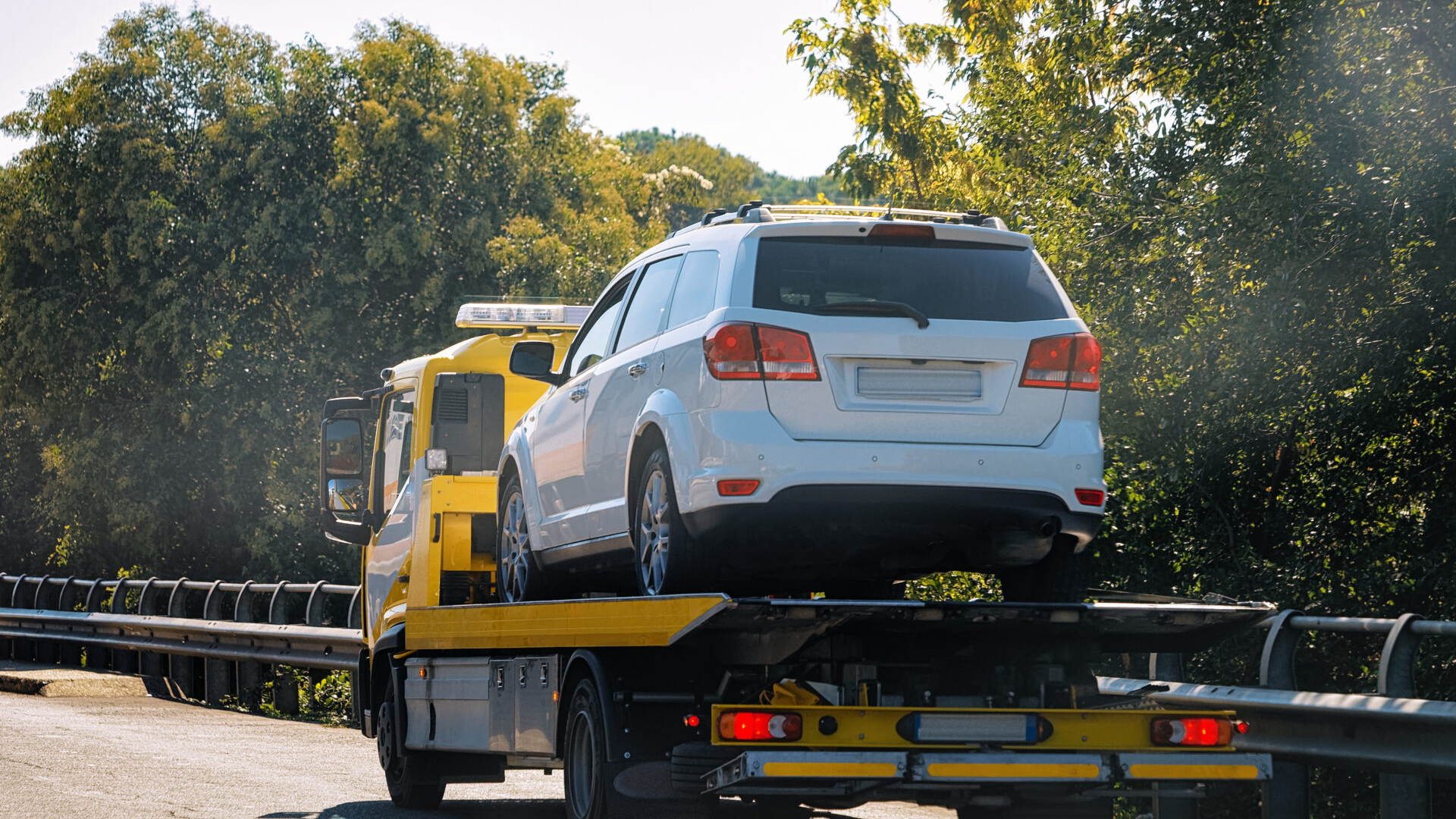
Flatbed towing, for example, places the vehicle onto a flat platform rather than allowing its wheels to remain on the roadway during transport. This can be useful for certain vehicles and towing situations, although the appropriate method always depends on the vehicle and circumstances.
For vehicles that cannot roll normally, specialized recovery equipment may be required. Professional operators can assess the situation and determine how to load or recover the vehicle without relying on improvised methods.
Conclusion
Preparing a vehicle for professional towing starts with one priority: keeping people safe. Move away from traffic when possible, avoid unnecessary repairs or movement, secure your belongings, keep the keys accessible, and give the towing professional an accurate description of the vehicle's condition.
The safest preparation also means recognizing when not to touch the vehicle. A car with collision damage, locked wheels, steering problems, a dead battery, or a disabled transmission may require specialized equipment and a different towing procedure.
For drivers dealing with a roadside emergency in Marrero, Harvey, Gretna, Westwego, or nearby Louisiana communities, professional towing and roadside assistance can provide the equipment and experience needed to handle the situation appropriately. A&Z Towing LLC provides 24/7 emergency towing, light-duty towing, flatbed towing, vehicle recovery, and roadside assistance for a range of vehicle emergencies.
When a tow is necessary, accurate information, careful preparation, and professional handling can help make the process safer and more efficient.
Frequently Asked Questions
What is the safest way to prepare a car for towing?
The safest approach is to move passengers away from traffic, secure the vehicle, remove valuable belongings when safe, keep the keys accessible, and tell the towing professional whether the vehicle starts, rolls, steers, or has mechanical or collision damage.
Should a car be in neutral before it is towed?
Not always. The appropriate transmission position depends on the vehicle and towing method. If you are unsure, tell the towing provider whether the vehicle can shift normally and follow the tow operator's instructions.
What should I remove from my car before towing?
Remove valuables, important documents, electronics, medication, keys, cash, and other personal items when it is safe to access the vehicle. Do not put yourself in danger to retrieve belongings from a damaged or unsafe vehicle.
Can a vehicle with a dead battery be towed?
Yes. A dead battery does not automatically prevent a vehicle from being towed, although it may affect electronic systems such as the gear selector or parking brake. Tell the towing provider about the dead battery before the vehicle is loaded.
What information should I give a towing company?
Provide your exact location, vehicle make and model, vehicle condition, reason for towing, destination, and what information to give a tow truck regarding whether the vehicle starts, rolls, steers, and brakes. Mention collision damage, locked wheels, or other conditions that may affect loading.
Is it safe to drive a car with a flat tire to a repair shop?
Driving on a severely deflated or damaged tire can cause additional tire or wheel damage and may create a safety hazard. If the tire cannot be safely repaired or replaced at the roadside, professional roadside assistance or towing may be appropriate.
How should I prepare a car after an accident for towing?
Do not attempt to straighten damaged wheels, repair structural components, or force the vehicle to move. Keep people in a safe location and tell the towing professional about damaged wheels, steering problems, leaking fluids, deployed airbags, or other visible damage.
Can electric and hybrid vehicles be towed normally?
Electric and hybrid vehicles may have specific towing requirements because of their drivetrain and high-voltage systems. Tell the towing provider that the vehicle is electric or hybrid so the operator can use an appropriate towing procedure.
What should I do if my vehicle is stuck in mud or a ditch?
Avoid repeatedly accelerating or attempting an improvised pull. Explain the vehicle's location and condition to a professional recovery provider. Depending on how deeply the vehicle is stuck and whether it can roll, specialized winch-out services or recovery equipment may be required.
Is flatbed towing safer for every vehicle?
Flatbed towing can be appropriate for many vehicles, but it is not automatically the best method for every situation. Understanding flatbed towing vs. wheel lift towing helps explain how the correct method depends on the vehicle, drivetrain, condition, accessibility, and type of damage. A professional tow operator can determine the appropriate approach.