Can a Tow Truck Pick Up a Vehicle From a Residential Property?
Introduction
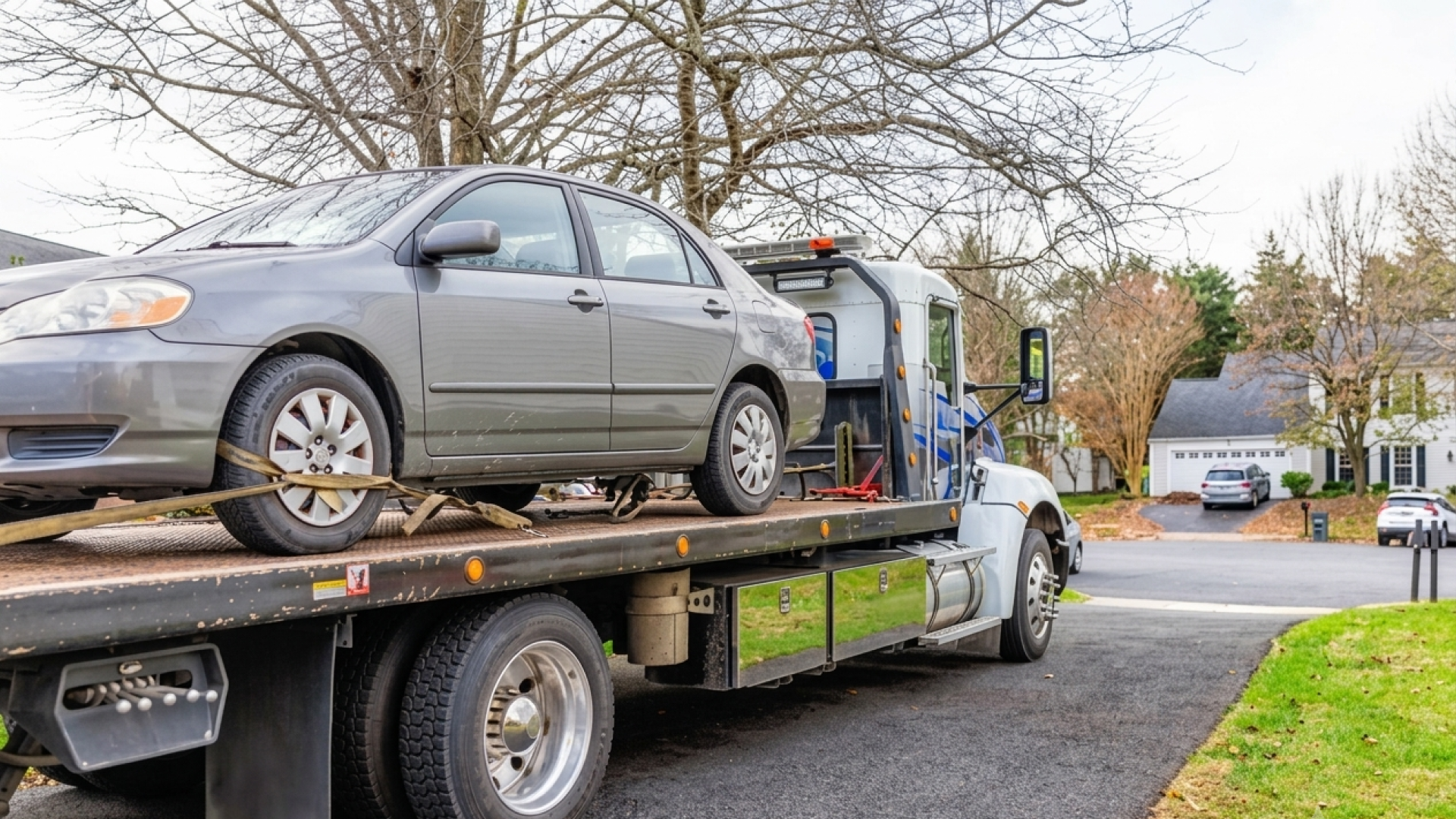
Yes, a tow truck can generally pick up a vehicle from a residential property. Cars are often towed from driveways, private parking areas, apartment complexes, garages, and other residential locations for reasons ranging from breakdowns and non-running vehicles to scheduled transportation and accident recovery.
The process can be slightly different from requesting a roadside tow. A driver may need to provide the property's address, explain where the vehicle is parked, describe whether the vehicle starts or rolls, and confirm that they have permission to have it moved. These details help the towing provider determine what equipment and approach are appropriate.
Residential towing also presents practical challenges that may not exist on a public road. A narrow driveway, steep slope, locked gate, low clearance, parked vehicles, landscaping, or a car with flat or damaged tires can affect how the vehicle needs to be loaded.
For homeowners and renters in Marrero, Harvey, Gretna, Westwego, and nearby Louisiana communities, understanding how residential vehicle pickup works can make the experience much easier. This guide explains when a tow truck can access a residential property, what information to provide, which towing equipment may be used, and how to prepare the vehicle before the driver arrives.
Can a Tow Truck Pick Up a Vehicle From a House or Driveway?
Yes. Residential vehicle pickup is a common type of towing request, provided the towing company has appropriate access and the person requesting the tow has authorization to move the vehicle.
A tow truck may be called to a residential property when a vehicle:
Will not start
Has a dead battery and needs transportation
Has a flat tire or damaged tire
Has been involved in an accident
Needs to be transported to a repair shop
Needs to be moved to another residence
Is being relocated or transported for another legitimate reason
Cannot safely be driven on public roads
The most important factor is not simply the vehicle's location. The tow operator needs to know whether the truck can safely reach and load the vehicle.
Residential Towing Is Different From Roadside Towing
A roadside breakdown usually gives the tow operator relatively direct access to the vehicle. A residential pickup can involve more variables.
For example, a sedan parked in an open driveway may be straightforward to load. A non-running SUV parked behind a closed gate on a narrow driveway may require a different approach or additional equipment.
The towing provider may ask questions such as:
What type of vehicle needs to be moved?
Where exactly is it parked?
Is the vehicle running?
Can it roll and steer?
Are the tires inflated?
Is the vehicle behind a gate?
Is the driveway wide enough for a tow truck?
Is the vehicle blocked by another car?
Is there damage to the wheels, suspension, or body?
Giving accurate information before dispatch can prevent delays and help the operator arrive prepared.
What Types of Residential Properties Can a Tow Truck Access?
A residential tow does not have to originate from a single-family home. Depending on access and authorization, towing services may pick up vehicles from several types of residential properties.
Single-Family Homes
Driveways are among the most straightforward pickup locations. If the tow truck has enough room to approach the vehicle and position its equipment, the operator can usually determine the safest loading method after arriving.
A vehicle parked inside a garage can also potentially be moved, although the available clearance and access must be considered.
Apartment and Condominium Communities
Apartment complexes and condominiums may have private parking lots, garages, parking decks, gates, or controlled entrances.
If you are requesting a tow from an apartment property, make sure the driver has accurate information about the building, parking space, gate, and access instructions.
Property management rules may also apply, particularly when a vehicle belongs to someone other than the person requesting the tow.
Townhomes and Shared Driveways
Shared driveways can create additional space constraints. A tow operator may need to position the truck without blocking neighboring vehicles or damaging surrounding property.
If another vehicle is blocking the car that needs to be towed, tell the towing company before the truck arrives.
Private Parking Areas
Vehicles may also need to be transported from private residential parking areas, detached garages, or other private locations. The same basic principle applies: the requester must have appropriate authorization, and the tow truck must have safe access.
What Information Should You Give the Towing Company?
The quality of information provided during the initial call can have a direct effect on how efficiently the tow can be handled.
Instead of simply saying, "My car is in my driveway," describe the situation as accurately as possible.
Key Details to Share
Vehicle Details
Provide:
Make and model
Approximate vehicle size
Whether it starts
Whether it rolls
Whether the steering works
Whether the tires are inflated
Any visible damage
Whether the vehicle has all four wheels available for loading
A vehicle that does not start is not necessarily difficult to tow. A vehicle that does not start, does not roll, and has damaged wheels presents a different equipment requirement.
Property Access Details
Describe the location clearly. Mention if the vehicle is:
In an open driveway
Inside a garage
Behind a locked gate
In a narrow alley
In a parking garage
On a steep driveway
In a tight residential parking area
Blocked by another vehicle
If there are access restrictions, explain them before dispatch.
Key and Parking Information
Tell the provider whether the vehicle keys are available. If the vehicle is locked, explain that as well.
If the vehicle is parked in a location that requires a gate code, parking pass, or other access method, provide the necessary instructions.
Vehicle Condition and Special Circumstances
Does the Vehicle Need to Be Running for a Tow Truck to Pick It Up?
No. A vehicle does not necessarily need to start for it to be towed.
Tow trucks are designed to move vehicles that are disabled or otherwise unable to drive. The exact loading method depends on the vehicle's condition and the available equipment.
A non-running vehicle may still roll normally. In that case, loading may be relatively straightforward.
A more difficult situation occurs when the vehicle cannot roll because of a locked transmission, seized wheels, damaged suspension, flat tires, or collision damage.
What If the Vehicle Does Not Roll?
Tell the towing provider before the truck arrives.
If the wheels cannot move, the operator may need specialized towing equipment or a different loading technique. Trying to force a disabled vehicle to move without the proper equipment can cause additional damage.
This is one reason accurate information matters during the initial towing request.
What Type of Tow Truck Is Used for Residential Pickup?
The appropriate tow truck depends on the vehicle, its condition, and the property's layout.
Flatbed Tow Trucks
Flatbed towing can be a practical option for many passenger vehicles, SUVs, and other light-duty vehicles.
The vehicle is loaded onto a flat platform rather than being pulled with its drive wheels remaining on the road. This can be particularly useful when the vehicle needs secure transportation or has certain mechanical or wheel-related problems.
Wheel-Lift Towing
Wheel-lift equipment raises part of the vehicle while the remaining wheels stay on the ground. This method can be useful in situations where the tow truck has sufficient access and the vehicle's condition is suitable.
The operator determines whether this method is appropriate based on flatbed towing vs. wheel-lift towing principles.
Recovery Equipment
A vehicle that is stuck in soft ground, a ditch, mud, sand, or another difficult position may require recovery equipment rather than a routine tow.
Residential properties can occasionally create recovery situations too. For example, a vehicle might slide off a driveway or become stuck on soft ground beside a house.
Access Considerations: Garages and Gates
Can a Tow Truck Pick Up a Car From a Garage?
It may be possible, but garage access needs to be evaluated carefully.
The tow operator needs enough clearance to enter, position equipment, and remove the vehicle safely. A low garage door, narrow opening, tight turns, or limited space can make the process more complicated.
If the car is inside a garage, tell the towing company before requesting the tow. Give details about the garage opening, driveway, and vehicle position.
If possible, remove loose objects from around the vehicle and open the garage before the tow truck arrives.
What If the Garage Door Is Too Low?
Do not assume the tow truck can enter.
A vehicle may fit through the garage opening while the tow truck or its equipment does not. The operator can assess the situation and determine whether the vehicle can be accessed from outside or whether another approach is necessary.
Can a Tow Truck Remove a Vehicle From a Locked Gate or Private Property?
A towing company can generally perform a requested tow from private residential property when the person arranging the tow has the proper authority to have the vehicle moved.
That distinction matters.
A vehicle owner requesting transportation of their own car is different from an unrelated person attempting to have someone else's vehicle removed.
Apartment complexes, landlords, homeowners associations, and property managers may also have their own procedures for unauthorized or abandoned vehicles. In those situations, property authorization and applicable local rules can affect the process.
If you are arranging transportation for your own vehicle, clearly explain that to the towing provider and provide any access information needed.
How to Prepare a Vehicle for Residential Towing
A few simple preparations can make a residential pickup safer and more efficient.
Steps for Preparation
Clear the Vehicle's Path: Move bicycles, trash cans, tools, children's toys, or other objects that could interfere with loading. If another vehicle is blocking the disabled car, move it if possible.
Provide Access Instructions: Give the towing company the correct property address and any useful directions. If the home has a long driveway, multiple entrances, a gate, or a confusing layout, provide clear instructions.
Remove Important Personal Items: Before transportation, remove valuables and personal belongings from the vehicle whenever practical. Check areas such as the center console, glove compartment, door pockets, and trunk.
Have the Keys Available: If the keys are available, keep them accessible. Tell the tow operator if the keys are missing or the vehicle is locked.
Explain Vehicle Problems: Do not minimize mechanical or physical damage. If the steering is damaged, a tire is missing, the wheels are locked, or the vehicle was recently involved in an accident, communicate that information.
Common Residential Towing Mistakes to Avoid
Many towing problems are not caused by the tow truck itself. They happen because important information was not communicated beforehand.
Top Errors to Watch For
Assuming Every Tow Truck Can Access Every Driveway: Tow trucks vary in size and configuration. A car stuck in a tight residential driveway may require careful positioning.
Forgetting to Mention a Locked Gate: A gate can prevent access even when the vehicle is only a few feet away from the street.
Saying Only That the Car "Doesn't Work": A vehicle that does not start could have a dead battery, transmission problem, locked wheels, collision damage, or another issue. Describe what the vehicle actually does.
Trying to Move a Severely Damaged Vehicle Yourself: If a vehicle has collision damage or cannot roll, attempting to drag or push it into position can create additional risks. Wait for appropriate towing or recovery equipment.
Specific Towing Scenarios
Residential Towing After an Accident
A damaged vehicle may need to be moved from a residential driveway after an accident, particularly if it was transported home temporarily or became disabled after returning from a collision.
Accident-damaged vehicles can have hidden problems involving wheels, steering, suspension, or body components.
Tell the towing company that the vehicle has accident damage. The operator can then evaluate the vehicle's condition and determine the appropriate loading method.
If the vehicle is obstructing a driveway or creating a safety issue, avoid standing close to damaged components while waiting for assistance.
Residential Towing for Non-Running Vehicles
A vehicle that has been sitting at home for an extended period may eventually need transportation to a repair facility.
This can happen because of:
Engine problems
Transmission failure
Electrical issues
A dead battery
Flat tires
Brake problems
Long-term storage
Failed inspections or repairs
A vehicle that simply cannot be driven safely
A vehicle that won't start or roll is not automatically a recovery job. The main question is whether it can be safely accessed, loaded, and transported using appropriate equipment.
Choosing a Service and Knowing What to Expect
How to Choose a Towing Service for a Residential Pickup
When selecting a towing provider, focus on practical qualifications rather than choosing solely on price.
Look for a company that:
Offers the type of towing you need
Understands light-duty towing
Can handle non-running vehicles
Provides clear communication
Asks about vehicle condition and access
Explains what information the driver needs
Serves your local area
Provides roadside assistance when appropriate
For drivers in Marrero, Harvey, Gretna, Westwego, and surrounding Louisiana areas, local knowledge can also be useful because residential streets, driveways, apartment communities, and access conditions vary from one location to another.
What to Expect When the Tow Truck Arrives
The driver will typically assess the vehicle and the surrounding area before loading it.
The operator may look at:
Vehicle position
Available clearance
Tire condition
Wheel condition
Steering
Transmission position
Property access
Safe truck positioning
Potential obstacles
The driver then chooses an appropriate loading method based on the circumstances. A professional tow should prioritize preventing unnecessary damage to the vehicle and surrounding property.
Summary and Checklist
A Simple Residential Towing Checklist
Before requesting a tow, gather the following information:
Exact residential address
Vehicle make and model
Vehicle condition
Whether it starts
Whether it rolls and steers
Tire condition
Vehicle location on the property
Gate or access information
Whether another vehicle is blocking it
Destination, if the vehicle is being transported to a repair shop or another address
Having these details ready makes the initial conversation more useful and gives the towing provider a clearer picture of the job.
Why Local Towing Knowledge Matters in Marrero and Nearby Areas
Residential towing is not always as simple as connecting a vehicle and driving away. The property layout, vehicle condition, road access, and neighborhood environment can all influence how a tow is performed.
A local towing provider serving Marrero, Harvey, Gretna, Westwego, and surrounding areas can understand the practical challenges that come with residential vehicle pickups throughout the area.
A&Z Towing LLC provides 24/7 towing and roadside assistance for drivers dealing with vehicle breakdowns, accidents, flat tires, dead batteries, lockouts, and other roadside problems. Its services include emergency towing, light-duty towing, flatbed towing, vehicle recovery, and roadside assistance.
The same principle applies to any local service provider: clear communication about the vehicle and location helps the provider deliver the right type of assistance.
Conclusion
Yes, a tow truck can pick up a vehicle from a residential property in many situations. A car can often be transported from a driveway, apartment parking area, private lot, garage, or other residential location when the requester has the appropriate authorization and the vehicle can be safely accessed.
The biggest factors are vehicle condition and property access. A running sedan in an open driveway is a very different job from a damaged SUV with locked wheels parked behind a narrow gate.
Before requesting residential towing, provide accurate details about the vehicle, its location, access conditions, and any mechanical or accident damage. Clear information allows the towing provider to prepare for the job and select equipment that fits the situation.
For homeowners and drivers in Marrero, Harvey, Gretna, Westwego, and surrounding Louisiana communities, keeping this information handy can make an unexpected vehicle problem much less stressful.
Frequently Asked Questions
1. Can a tow truck pick up a vehicle from a residential driveway?
Yes. A tow truck can generally pick up a vehicle from a residential driveway when the person requesting the service has authorization and the truck can safely access and load the vehicle.
2. Can a tow truck move a car that does not start?
Yes. A vehicle does not have to start to be towed. The appropriate equipment depends on whether the vehicle can roll, steer, and accept normal loading procedures.
3. Can a tow truck pick up a vehicle from inside a garage?
Potentially. The towing operator needs to consider garage-door height, driveway width, available clearance, and the position and condition of the vehicle before determining how it can be removed.
4. Can a tow truck move a car with flat tires from a house?
Yes, depending on the vehicle and its condition. Flat tires can affect loading, so mention the tire condition when requesting the tow.
5. What if my vehicle is blocked by another car in the driveway?
Tell the towing provider before the truck arrives. If the blocking vehicle can be moved safely, clearing the path beforehand may make loading easier.
6. Can a tow truck pick up a vehicle behind a locked gate?
It may be possible if the person requesting the tow has appropriate authorization and can provide access. Give the towing company the gate information before dispatch.
7. Is flatbed towing suitable for a vehicle at a residential property?
Flatbed towing can be suitable for many cars and light-duty vehicles. The operator will consider the vehicle's condition, location, and available access when determining the appropriate towing method.
8. Can a damaged vehicle be towed from a residential property after an accident?
Yes, in many circumstances. Tell the towing provider about the accident damage, especially if the wheels, steering, suspension, or body are affected.
9. What information should I give a tow truck company for a home pickup?
Provide the exact address, vehicle make and model, vehicle condition, whether it starts or rolls, tire condition, parking location, access restrictions, and any obstacles that could affect loading.
10. Is residential towing available in Marrero, Harvey, Gretna, and Westwego?
Local towing providers may serve these communities and surrounding Louisiana areas. Availability can depend on the specific location, service required, vehicle type, and current dispatch conditions.